Casein Protein Powder: How to Pick the Right One
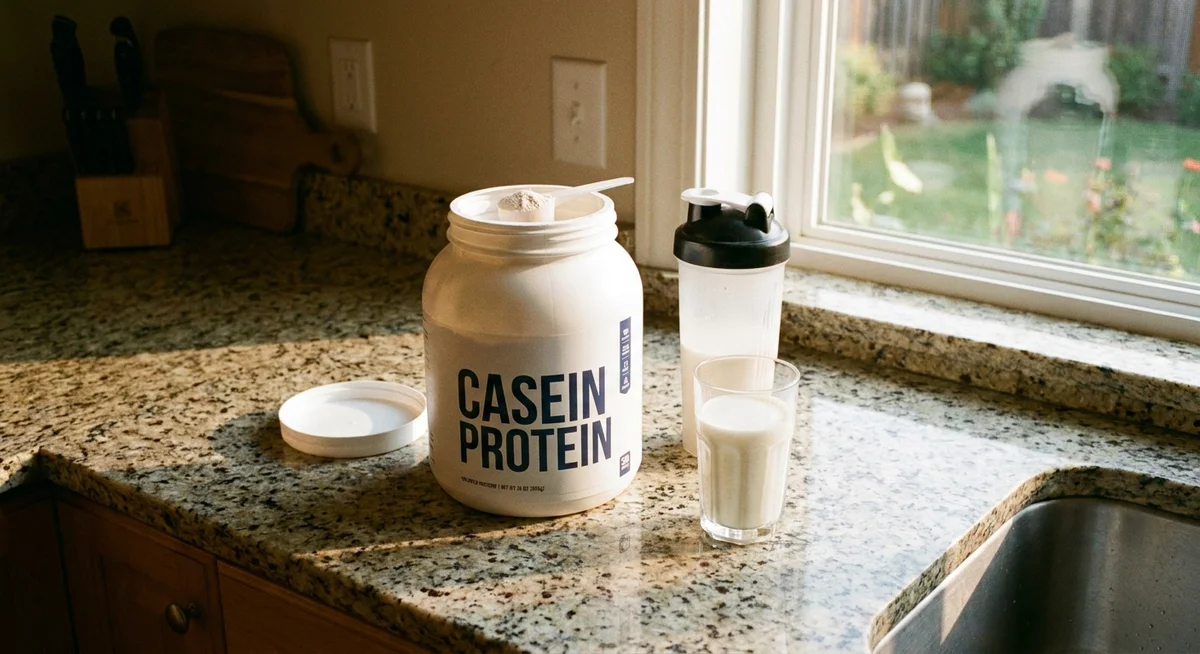
Casein protein powder digests slowly over four to seven hours, releasing amino acids steadily rather than all at once. That makes it the most practical supplement for overnight muscle recovery, long stretches between meals, or any situation where you want protein working in the background without needing to eat again soon. This guide covers what casein actually is, how to read a label, and what separates a quality product from a mediocre one.
Key takeaways
- Casein accounts for roughly 80% of the protein in cow's milk and forms a gel-like clot in your stomach, which is why it digests slowly.
- Micellar casein is the least-processed form and the best default choice for most buyers.
- A good casein powder delivers at least 23g of protein per 30g serve, with minimal fillers.
- It works best taken before bed, but there is nothing wrong with using it any time you need a slow-release protein source.
- People with a dairy allergy should avoid casein entirely. Lactose intolerance is less of a concern because casein contains very little lactose.
What is casein protein, and why does it digest slowly?
Casein is one of two major proteins found in milk. The other is whey. When milk acidifies in your stomach, casein curdles into a thick gel. That gel breaks down gradually, releasing leucine and other essential amino acids over several hours rather than in one spike. The practical result is a longer window of muscle protein synthesis, which is why researchers have consistently found casein to be superior to whey for overnight recovery in resistance-trained adults.

Whey spikes blood amino acid levels quickly, which has its uses. Casein keeps levels elevated for longer. Neither is universally better. They do different jobs, and understanding that is the starting point for deciding whether casein belongs in your stack. For a side-by-side breakdown, the whey vs casein comparison on this site covers the research in detail.
Which type of casein should you buy?
Three forms show up on labels. Here is how they differ:
| Form | How it's made | Digestion speed | Texture in a shake | Best for |
|---|---|---|---|---|
| Micellar casein | Cold-filtered from skim milk, minimal processing | Slowest (5-7 hours) | Thick and creamy | Most buyers, especially for overnight use |
| Casein hydrolysate | Pre-digested with enzymes | Faster than micellar (closer to whey) | Thinner, often bitter | Post-workout if you want casein's amino profile with faster absorption |
| Calcium caseinate | Treated with alkaline calcium hydroxide | Moderate | Thinner than micellar | Food manufacturing; less ideal for a shake |
Micellar casein is the right default for almost everyone. It is the least altered form, retains the most natural structure, and produces the slowest, most sustained amino acid release. If a label just says "casein protein" without specifying the type, check the ingredients list. Micellar casein will be listed first if it is the primary source.
How do you read a casein protein label?
Protein content per serve is the most important number. Look for at least 23g of protein per 30g of powder. If the figure is lower, the product is likely padded with fillers or has a higher carbohydrate content than it needs to. Some formulas deliberately add casein to a blend to make a cheaper whey product look like a slower digesting formula. A standalone casein product should list micellar casein as the first ingredient, not a protein blend.
What else should you check before buying?
What to look for
- Micellar casein listed as the first ingredient
- 23g or more of protein per 30g serve
- Third-party batch testing or Informed Sport certification
- Low sodium (under 200mg per serve)
- Short, readable ingredients list
- Less than 5g of total carbohydrates per serve
What to avoid
- Proprietary blends that hide individual protein amounts
- Artificial colours (unnecessary in a shake you're drinking at night)
- Excessive thickeners used to simulate the creaminess of real casein
- Products with no sourcing information at all
- Casein hydrolysate if you specifically want slow release
- Flavours with very high added sugar content
When and how should you take casein protein?
The classic use case is before bed. Taking 30 to 40g of micellar casein 30 to 60 minutes before sleep keeps muscle protein synthesis elevated through the night, when you would otherwise go six to eight hours without amino acids. Studies published in the journal Medicine and Science in Sports and Exercise show this approach measurably improves overnight muscle recovery in people doing resistance training.
Outside of that, casein suits any situation where you will go more than three hours without eating. A mid-morning shake, a meal replacement on a long travel day, or a high-protein snack before a long meeting all make sense. If you want to understand how to structure your daily protein intake around workouts and fasting windows, the guide to protein powder and intermittent fasting is worth reading.
Casein mixes thicker than whey, so use more liquid than you would for a whey shake. Around 350 to 400ml of cold water or milk per 30g serve keeps it drinkable. It also works well stirred into Greek yogurt or blended into a smoothie where the thick texture is an advantage, not a problem. For more creative uses, the mixing and cooking guide has practical ideas.
Frequently asked questions
Is casein protein safe to take every night?
Yes, for healthy adults. Daily casein intake before bed is well-studied and shows no adverse effects in people with normal kidney function across trials lasting up to 12 weeks. If you have pre-existing kidney disease, check with your doctor first. The broader evidence on protein and kidney health is covered in the protein and kidney health article on this site.
Can lactose-intolerant people use casein powder?
Usually yes. Micellar casein contains very little residual lactose, typically under 1g per serve, because most lactose stays in the whey fraction during processing. Most people with mild to moderate lactose intolerance tolerate it without issue. If you have a confirmed dairy allergy (an immune response to milk proteins), avoid casein entirely, as the protein itself is the allergen.
Does casein protein help with weight loss?
It can. Casein is highly satiating, and its slow digestion reduces hunger for longer than most other protein sources. Using it to replace a high-carbohydrate evening snack typically reduces total calorie intake without requiring much conscious effort. It does not have fat-burning properties on its own, but as part of a calorie-controlled diet, the appetite-suppressing effect is a genuine advantage.
How is casein different from a natural protein powder?
The difference is about what ingredients are used to flavour and sweeten the product, not the protein source itself. Micellar casein can be formulated with or without artificial additives. A natural protein powder uses casein or whey sourced with minimal processing and relies on natural sweeteners and flavours. The base protein is the same; the formulation philosophy differs.
Choosing between casein and whey isolate?Read the full whey protein isolate guide to see which one fits your goals.