Protein Powder and Intermittent Fasting: How to Make Both Work

Intermittent fasting and protein powder are both popular tools for body composition, but they pull in opposite directions at first glance. Fasting asks you to go without food for hours at a time. Protein asks you to eat frequently enough to fuel muscle repair. You can make both work together, but only if you understand what actually breaks a fast and how to structure your intake when your eating window is short.
Key takeaways
- Protein powder breaks a fast. Even 20-30 g of protein triggers an insulin response and ends the fasted state.
- Timing protein around your eating window, especially near your first and last meal, preserves muscle during fasting protocols.
- Shorter eating windows (16:8 or 18:6) make it harder to hit daily protein targets. Planning matters more than usual.
- Casein protein before bed works well for IF practitioners whose last meal falls 2-3 hours before sleep.
- Black coffee, water, and electrolytes do not break a fast. Plain protein powder does.
Does protein powder break a fast?
Yes, it does. Any meaningful calorie source, including protein powder, raises blood insulin and switches the body out of a fasted metabolic state. A standard 30 g scoop of whey delivers roughly 120 calories and 25-27 g of protein, enough to trigger a measurable insulin response within 30 minutes. Some people ask about very small amounts (5 g of collagen, a splash of cream) and the honest answer is: small additions cause small insulin spikes. For the purposes of fat oxidation and autophagy, a full serving of protein powder ends the fast. Save it for your eating window.
How do you hit your protein targets in a shorter eating window?
This is where most IF practitioners struggle. If you follow a 16:8 protocol, you have 8 hours to consume a full day's protein, typically 1.6 to 2.2 g per kg of bodyweight for people doing regular resistance training. For an 80 kg person, that is 128 to 176 g of protein packed into two or three meals. Whole food alone makes that difficult without overeating on calories. Protein powder fills the gap efficiently.
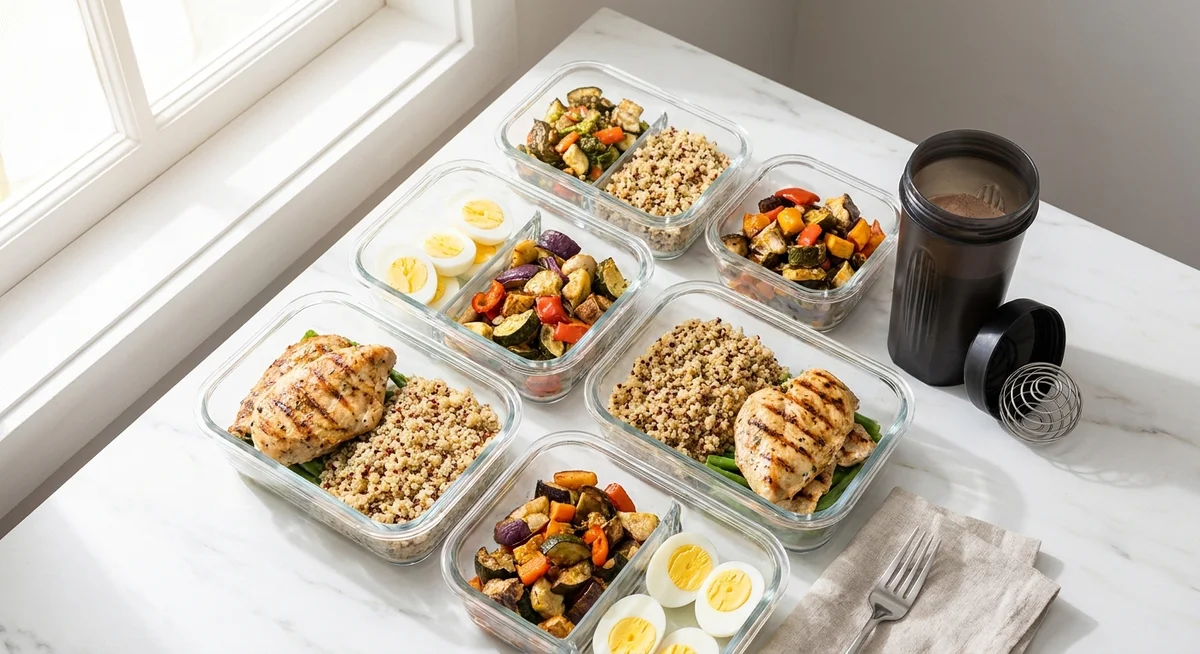
The practical approach is to treat protein powder as a bridge, not a replacement for whole food. Use one shake to open your eating window (breaking the fast with something quick and digestible) and a second, slower-digesting option such as casein near the end of your window. Everything else comes from meals. Checking the protein powder buying guide helps you match the right type to each part of your day.
| Protocol | Eating window | Protein timing strategy | Shakes per day |
|---|---|---|---|
| 12:12 | 12 hours | Standard spacing across 3 meals; shake optional | 0-1 |
| 16:8 | 8 hours | Shake at window open, whole food meals, casein optional at close | 1-2 |
| 18:6 | 6 hours | Shake at window open, 2 dense protein meals, shake at window close | 2 |
| OMAD (23:1) | 1 hour | Very difficult to hit targets; 2 shakes + dense meal required | 2+ |
Which protein type works best for intermittent fasting?
The answer depends on where in your window you are using it.
Whey isolate at window open: Fast-digesting and high in leucine, whey isolate is ideal for breaking the fast, particularly after a fasted training session. It hits the bloodstream quickly, switches muscle protein synthesis on, and keeps calories lean. If you have a sensitive stomach after fasting, isolate causes less bloating than concentrate because the lactose is largely removed. Read more in whey isolate vs concentrate to understand the practical differences.
Casein at window close: Casein forms a gel in the stomach and releases amino acids over 5-7 hours. Taking it 30-60 minutes before bed, at the end of your eating window, keeps muscle protein synthesis elevated through most of your overnight fast. This is particularly useful for people running 18:6 or longer protocols where the overnight fasted period stretches to 18+ hours.
Plant proteins mid-window: Pea or rice blends are a good choice for a mid-window meal replacement shake. They digest at a moderate pace and mix well into smoothies with fruit or oats if you want a more substantial meal. They are also a practical option if dairy-based proteins cause digestive discomfort after a long fast. The plant protein comparison covers the amino acid differences in detail.
Protein powder and IF: what works
- Whey isolate to break the fast cleanly and quickly
- Casein at the end of the eating window for overnight coverage
- Using shakes to close the gap when whole food volume is limited
- Keeping flavors simple so shakes are easy to consume when appetite is low after fasting
Common mistakes to avoid
- Drinking a protein shake during the fasted window thinking it will not count
- Relying on protein powder for most daily intake instead of whole food meals
- Using a heavy concentrate or mass gainer right after fasting, which often causes bloating
- Running a very short eating window (OMAD) without checking whether protein targets are actually being met
Does fasting reduce muscle loss, or does protein need to cover that?
Fasting alone does not cause significant muscle loss in the short term, particularly in people who are resistance training. Research on 16:8 protocols in trained individuals generally shows neutral effects on lean mass when total protein intake is maintained. The keyword is "maintained." When the eating window gets so short that protein intake drops well below 1.6 g per kg, muscle loss becomes a real risk over weeks and months. Protein powder is the practical solution, not a crutch.
For people training in the fasted state, the muscle protein synthesis response to a post-workout shake is the same whether you trained fasted or fed. What matters is getting the protein in. If your workout falls in the last hour before your eating window opens, time your shake to coincide with that window opening.
Frequently asked questions
Can I have protein powder in black coffee to break the fast?
No. Adding protein powder to coffee, black or otherwise, turns it into a calorie-containing meal. It will break your fast. Black coffee on its own (no protein, no milk, no syrup) does not break a fast in any meaningful way for most people. Keep them separate: black coffee during the fasted window, protein shake when the eating window opens.
What if I train in a fasted state and feel weak without protein?
Feeling weak during fasted training is common in the first 2-3 weeks and usually improves as the body adapts to using fat for fuel. If performance is genuinely suffering after several weeks, consider shifting your training to the first hour of your eating window rather than the fasted period. That way you can fuel before and after without compromising the fast.
How much protein can the body absorb in one meal?
The "you can only absorb 30 g per meal" claim is a myth. The body can absorb virtually all the protein you eat; what varies is the rate of digestion and how much goes toward muscle protein synthesis versus other uses. Larger single doses (50-70 g) do stimulate MPS, though less efficiently per gram than moderate doses spread across a window. Spreading intake across two or three meals inside your window is still the smarter approach for muscle building.
Is intermittent fasting suitable for people trying to build muscle?
Yes, with effort. Research comparing IF to standard meal patterns shows similar muscle gain outcomes when total calories and protein are matched. The challenge is purely practical: eating enough calories and protein in a compressed window. People in a serious muscle-building phase often find that a 16:8 window is manageable, while OMAD is nearly impossible to make work without shortchanging either calories or protein.
Find a clean protein powder for your eating windowOur vanilla protein powder guide covers what to look for and what to avoid.