Protein Powder Buying Guide: How to Choose the Right Type for Your Goal
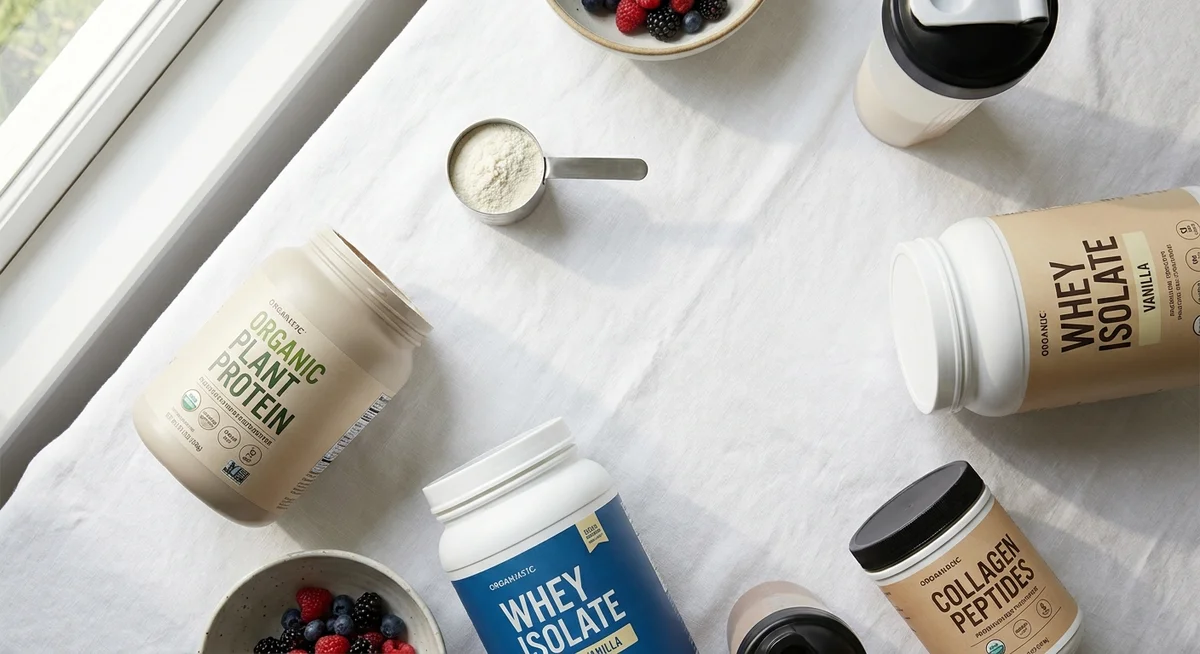
Picking a protein powder sounds simple until you're standing in front of forty different tubs with conflicting claims on every label. Whey isolate, concentrate, casein, plant blends — each one suits a different goal, body, and budget. This guide matches the most common protein types to the situations they genuinely fit, so you can stop guessing and buy the right tub the first time.
Key takeaways
- Whey concentrate is the best value for healthy adults who digest dairy well.
- Whey isolate suits people with lactose sensitivity or those cutting calories tightly.
- Casein is worth considering for overnight recovery or as a high-satiety meal replacement.
- Plant proteins (pea, rice, or blends) are the right call for vegans, people with dairy allergies, or anyone who simply prefers them.
- Protein blends often cost less per gram than isolate while still delivering a complete amino acid profile.
Which protein type is best for building muscle?
For most people focused on muscle growth, whey concentrate or whey isolate will do the job equally well when total daily protein is on target. Both are "fast" proteins — digested quickly, which drives a sharp rise in muscle protein synthesis within about 60 to 90 minutes of consumption. The difference between them is mostly in processing and price, not results.
Whey concentrate sits at roughly 70 to 80 percent protein by weight. The remaining fraction is fat and lactose, which gives it a richer flavour and a creamier texture. Isolate goes through additional filtration to reach 90 percent or more protein per serving, stripping out most of the fat and lactose in the process. If you train consistently, hit your daily protein target (around 1.6 to 2.2 g per kg of body weight), and digest dairy comfortably, concentrate is the smarter buy — you get the same muscle-building signal for a lower price per kilogram.
When does paying more for whey isolate make sense?
Isolate earns its higher price tag in three specific situations: lactose intolerance, strict calorie targets, and post-surgery or clinical nutrition needs.
Because isolate contains very little lactose, people who bloat or feel uncomfortable on concentrate often find isolate sits far more easily. If you're cutting calories for fat loss, the lower fat and carbohydrate content means you get more protein per calorie — useful when every macronutrient gram is being tracked closely. And for anyone recovering from illness or managing a specific health condition, the cleaner macro profile gives more control over dietary intake.
Which protein type fits which goal?
| Goal / Situation | Best fit | Why |
|---|---|---|
| Build muscle on a budget | Whey concentrate | Highest protein-per-dollar ratio, great amino acid profile |
| Fat loss / calorie deficit | Whey isolate | More protein per calorie, low fat and carbs |
| Lactose sensitivity | Whey isolate or plant protein | Isolate has minimal lactose; plant has none |
| Overnight recovery | Casein | Slow-digesting — keeps amino acid levels elevated for 5 to 7 hours |
| Vegan / dairy-free | Pea + rice blend | Together they cover the full essential amino acid spectrum |
| Satiety between meals | Casein or plant blend | Both digest slowly and keep hunger lower than whey |
| General health and convenience | Whey concentrate or plant blend | Flexible, widely available, easy to cook with |
Are plant proteins worth it if you're not vegan?
Yes — in more cases than people expect. The gap between whey and plant protein for muscle building is smaller than it used to look. Studies using matched doses of pea protein isolate versus whey found similar gains in muscle thickness over 12 weeks. The key is using a plant blend (pea combined with rice is the most common pairing) rather than a single source, because each plant protein has a different limiting amino acid that the other compensates for.
Plant proteins also tend to be easier on the digestive system for people who are sensitive to dairy, and they pair well with cooking and baking — a point worth considering if you use protein powder beyond shakes. Our guide to mixing protein powder in smoothies and cooking covers which protein types hold up best to heat and blending.
What about blends?
Multi-protein blends — usually a mix of whey concentrate, isolate, and casein — aim to deliver both a fast initial spike and a slower sustained release of amino acids. They can be a practical middle ground if you want one tub that covers post-workout and between-meal needs. In practice, if you're eating regular meals and hitting your daily protein total, the timing nuances matter less than the marketing suggests. Blends tend to taste good and are competitively priced, which makes them a reasonable default for people who don't want to overthink the specifics.
Before you buy, it helps to understand what the label is actually telling you. Our guide to reading a protein powder nutrition label explains serving size tricks, amino acid spiking, and what the third-party testing logos actually mean.
Reasons to choose whey
- Highest biological value of any single protein source
- Fast absorption suits post-workout timing
- Wide flavour range and easy to mix
- Typically cheaper per gram than plant isolates
Reasons to choose plant
- Dairy-free and vegan-compatible
- Gentler on digestion for many people
- Works well in cooking and baking
- Often cleaner ingredient lists
FAQ: Choosing a protein powder
Does expensive protein powder build more muscle than cheap protein?
Not by itself. Muscle growth depends on total daily protein intake, training stimulus, sleep, and overall diet — not the price of the tub. A mid-range whey concentrate from a reputable brand will support the same results as a premium isolate if you're hitting your protein targets. Spend more only when you have a specific reason (lactose sensitivity, calorie restriction, dietary preference).
Can you mix different types of protein powder?
Yes. Many people keep a fast whey for after training and a casein or plant blend for other times of day. There's no interaction between types — your body simply digests whatever arrives. If you want simplicity, one all-purpose blend covers most needs without needing multiple tubs.
Is flavoured or unflavoured protein powder better?
Unflavoured is more versatile for cooking, has fewer additives, and lets you control sweetness yourself. Flavoured versions are more convenient for straight shakes and tend to be more palatable for people who are new to protein powder. Neither is nutritionally superior — the choice comes down to how you plan to use it.
How do I know if a protein powder is third-party tested?
Look for logos from Informed Sport, NSF Certified for Sport, or HASTA on the packaging. These programs test each batch for heavy metals, banned substances, and label accuracy. A product without any third-party certification isn't automatically unsafe, but independent testing is the only way to verify that what's on the label is what's in the tub. Our breakdown of protein powder marketing claims covers exactly what to look for and what to ignore.
See our Vanilla Protein PowderA clean, versatile option with transparent labelling — a good starting point for any goal.