Protein Powder Marketing Claims: What to Believe and What to Skip
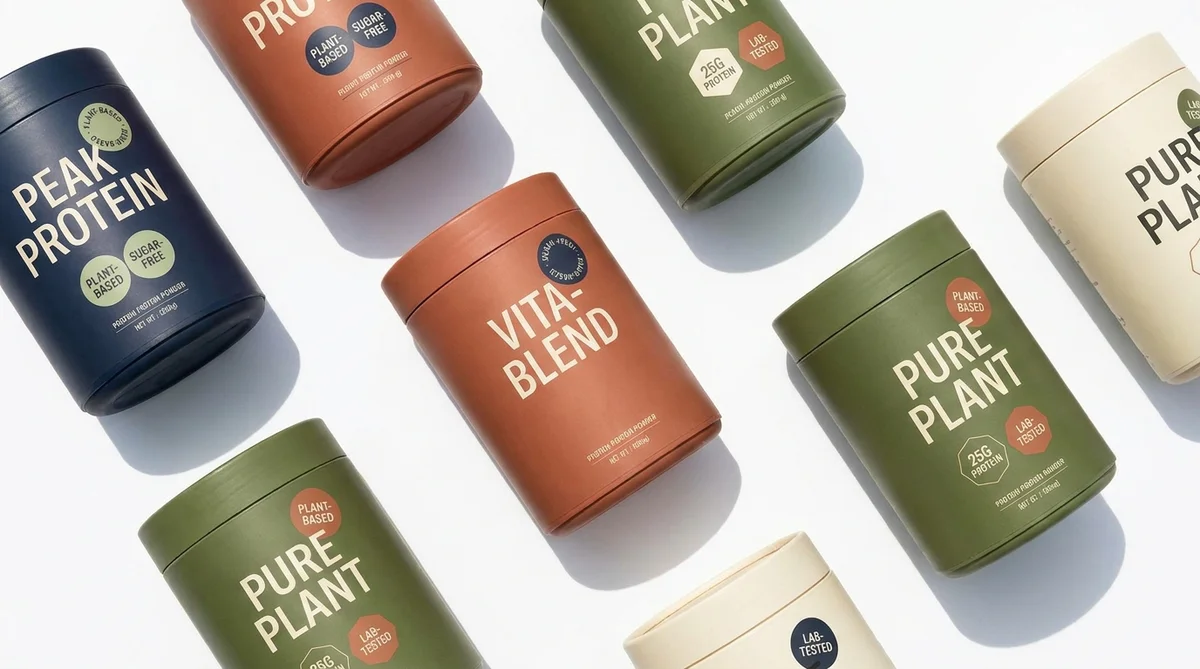
Walk down the supplement aisle or scroll through any online store and you will be hit with claims: "ultra-pure", "lab-tested", "performance-grade", "2x absorption". Some of those phrases mean something. Most are decoration. Knowing the difference takes about five minutes of reading this guide, and it will save you money on every tub you buy from here on.
Key takeaways
- Protein content per serving (in grams) is the only number that really matters at a glance.
- Amino acid spiking is still happening in 2024 and can inflate the stated protein figure.
- Terms like "advanced", "ultra", and "performance-grade" have no regulatory definition.
- Third-party testing certifications are genuine signals worth paying attention to.
- A clean, short ingredient list is almost always a better sign than a long list of "complexes".
Which label claims actually mean something?
A small number of phrases on a protein powder label are anchored in real standards. If a brand uses any of the following, there is usually something concrete behind it.
| Claim | What it actually means | Worth paying for? |
|---|---|---|
| Third-party tested (Informed Sport, NSF Certified) | An independent lab checked that what is on the label is in the product, and no banned substances are present. | Yes, especially for competitive athletes. |
| Grass-fed whey | The dairy cattle were pasture-fed, which can affect the fatty acid profile. The protein content itself is not meaningfully different. | Matters only if sourcing is important to you. |
| Cold-processed / cold-filtered | Lower heat during manufacturing, which may preserve more native protein structures. Genuine, but the practical difference in results is small. | Minor benefit. Not a deal-breaker either way. |
| No artificial sweeteners / flavours | The product uses stevia, monk fruit, or natural flavours instead of sucralose or acesulfame K. You can verify this in the ingredient list. | Verify it yourself rather than taking the claim on faith. |
| "Ultra", "Advanced", "Pro", "Performance-grade" | Undefined marketing language. No regulatory body defines these terms. | No. Ignore them completely. |
What is protein spiking and how do you spot it?
Protein spiking (also called amino acid spiking or nitrogen spiking) is when a manufacturer adds cheap amino acids like glycine, taurine, or creatine to inflate the total nitrogen count. Standard protein testing measures nitrogen, then multiplies it to estimate protein grams. Add extra amino acids and the number goes up without adding any more actual protein from whey or casein.
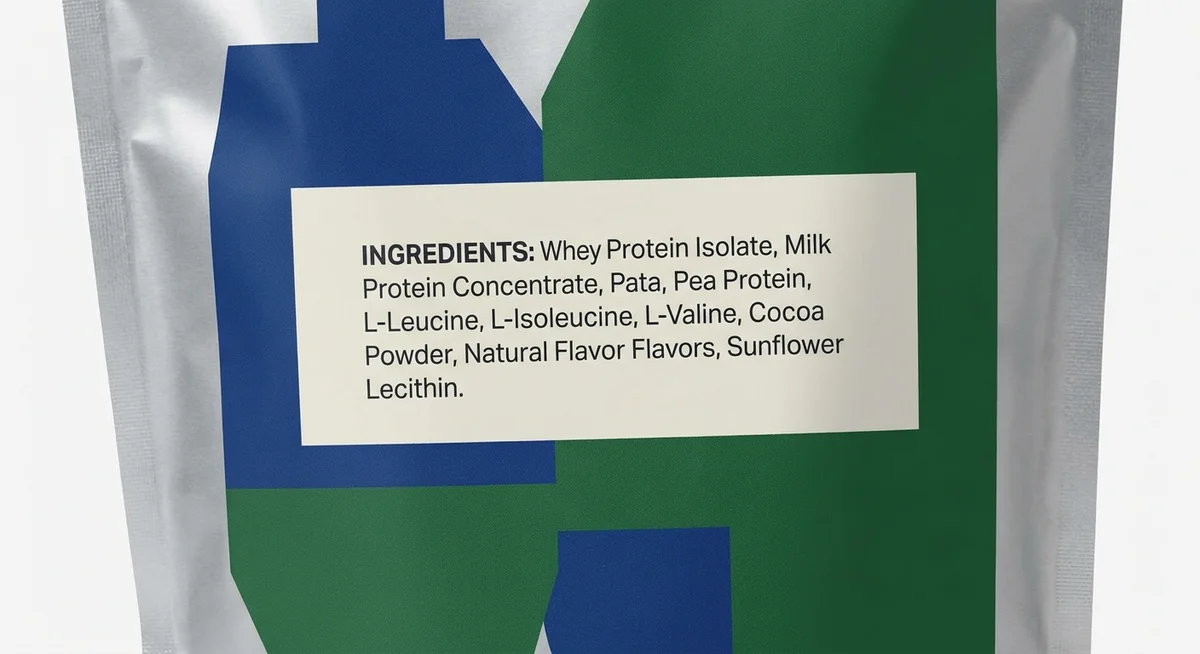
To spot it, look at the full ingredient list after the protein source. If you see glycine, taurine, creatine, or a long list of individual amino acids right after the whey or plant protein, they may be there to pad the numbers. A clean product lists whey concentrate, whey isolate, or pea protein as the first and primary ingredient, with nothing to bulk out the nitrogen count.
You can also cross-check by reading the nutrition label carefully. Divide the protein grams per serving by the total serving weight in grams. If you get below about 70 to 75 percent, there is a lot of something else in there. The higher that ratio, the purer the source.
How to compare two products fairly
Signs of a trustworthy product
- Protein source is the first ingredient
- Protein-to-scoop ratio above 75%
- Third-party certification listed (not just "lab-tested" with no name)
- Short ingredient list with recognisable names
- No proprietary blends hiding individual doses
- Nutritional panel matches what the front claims
Signs to be cautious about
- Amino acids listed before or alongside the protein source
- Vague terms like "protein matrix" or "anabolic complex"
- "Proprietary blend" with no individual gram amounts
- Front-of-pack protein claim higher than the Nutrition Information Panel
- Dozens of added vitamins and minerals to distract from low protein content
- No manufacturer details or country of manufacture listed
Does flavour affect protein quality?
No, but it can affect how much sugar and additives end up in your shake. Heavily flavoured powders sometimes carry a significant sugar load or rely on maltodextrin as a base. Again, the ingredient list tells the story. A vanilla protein powder, for example, should list a natural vanilla flavour or vanilla bean extract without needing a paragraph of stabilisers and gums to hold it together. If you are comparing flavoured options, check the nutritional profile of a quality vanilla protein powder to see what a clean flavoured product actually looks like.
The certification shortcut
If ingredient-list scrutiny is not your idea of a good time, the fastest shortcut is to look for a genuine third-party certification. Informed Sport and NSF Certified for Sport are the two most credible for athletes. Both programs batch-test finished products. A brand that invests in that testing has skin in the game. A brand that only says "lab-tested" with no certifying body named has very little accountability.
Australia's TGA (Therapeutic Goods Administration) also regulates listed medicines (AUST L number), but most protein powders are foods, not medicines, so TGA registration is not typically the right benchmark. For food products, look to the manufacturer's own certifications and independent testing instead.
Frequently asked questions
Is a more expensive protein powder always better quality?
Not automatically. Price can reflect genuine quality inputs (grass-fed whey, third-party testing, better flavouring), but it also reflects marketing budgets and celebrity endorsements. Use the protein-to-serving ratio and ingredient list as your quality check, then compare that across price points. Some mid-range products score better than premium ones on both.
What does "2x absorption" or "fast-release protein" mean on a label?
These are almost always undefined claims. Whey protein is genuinely digested faster than casein, but two whey products labelled differently do not have meaningfully different absorption rates. Unless a brand cites a specific clinical study with an actual methodology, treat any absorption multiplier as marketing copy rather than fact.
Should I trust "natural" on a protein powder label?
Treat it as a starting point, not a guarantee. Food labelling in Australia allows "natural" with some flexibility in interpretation. Read the ingredient list for artificial colours, sweeteners, and preservatives rather than relying on the word itself. If you want to know what a genuinely clean formulation looks like, knowing how to read a protein powder nutrition label is the most reliable skill you can build.
Do proprietary blends hide low-quality ingredients?
They can. A proprietary blend lists the total weight of a combination of ingredients without breaking down individual amounts. This makes it impossible to know whether you are getting a meaningful dose of each component. Some legitimate manufacturers use blends for genuine IP reasons, but as a buyer you cannot verify what you are actually getting. Prefer products that disclose individual ingredient amounts.
Find the right protein powder for your goalBrowse Australia's protein powder guide for honest, side-by-side comparisons.