How to Mix Protein Powder: Shakers, Smoothies, and Cooking
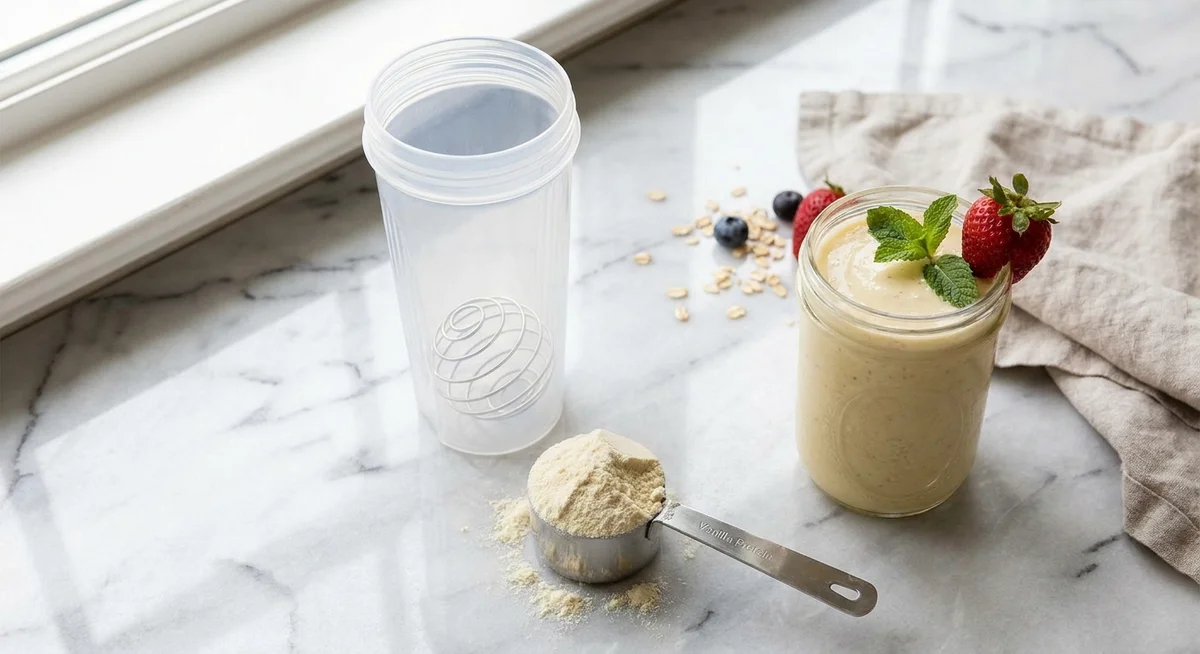
Getting lumps, chalky grit, or a layer of powder stuck to the bottom of your cup? You are not using the wrong protein powder. You are mixing it wrong. The method matters as much as the product, and a few small adjustments will turn a grainy drink into something you actually look forward to.
Key takeaways
- Always add liquid first, then powder, to prevent clumping.
- A shaker ball or blender blade breaks up the powder far better than a spoon.
- Water temperature affects texture: cold or room temperature works best for most proteins.
- Protein powder mixes into baked goods and cooked meals without losing its nutritional value.
- Flavoured powders (like vanilla) double as a flavour base in recipes, reducing the need for added sweeteners.
What is the best way to mix protein powder without lumps?
The single most effective change you can make is reversing the order: pour your liquid in first, add the powder on top, then shake or blend. Powder poured into an empty cup or shaker bonds with the walls and forms dry clumps before the liquid even reaches it. Liquid first gives the powder something to absorb into from the start.
A shaker bottle with a wire mixing ball is the standard tool for a reason. The ball breaks apart clumps as liquid passes through it with each shake. If you do not have a shaker, a small hand-held milk frother works well and takes about ten seconds. A spoon or fork will always leave some lumps unless the powder is very finely milled.
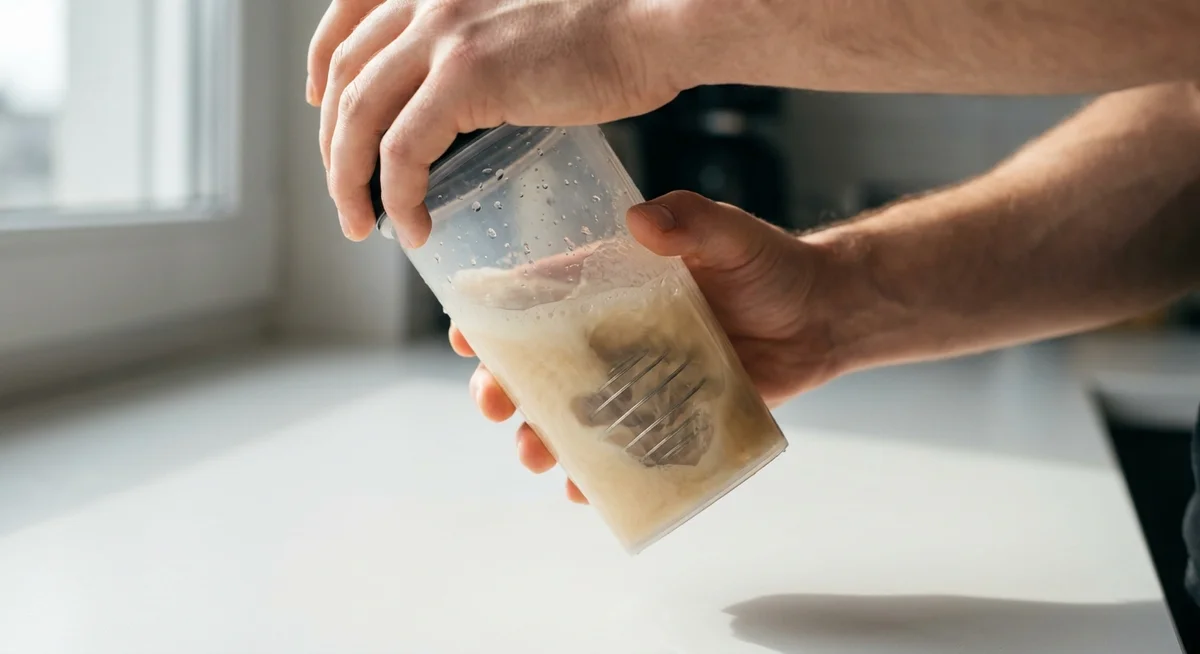
Water temperature is the other variable most people overlook. Very cold water (straight from the fridge) slows hydration and makes some proteins harder to dissolve. Room temperature water or slightly chilled water gives the best result for most whey and plant-based powders. If you prefer a colder drink, mix first with room temperature water, then add ice.
Which liquids mix best with protein powder?
Water gives the cleanest result: easiest to mix, lowest in calories, and it lets the powder's flavour come through without competition. Cow's milk adds creaminess and extra protein but can make the drink thicker. Oat milk and almond milk sit between the two. Coconut water mixes cleanly and adds electrolytes, making it a decent post-workout choice.
| Liquid | Mixability | Texture | Best for |
|---|---|---|---|
| Cold water | Good | Light | Quick post-workout shake |
| Milk (dairy) | Good | Thick, creamy | Meal replacement or bulking |
| Oat milk | Very good | Smooth, slightly sweet | Everyday flavoured shakes |
| Almond milk | Very good | Light, neutral | Lower-calorie shakes |
| Coconut water | Excellent | Thin, refreshing | Rehydration after training |
How do you add protein powder to smoothies?
A blender is the most forgiving mixing method. Add your liquid, fruit, or other ingredients first so the blades are not trying to chop dry powder. Add the protein powder last, then blend for 30 to 45 seconds. Most powders disappear completely into a blended smoothie with no grainy texture at all.
Vanilla protein powder works especially well in smoothies because it acts as both a protein source and a flavour base. You can cut back on sweeteners like honey or dates and let the powder carry the sweetness. A scoop of vanilla protein powder blended with banana, almond milk, and frozen spinach is a common starting point that tastes genuinely good.
Can you mix protein powder into food?
Yes, and it is one of the most practical ways to increase your daily protein without adding another drink to your routine. The most common uses are oats, pancakes, muffins, and energy balls. The key rule: protein powder is not a 1:1 flour substitute. Replace no more than 25 to 30 percent of the flour in a recipe or the result turns dry and rubbery.
For oats or overnight oats, stir one scoop of powder into the liquid before adding your oats. The oats absorb the mixture overnight and the texture is indistinguishable from a normal bowl. For baking, mix the protein powder with your dry ingredients before adding wet ingredients, the same way you would treat baking powder.
High heat does not destroy protein or make it harmful, though it can denature the protein structure slightly. The nutritional value (amino acid content) stays largely intact after baking or cooking. If you are concerned about getting the most from each scoop, check the guidance in our article on when to take protein powder for timing considerations alongside food-based uses.
One more thing worth knowing: strong-flavoured powders like chocolate or vanilla tend to blend into recipes better than unflavoured or lightly flavoured ones. Unflavoured powder can carry a slightly eggy or beany smell when baked. If you plan to cook with your protein regularly, a flavoured powder usually gives more reliable results in sweet recipes.
For a deeper look at what separates quality powders from marketing noise, the guide on how to read a protein powder nutrition label covers exactly what to check before you buy.
Frequently asked questions
Why does my protein powder always clump?
Clumping usually comes from adding powder to an empty container before the liquid, using very cold water, or not mixing vigorously enough. Switch to liquid-first, use room-temperature water, and shake for a full 20 to 30 seconds with a wire ball in your shaker. If clumping persists, try a hand frother for ten seconds. Most powders dissolve completely with the right method.
Can you mix protein powder with hot liquid?
Most protein powders can handle warm liquids (like warm oat milk), but very hot liquid, above about 70 degrees Celsius, can cause some proteins (especially whey isolate) to denature and produce a grainy or curdled texture. For hot drinks like coffee or oatmeal, let the liquid cool slightly before mixing in the powder, or stir the powder into a small amount of cold water first and then add the warm base.
How long can a mixed protein shake sit before it goes off?
A protein shake mixed with water can sit in the fridge for up to 24 hours without any nutritional loss or safety concern. Mixed with dairy milk, keep it to 12 hours. After that, the texture can separate and the flavour degrades. Give it a quick shake before drinking if it has been in the fridge for a few hours, as settling is normal.
Does the ratio of powder to liquid matter?
Yes. Most scoops are designed for 250 to 350 ml of liquid. Using less liquid makes the shake thick and harder to fully dissolve; using too much thins it out. Start with the amount on the label and adjust from there. Thicker shakes work well as a meal addition; thinner shakes are easier to drink quickly post-workout. There is no wrong answer, it is personal preference within that range.
Try a Versatile Vanilla Protein PowderA smooth-mixing, lightly sweetened option that works in shakes, smoothies, and baked recipes.