Protein Powder for Injury Recovery: How to Eat When You Can't Train

When an injury stops your training, your first instinct might be to eat less because you're moving less. That instinct is mostly wrong. Protein needs stay high during injury recovery, sometimes higher than when you're training normally, because your body is actively rebuilding damaged tissue. Getting enough protein, and timing it well, is one of the few nutrition levers you can actually pull while you wait to get back on your feet.
Key takeaways
- Protein needs during injury recovery are at least as high as during normal training, often 1.6 to 2.2 g per kg of body weight per day.
- Muscle loss (atrophy) accelerates fast during immobilisation; adequate protein slows the process significantly.
- Collagen synthesis for tendon and ligament repair requires specific nutrients alongside protein, particularly vitamin C.
- Protein powder is a practical tool when appetite drops or meals become harder to prepare with a cast, crutches, or limited mobility.
- Total calories still matter: a large deficit while injured accelerates muscle loss, not fat loss.
Why does your body need more protein when you're injured?
Injury triggers an inflammatory response followed by a repair phase. Both demand amino acids. Your body uses protein to rebuild muscle fibres, synthesise collagen for tendons and ligaments, support immune function, and produce the enzymes involved in healing. At the same time, immobilisation causes anabolic resistance, meaning your muscles become less efficient at using protein to build and maintain tissue. The practical fix is to eat more protein per meal, not less, to overcome that blunted response.
Research from the Journal of the International Society of Sports Nutrition puts the target for injured athletes at 1.6 to 2.5 g of protein per kg of body weight per day, depending on the severity and type of injury. For an 80 kg person, that's 128 to 200 g of protein daily. That's a lot to hit from whole food alone when your appetite is reduced and your energy output has dropped.
What type of protein works best for recovery?
Not all proteins are equal when healing is the goal. The type of protein matters for different aspects of repair.
| Protein Type | Best For | Key Advantage | Worth Knowing |
|---|---|---|---|
| Whey Isolate | Muscle preservation | High leucine content drives muscle protein synthesis | Fast-digesting; best spread across 4+ meals per day |
| Casein | Overnight muscle protection | Slow release sustains amino acid availability for hours | Good before bed during extended immobilisation |
| Collagen Peptides | Tendon and ligament repair | Provides hydroxyproline and glycine for connective tissue | Take with vitamin C 30-60 min before any movement or physio |
| Pea / Rice Blend | Plant-based muscle support | Complete amino acid profile when blended | Slightly lower leucine than whey; use a larger serve |
If you're dealing with a soft tissue injury (torn ligament, tendon strain, rotator cuff damage), collagen peptides deserve a specific mention. A 2019 study in the American Journal of Clinical Nutrition found that 15 g of collagen taken with vitamin C before exercise significantly increased collagen synthesis in injured tendons. On rest days, standard protein powder for muscle preservation is your main priority. On days when you do physio or any gentle movement, a collagen shake beforehand adds a targeted boost.
How should you structure protein intake while injured?
The same principle that applies to training applies to injury: spreading protein across the day outperforms front- or back-loading it. Your muscles can only use around 30 to 40 g of protein per sitting for synthesis, so eating 150 g in two meals leaves a lot of potential on the table.
A practical daily structure for a 75 to 85 kg person targeting 160 g of protein might look like this:
- Breakfast: Greek yoghurt, eggs, or a protein shake (35 to 40 g)
- Mid-morning: Cottage cheese or a protein shake if appetite is low (25 to 30 g)
- Lunch: Chicken, fish, or legumes with vegetables (40 g)
- Afternoon: Protein shake or boiled eggs (25 to 30 g)
- Dinner: Red meat, salmon, tofu (35 to 40 g)
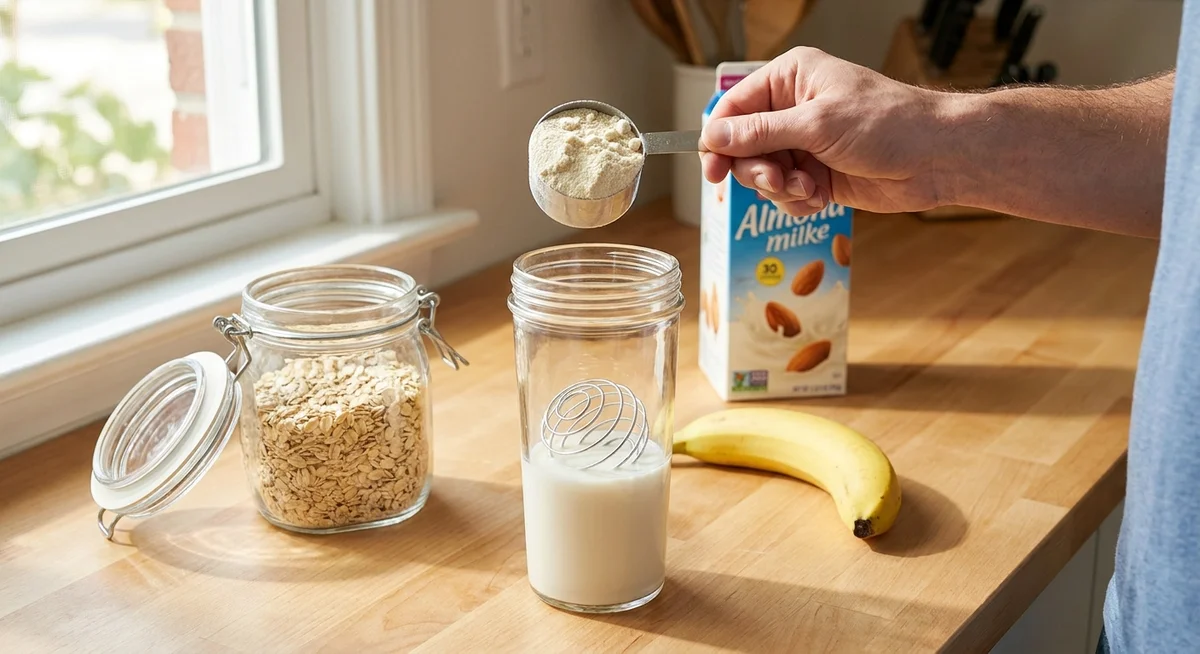
Protein powder earns its place here when cooking is difficult with limited mobility. A scoop in milk or water takes thirty seconds to prepare and adds 25 to 30 g of high-quality protein with no chopping, no dishes, and no risk of dropping a frying pan on crutches.
What about calories? Should you eat in a deficit while injured?
This is where most people go wrong. They see reduced activity as an automatic reason to slash calories. A small reduction in total energy is reasonable if you're completely sedentary, but a large deficit while injured is counterproductive. Your body prioritises wound healing and immune function over muscle retention when it senses a calorie shortage, which means more muscle loss and potentially slower tissue repair.
A modest reduction of 10 to 15 percent below your normal maintenance calories is a sensible ceiling. Keep protein high, reduce carbohydrates moderately (since you don't need as much glycogen for fuel), and keep dietary fat at normal levels. Check our guide to protein in a calorie deficit for more on how to balance intake without accelerating muscle loss.
Which protein powder is easiest to use during recovery?
When you're injured, convenience matters. A powder that mixes in cold water with a spoon is easier to manage than one that requires a blender. Unflavoured or mildly flavoured options work in savoury dishes too (stirred into soup or mashed potato) if appetite is low and shakes become monotonous. If you want a flavour that's easy to drink daily without fatigue, vanilla is the most versatile. Our vanilla protein powder mixes well in water, milk, or smoothies and works as a base for simple recovery shakes without tasting overly sweet.
If you're plant-based, a pea and rice blend is the most complete option. For more on hitting protein targets without animal products, see our plant-based protein guide.
Frequently asked questions
Do I still need protein powder if I'm not exercising at all?
Yes. Protein requirements during injury and immobilisation remain high because your body needs amino acids for tissue repair, immune function, and muscle preservation. In fact, the blunted muscle protein synthesis response during immobilisation means many people need more protein per meal, not less, to achieve the same effect they'd get when training normally.
Can protein powder speed up how fast I heal?
It supports the conditions needed for healing, but it won't accelerate the biological timeline beyond what your body can do. Getting enough protein ensures you don't slow healing by starving your body of the building blocks it needs. Combined with adequate calories, vitamins (especially vitamin C and zinc), and appropriate physio, good protein intake gives your body the best environment to repair efficiently.
How long should I keep protein intake high after an injury?
Keep protein at the higher end (1.8 to 2.2 g per kg) through the full rehabilitation period, including the weeks after you return to training. When you resume exercise, your recovering muscles are still adapting and remain more susceptible to breakdown than fully healthy tissue. Dropping protein too early during the return-to-training phase is a common mistake that delays full strength recovery.
Is there any protein type I should avoid while injured?
No specific type is harmful during injury, but low-quality protein blends with lots of fillers, artificial sweeteners, and minimal amino acid content are poor value at any time. Check the label for at least 20 g of protein per serve and a short ingredient list. Our guide to reading protein powder labels walks you through what to look for and what to ignore.
Find a protein powder that works during recoverySimple, versatile, and easy to prepare when mobility is limited.