Protein Powder in a Calorie Deficit: How to Lose Fat Without Losing Muscle

When you cut calories to lose weight, your body does not automatically draw from fat stores alone. Without enough protein and the right training stimulus, it will break down muscle tissue for fuel. Protein powder is one of the most practical tools for keeping protein intake high when total food volume is deliberately low.
Key takeaways
- A calorie deficit reduces muscle protein synthesis; higher protein intake partially offsets this effect.
- Most people in a deficit benefit from 1.6 to 2.4 g of protein per kg of bodyweight per day.
- Protein powder is a low-calorie, high-protein tool that fills gaps without blowing your calorie budget.
- Timing matters more in a deficit than in a surplus: spreading protein across 3 to 4 meals maximises muscle retention.
- Not all protein powders are equal in satiety; whey and casein outperform most plant options for appetite control.
Why does muscle loss happen when you cut calories?
Muscle loss during a calorie deficit comes down to energy balance at the cellular level. When your body senses less incoming energy, it up-regulates muscle protein breakdown to source amino acids for fuel, especially if dietary protein is too low. Research consistently shows that resistance-trained individuals lose significantly less muscle when protein intake is kept high, even in aggressive deficits of 500 to 750 calories per day.
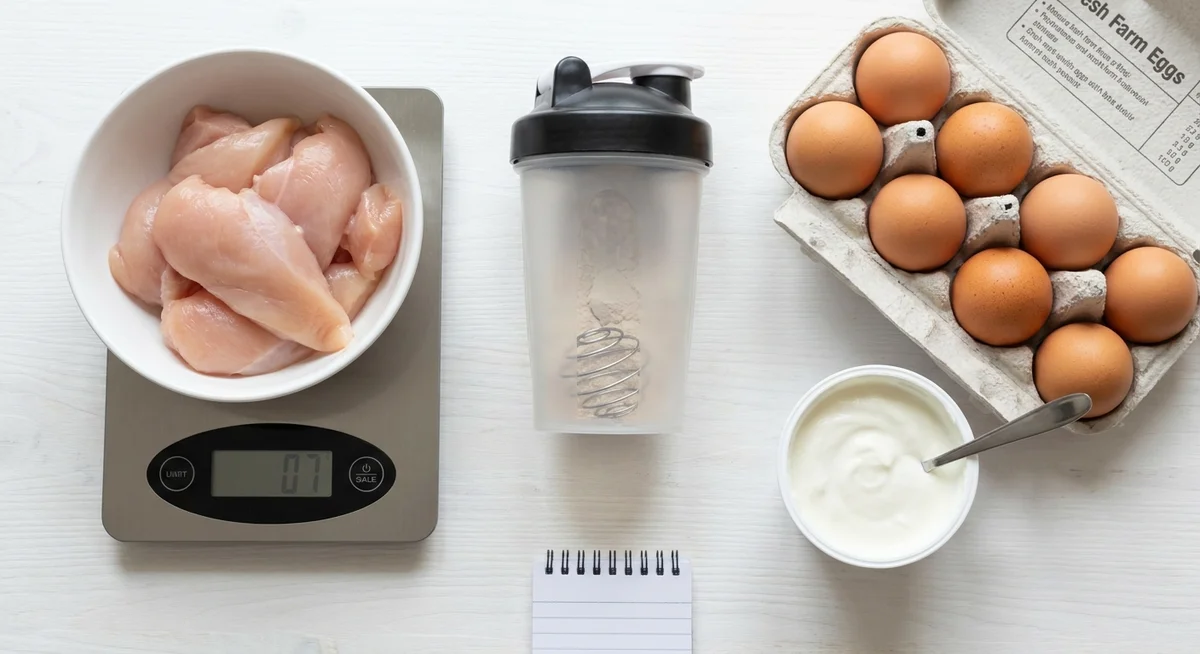
The practical problem is that eating enough protein from whole foods alone gets harder as total calories drop. A 2,000 kJ meal of chicken breast and vegetables provides plenty of protein but leaves little room for other macronutrients. This is where a well-chosen protein powder becomes genuinely useful: it gives you 20 to 30 g of high-quality protein for roughly 400 to 500 kJ, keeping you on target without eating up your calorie budget.
How much protein do you actually need in a deficit?
The standard recommendation of 0.8 g per kg of bodyweight was set for sedentary people with no intention of retaining muscle. If you train and you are in a calorie deficit, that number is not enough.
Current sports nutrition literature points to 1.6 to 2.4 g per kg as the effective range for people actively trying to preserve lean mass during fat loss. At the upper end, some studies of lean, resistance-trained athletes show benefit from intakes as high as 3.1 g per kg during very aggressive cuts. A practical starting point for most people: 2.0 g per kg of your target bodyweight (not your current bodyweight if you are significantly above your goal).
| Bodyweight | Minimum (1.6 g/kg) | Target (2.0 g/kg) | Upper range (2.4 g/kg) |
|---|---|---|---|
| 60 kg | 96 g | 120 g | 144 g |
| 75 kg | 120 g | 150 g | 180 g |
| 90 kg | 144 g | 180 g | 216 g |
| 105 kg | 168 g | 210 g | 252 g |
Hitting 180 g of protein from food alone on a 7,000 kJ deficit budget is genuinely difficult. Two scoops of protein powder across the day can contribute 40 to 50 g of that total for under 1,000 kJ. That flexibility is hard to replicate with whole food alone without sacrificing dietary variety.
Which protein powder works best in a calorie deficit?
The answer depends on when and how you use it. For immediate post-training use and general daytime meals, whey protein concentrate or whey isolate is the most practical choice: it digests quickly, has a high leucine content (the amino acid most directly linked to muscle protein synthesis), and mixes easily. You can read more about the difference between these two options in our guide to whey isolate vs concentrate.
Better for a deficit
- Whey isolate: lowest calorie per gram of protein, minimal fat and carbs
- Casein: slow-digesting, extends satiety for hours (strong choice before bed or for replacing a meal)
- Whey concentrate: slightly more calories than isolate but still efficient; often cheaper
Use with caution
- Mass gainers: designed for a calorie surplus; often 1,500+ kJ per serve
- Flavoured powders with added sugars: can sneak in 8 to 15 g of sugar per serve
- Meal replacement blends: check the label carefully; some are low-calorie, many are not
For people avoiding dairy, a pea protein isolate is the strongest plant-based option in a deficit: it has a solid leucine profile, high protein density, and minimal carbohydrates compared to hemp or brown rice. Our breakdown of pea, rice, hemp, and soy proteins covers this in detail.
Timing protein powder for maximum muscle retention
In a calorie surplus, meal timing matters relatively little. In a deficit, it matters more. Here is why: muscle protein synthesis rates drop faster between meals when total calorie intake is low, so long gaps without protein intake give the body more opportunity to break down muscle tissue for fuel.
Aim to spread your total daily protein across 3 to 4 meals or snacks, each containing 30 to 40 g of protein. This keeps muscle protein synthesis elevated throughout the day. A protein shake between meals or as a pre-bed snack (casein works well here) fills the gaps that are hard to cover with whole food alone. For a full breakdown of timing strategies, see our article on when to take protein powder for best results.
Common mistakes that cost you muscle on a cut
Cutting protein too aggressively is the most common error. When food costs go up and grocery budgets tighten, high-protein whole foods like salmon and lean beef are often the first to go. Keeping a tub of protein powder on hand is a cheap insurance policy: two scoops often cost less per serve than a single chicken breast.
The second mistake is relying on protein powder to replace structured meals entirely. A shake is a supplement to a diet, not a diet in itself. Whole foods contribute fibre, micronutrients, and food volume that improve satiety and overall health. Use protein powder to top up, not to opt out of eating real food.
The third mistake is skipping resistance training while cutting. Without the training signal telling the body to preserve muscle, even high protein intake cannot fully prevent loss. Protein and training work together; neither one alone is enough.
Frequently asked questions
Can protein powder actually help me lose fat faster?
Protein itself has a higher thermic effect than carbohydrates or fat, meaning your body burns more calories digesting it. High protein intake also reduces appetite by affecting satiety hormones. Neither effect is dramatic on its own, but across weeks and months, these small advantages add up. Protein powder is a delivery mechanism for that protein, not a fat-loss drug.
How many shakes per day is too many?
For most people, one to two shakes per day is a practical ceiling. Beyond that, you are crowding out whole foods that provide fibre and micronutrients your body needs. If you are hitting your protein targets from food, you may not need a shake at all. Use them to fill genuine gaps, not to replace meals by default.
Will protein powder stop working if I use it every day?
No. Protein does not lose effectiveness with consistent use. There is no adaptation or tolerance effect. What can change over time is body composition: as you get leaner, maintaining muscle requires increasingly precise training and nutrition, not cycling off protein powder.
Is vanilla protein powder a good choice for a calorie deficit?
Yes, provided you read the label. A quality vanilla protein powder typically sits at 100 to 130 calories per serve with 20 to 25 g of protein and minimal added sugar. It is also the most versatile flavour for cooking and smoothies, which helps with diet adherence over a long cut. Check our guide to vanilla protein powder for what to look for before you buy.
Find the right protein powder for your deficitSee what to look for in a quality vanilla protein powder before you commit to a tub.