Natural Protein Powder: What It Really Means
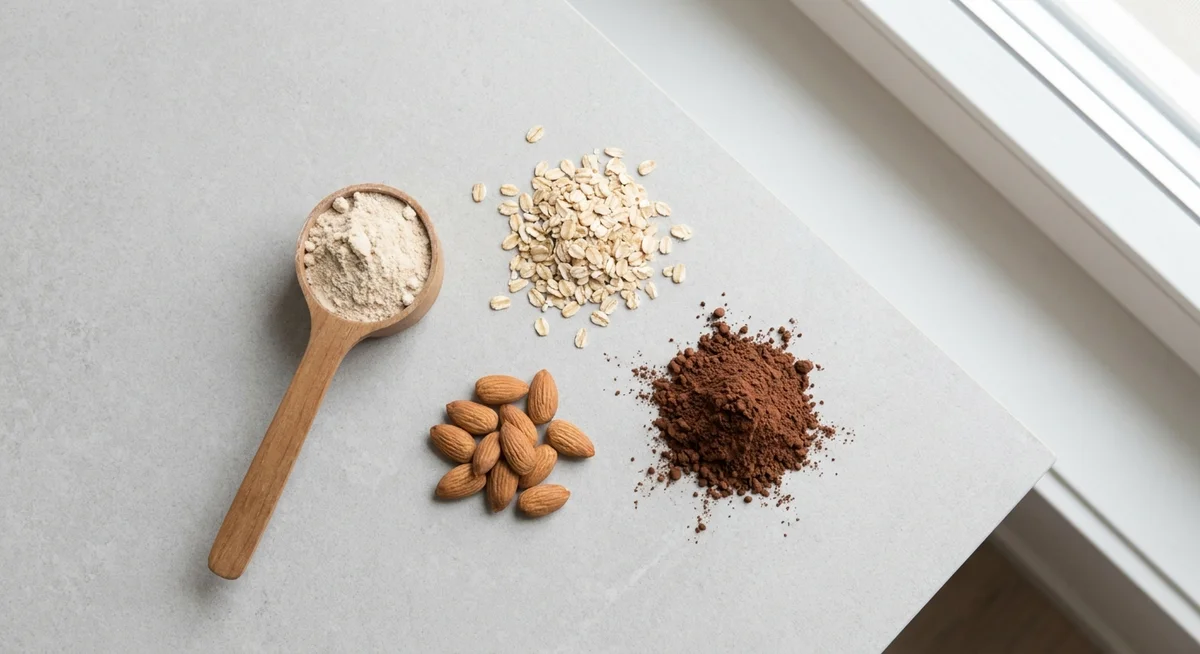
Natural protein powder is protein powder made without artificial sweeteners, colours, flavours, or synthetic additives. In practice, "natural" is a marketing term with no formal legal definition in Australia, so two products can carry the same word on their tubs and have very different ingredient lists. Knowing what to look for lets you cut through the noise and choose a powder that actually matches the label.
What Does "Natural" on a Protein Powder Label Actually Mean?
In Australia, Food Standards Australia New Zealand (FSANZ) does not regulate the word "natural" on food packaging the way it controls health claims or nutrition content claims. Manufacturers can use it without meeting a defined standard, which means the word alone tells you almost nothing.
What the term generally signals in practice is that a product avoids:
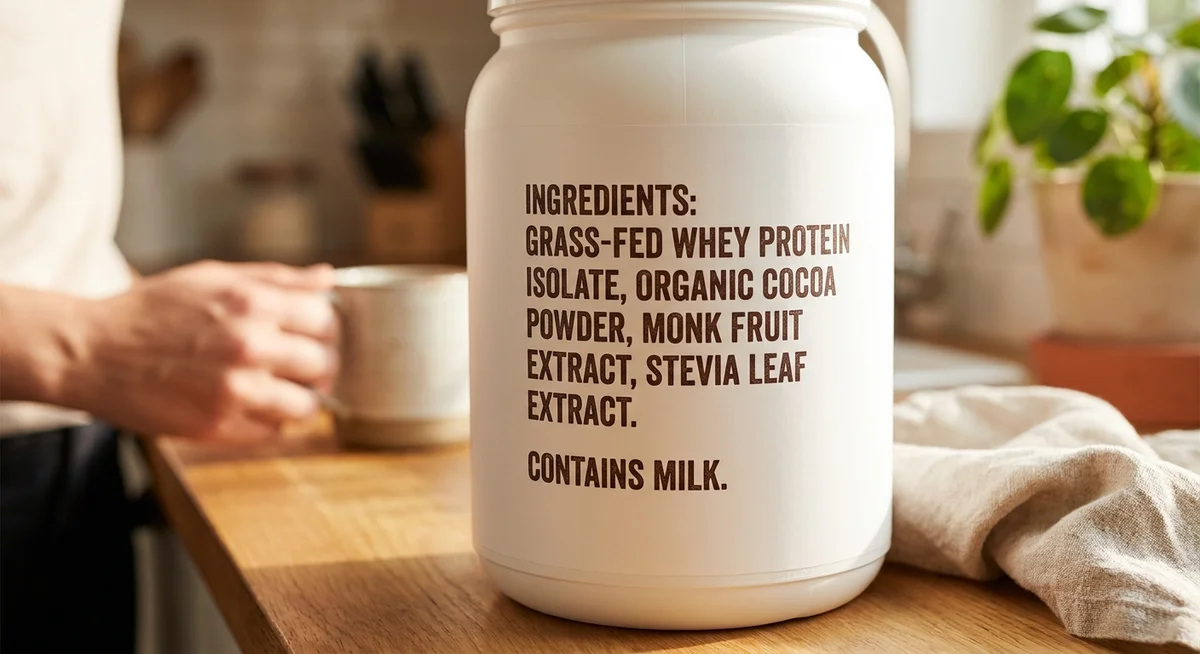
The only reliable way to verify whether a protein powder is genuinely natural is to read the ingredient list, not the front-of-pack claims. Our guide on how to read a protein powder nutrition label walks you through exactly what each line means and where the common shortcuts are hidden.
Which Sweeteners Count as Natural?
Sweeteners are where "natural" protein powders vary most. The most common natural options you will see are:
Stevia
Derived from the leaves of the Stevia rebaudiana plant. Stevia glycosides (rebaudioside A is the most refined form) are extracted and concentrated. Most nutritionists consider it a natural sweetener. At high doses it can leave a bitter aftertaste, which is why many products blend it with other sweeteners.
Monk Fruit (Luo Han Guo)
Extracted from a small melon grown in southern China. The active compounds are mogrosides, which are 150 to 200 times sweeter than sugar. Monk fruit has no known negative effects at typical serving doses and is increasingly common in premium natural protein powders.
Coconut Sugar and Rice Malt Syrup
These are whole-food sweeteners that add a small amount of carbohydrate alongside sweetness. They keep the ingredient list clean but do raise the carbohydrate and calorie count slightly compared to stevia or monk fruit. Worth checking the nutrition panel if you are tracking macros closely.
What to Avoid
Sucralose, Ace-K, and aspartame are the three artificial sweeteners most common in mainstream protein powders. They are not dangerous at the amounts found in one serve, but if avoiding synthetic additives matters to you, check the ingredient list for these names or their additive numbers (955, 950, 951).
Which Protein Sources Are Considered Natural?
The protein base itself also matters when assessing how "natural" a product really is.
Whey Protein (Concentrate and Isolate)
Whey is a by-product of cheese manufacturing, making it a minimally processed dairy protein. Whey concentrate undergoes less processing than isolate, retaining more of the naturally occurring fats and lactose from milk. Whey isolate is filtered further to push protein content above 85%, removing most lactose. Both are considered natural protein sources. For a detailed breakdown of the differences, see our article on whey isolate vs concentrate.
Plant Proteins
Pea protein, brown rice protein, hemp protein, and soy protein are all derived from whole food sources with minimal chemical processing. Pea protein is the most popular in natural plant-based formulas because it has a solid amino acid profile and mixes well. Combining pea and rice protein is a common strategy to cover the amino acids each one lacks individually. Read our comparison of plant protein vs whey for a full look at how they stack up on nutrition and digestibility.
Casein
Like whey, casein comes from cow's milk. It is a slower-digesting protein because it forms a gel in the stomach. Casein from non-GMO or grass-fed sources is commonly marketed as natural casein protein.
Collagen Protein
Bovine or marine collagen is derived from animal hides, bones, or fish scales through a hydrolysis process. It is technically a natural protein but is not a complete protein (it lacks tryptophan), so it is best used as a supplement alongside a complete protein source rather than a primary powder.
Reading the Label: A Practical Checklist
When you pick up a tub claiming to be natural, run through these four checks before buying:
If you want a deeper look at how to apply this checklist at the shelf, our nutrition label reading guide covers the full panel step by step.
Is Natural Protein Powder Better for You?
Not automatically. "Natural" speaks to the ingredients, not the quality of the protein itself. A natural plant protein blend with a poor amino acid profile is less useful for muscle protein synthesis than a conventional whey isolate with sucralose. If your goal is performance, the amino acid profile and protein percentage matter more than whether the sweetener came from a leaf or a lab.
Where natural protein powder has a genuine advantage is for people with sensitivities to artificial sweeteners (some report digestive discomfort with sucralose at high doses), for those following a clean eating approach, or for anyone who simply prefers a shorter ingredient list. Those are all valid reasons to choose natural. Just weigh them alongside the protein quality metrics, not instead of them.
Frequently Asked Questions
Is natural protein powder safe?
Yes. Natural protein powders use ingredients with long histories of safe use, including dairy proteins, plant proteins, stevia, and monk fruit. As with any supplement, check the total protein intake across your whole diet. Most Australian adults do not need more than 1.6 to 2.2 grams per kilogram of body weight per day for muscle building goals.
Does natural protein powder taste worse than regular protein powder?
It can taste different, particularly if it uses stevia, which has a slightly bitter finish at higher concentrations. Many brands have improved their natural formulas significantly in recent years. Monk fruit-sweetened products tend to have a cleaner finish. Sample sachets are worth trying before committing to a 1 kg tub.
Can I use natural protein powder for weight loss?
Protein powder, natural or otherwise, supports weight loss primarily by helping you hit your daily protein target while keeping calories in check. Natural versions with no added sugars and a high protein percentage per serve are well suited to this goal. The broader strategy of protein intake, calorie control, and training matters far more than whether the sweetener is synthetic.
Are natural protein powders more expensive?
Generally yes, by around 10 to 30% compared to equivalent products using artificial sweeteners. The cost difference comes from more expensive natural sweetener ingredients and, in some cases, higher quality protein sources like grass-fed whey. Whether that premium is worth it depends on your priorities: if avoiding artificial additives matters to you, the difference is usually a few dollars per week at normal serving sizes.