Protein Powder for Basketball Players: How to Fuel Training and Recover Faster

Basketball is one of the most physically demanding team sports. A single game can involve 50 to 150 high-intensity sprints, repeated jumping, physical contact under the boards, and 40-plus minutes of sustained effort. That combination of explosive power and aerobic capacity puts serious strain on muscle tissue, and getting enough protein is what separates players who bounce back quickly from those who drag through the next practice.
Key takeaways
- Basketball players typically need 1.6 to 2.2 g of protein per kilogram of body weight per day.
- Whey isolate is the best choice post-game or post-training because it absorbs fast and drives muscle protein synthesis quickly.
- Casein works well before bed to sustain recovery during the long overnight window.
- Timing matters: aim for 25 to 40 g of protein within 30 to 60 minutes after a session.
- Plant-based players can get full coverage with a pea-and-rice blend or a quality soy formula.
How much protein does a basketball player actually need?
Most recreational basketball players need around 1.6 g of protein per kilogram of body weight per day. Competitive players training twice daily, or those in a muscle-building phase, benefit from pushing that to 2.0 to 2.2 g/kg. For a 90 kg player, that's 144 to 198 g of protein every day, which is genuinely difficult to hit from whole food alone during a heavy schedule. That's where protein powder fills a real gap, not just a marketing one.
Spreading intake across four to five meals or snacks is more effective than cramming it into one or two big hits. Research consistently shows that 25 to 40 g per serving is the sweet spot for stimulating muscle protein synthesis in most adults, with larger athletes sitting toward the upper end of that range.
Which protein powder is best for basketball players?
The answer depends on when you're taking it and what your diet already looks like. Here's how the main options compare for the specific demands of the sport.
| Protein Type | Best Timing | Key Benefit for Basketball | Watch Out For |
|---|---|---|---|
| Whey Isolate | Post-training, post-game | Fast absorption, high leucine content to kick-start repair | Not ideal for lactose intolerance without hydrolysed version |
| Whey Concentrate | Post-training, between meals | Cost-effective, good amino acid profile | Slightly more fat and lactose than isolate |
| Casein | Before bed | Slow digestion sustains overnight muscle repair | Too slow when you need quick post-game recovery |
| Pea + Rice Blend | Any time | Complete amino acid profile, dairy-free | Slightly grainier texture; check leucine content |
| Soy Isolate | Post-training, before bed | Complete plant protein with solid leucine levels | Some players prefer to limit phytoestrogens |
If you're only buying one tub, a quality whey isolate covers the most bases. It's fast, versatile, and backed by the strongest body of evidence for supporting muscle repair after high-intensity sport.
When should basketball players take protein powder?
Timing protein around your training and games gives you the most return on each serve. Here's a practical framework for a typical training day:
High-priority windows
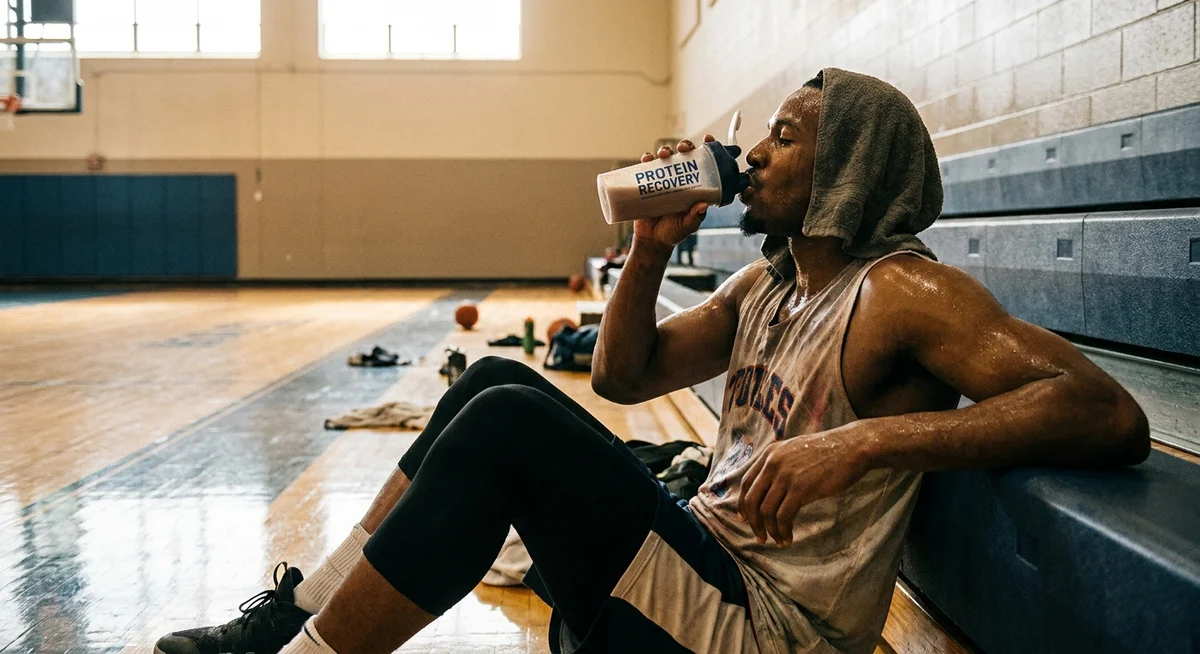
- Within 30-60 minutes post-session: 25 to 40 g whey isolate to start the repair process while muscles are most receptive.
- Before bed: 30 to 40 g casein to sustain amino acid delivery across the 7-8 hour overnight fast. This window is often the most underused by recreational players.
- On back-to-back game days: Add a shake between meals to keep daily totals up without relying on heavy food that slows you down.
Lower-priority windows
- Pre-training (1-2 hours before): Only necessary if you haven't eaten in three or more hours. A small meal with protein works just as well.
- Mid-game: Not practical and not needed. Save the shake for after the buzzer.
- Rest days: Total daily protein still matters on off days, but timing is much less critical. Spread intake across regular meals.
What about hydration and carbohydrates?
Protein doesn't work in isolation. Basketball burns through glycogen quickly, so pairing your post-game shake with 40 to 80 g of fast carbohydrates (fruit, rice cakes, a banana) restores muscle glycogen and helps protein get to work faster. Dehydration blunts muscle protein synthesis, so replacing fluids before reaching for a shake is always step one after a session.
Players who are trying to add muscle mass should prioritise a calorie surplus on training days, using protein powder as a convenient top-up rather than a meal replacement. Those focused on staying lean while maintaining strength can use shakes to hit protein targets without adding excess calories from fat and carbs.
Plant-based options for basketball players
Dairy-free players aren't at a disadvantage, provided they choose well. A pea-and-rice blend delivers a complete amino acid profile that closely matches whey in several head-to-head studies. Look for a product with at least 2.5 g of leucine per serving (check the label) to ensure it stimulates muscle protein synthesis at the same rate as an equivalent whey dose. Vegan protein options have improved dramatically in taste and mixability over the past few years, so there's no reason to accept a formula that tastes like cardboard.
Frequently asked questions
Can a basketball player take protein powder every day?
Yes, and for players training most days of the week, daily use is normal. Protein powder is a food supplement, not a drug. The relevant question is whether your total daily protein intake is appropriate for your training load, not how many days per week you use a shake to hit that number. Daily use is fine for healthy adults at standard doses.
How much protein powder should a basketball player take per day?
Most players need one to two shakes per day to bridge the gap between food intake and their protein target. One 30-35 g serve post-session and one 30-40 g serve of casein before bed covers the two highest-value windows without overdoing it. If your whole-food intake is already high, one shake may be enough.
Is whey protein safe for younger basketball players?
For teenagers 16 and older who are training regularly, whey protein is generally considered safe at normal doses. Younger players should prioritise whole food first and consult a sports dietitian before adding supplements. Check out the detailed breakdown in our guide on protein powder for teenagers before making a call.
Does protein powder help with soreness after games?
It helps indirectly. Muscle soreness after a hard game or training session is partly caused by micro-damage to muscle fibres. Adequate protein gives your body the amino acids it needs to repair that damage faster. Studies on post-exercise protein intake consistently show reduced markers of muscle damage and faster recovery of strength output in the days following a session, which matters a lot when games come every two or three days.
Find a protein powder worth buyingRead our in-depth guide to vanilla protein powder and what to look for on the label before you commit to a tub.