Protein Powder for Vegans: How to Get Complete Protein From Plants
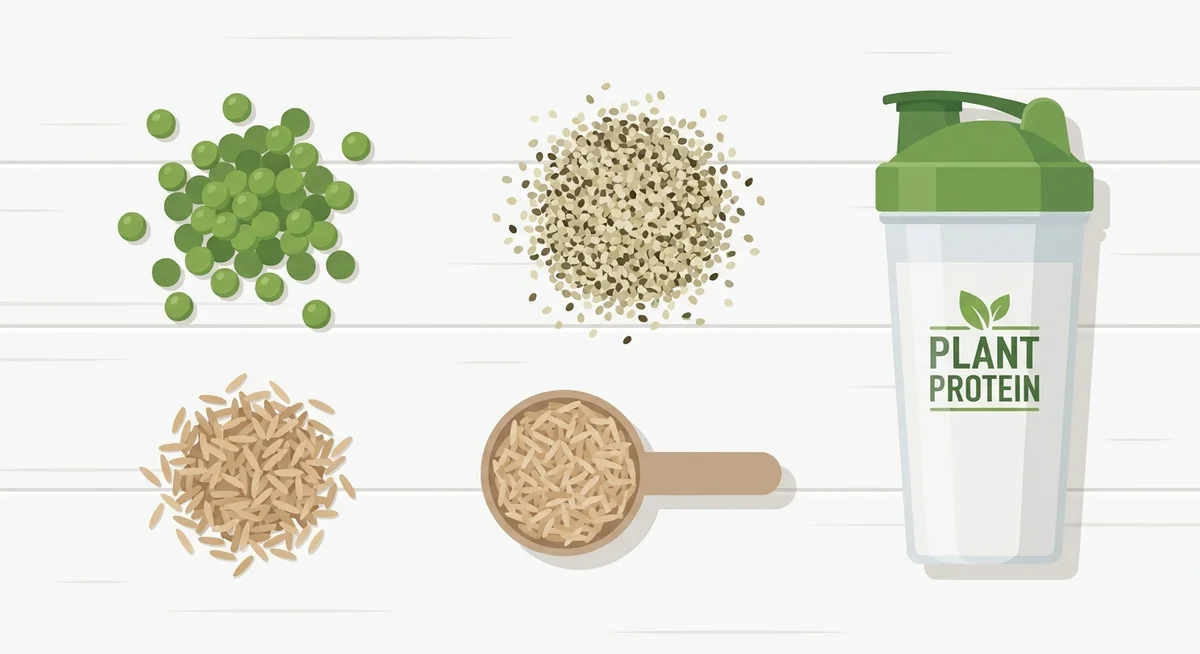
Vegan protein powder can fully support muscle growth and recovery, but the type you choose matters more than most people realise. Because individual plant proteins are often low in one or two essential amino acids, getting a complete profile requires either a blended formula or a strategic pairing. This guide covers what to look for, which proteins to compare, and how to hit your daily targets on a fully plant-based diet.
Key takeaways
- Most single-source plant proteins are incomplete - they fall short on at least one essential amino acid.
- Blended formulas (pea + rice is the most common) cover the full amino acid profile reliably.
- Leucine content is the key number to check: you need at least 2.5g per serve to trigger muscle protein synthesis.
- Digestibility scores (DIAAS) are lower for plant proteins, so you may need 10-15% more total protein per day to compensate.
- Flavour and texture improve significantly with blended powders compared to single-source options.
Why do plant proteins get flagged as incomplete?
A protein is called "complete" when it supplies all nine essential amino acids in amounts your body can actually use. Animal proteins do this naturally. Most plant proteins don't - not because the amino acids are missing entirely, but because the ratios are off. Pea protein, for example, is high in arginine and lysine but relatively low in methionine. Rice protein sits at the opposite end: good methionine, weaker lysine. Combine them, and those gaps close.
This is why a blended pea-rice powder is the gold standard for vegan athletes. Studies comparing a 70:30 pea-rice blend with whey have found similar muscle gains over 8-week resistance training programs, provided total protein intake is matched. The old idea that plant protein is automatically inferior has not held up to modern research.
Which vegan protein powders are worth comparing?
There are five main plant protein sources you'll see on labels in Australia. Here's how they stack up on the metrics that matter for performance:
| Protein Source | Protein per 30g Serve | Complete Profile? | Leucine per Serve | Best For |
|---|---|---|---|---|
| Pea (isolate) | ~24g | No (low methionine) | ~1.9g | Bulking, high-volume training |
| Rice (concentrate) | ~22g | No (low lysine) | ~1.7g | Pairing with pea or soy |
| Pea + Rice blend | ~23g | Yes | ~2.5g | All-purpose muscle and recovery |
| Soy (isolate) | ~25g | Yes | ~2.3g | Budget-friendly complete option |
| Hemp | ~12-15g | Near-complete | ~1.0g | Whole-food nutrition, not primary protein source |
How much protein do vegans actually need per day?
The general recommendation for active adults is 1.6 to 2.2g of protein per kilogram of bodyweight per day. For vegans, most sports dietitians suggest targeting the higher end of that range - around 1.8 to 2.2g per kg - because plant proteins have lower digestibility scores than animal proteins. The DIAAS (Digestible Indispensable Amino Acid Score) for pea protein sits around 0.82 compared to 1.09 for whey, meaning your body absorbs a smaller proportion of what you consume.
In practical terms, a 75kg vegan aiming for 2.0g per kg needs around 150g of protein per day. Two shakes using a quality pea-rice blend contribute roughly 46g - about 30% of the daily total. The rest comes from whole foods: lentils, tofu, tempeh, chickpeas, edamame, and seitan are all high-density options. Understanding how much protein you actually need per day helps you plan your food and supplementation without over-relying on powder alone.
Does soy protein affect hormones?
This is the most common concern people raise about soy, and the short answer is: no, at typical dietary doses. Soy contains phytoestrogens (isoflavones), which are plant compounds that interact weakly with estrogen receptors. Multiple clinical trials have found no significant effect on testosterone, estrogen, or reproductive hormones in men or women consuming soy protein at normal supplement amounts (20-40g per day). High-dose soy consumption well above typical use is a different story, but it's not a realistic concern for people using one or two scoops a day.
Pros of soy protein
- Complete amino acid profile, no blending needed
- Higher leucine than pea or rice alone
- Usually the most affordable plant option
- Decades of safety research behind it
Cons of soy protein
- Common allergen - not suitable for everyone
- Can cause bloating in sensitive individuals
- Most soy crops are genetically modified (if this matters to you, look for non-GMO labelling)
- Phytoestrogen concern lingers despite evidence to the contrary
What else should you check on the label?
Beyond protein content and amino acid profile, a few other label details matter for vegans specifically. Watch for added digestive enzymes (protease, amylase) - these are often included in plant blends to compensate for lower natural digestibility and are worth paying a little more for. Check that the sweetener and flavouring is suitable: most reputable brands use stevia or monk fruit, both vegan-friendly. If you're also watching your carbohydrate intake, note that pea protein naturally carries more carbs than whey isolate. Reading a protein powder nutrition label correctly takes about 30 seconds once you know what to look for.
Also consider third-party testing. Heavy metal contamination is more common in plant proteins than animal proteins, because plants absorb metals from soil during growth. Look for a brand that carries Informed Sport, NSF Certified for Sport, or a similar independent certification. The best protein powders available in Australia from reputable brands generally publish third-party test results openly.
Frequently asked questions
Can I build the same amount of muscle with vegan protein powder as with whey?
Yes, with two conditions: choose a complete protein (a pea-rice blend or soy isolate), and match or slightly exceed the protein doses used in whey studies. Research comparing pea protein with whey in resistance-trained men found no significant difference in muscle gain over 12 weeks. The gap between plant and animal protein largely disappears when total leucine and total protein intake are equalised.
Is a pea-rice blend better than soy protein for vegans?
Both are solid choices. Pea-rice blends avoid the soy allergen concern and tend to have better textures. Soy isolate offers a complete profile in a single source and is usually cheaper. If you have no soy allergy and tolerate it well, either option works. Many people find pea-rice blends easier on digestion.
How do I know if a vegan protein powder has enough leucine per serve?
Check the amino acid profile on the product page - most quality brands publish it. You're looking for at least 2g of leucine per serve, ideally 2.5g or more. If the label doesn't list amino acids, use the general rule: a 25g protein serve from a pea-rice blend delivers roughly 2.3-2.6g of leucine. Anything significantly below 25g of protein per serve may not hit that threshold without a larger dose.
Can I mix vegan protein powder with non-dairy milk to improve the amino acid profile?
Yes, and it's a simple way to boost the amino acid profile further. Oat milk adds some protein and carbohydrates. Soy milk adds around 7-8g of complete protein per 250ml serve. Even almond milk (though lower in protein) contributes small amounts. Adding soy milk to a pea-rice shake pushes the leucine content well above the 2.5g threshold without changing the flavour much.
Compare our vanilla protein powder optionsSee nutrition panels, amino acid profiles, and flavour notes to find the right fit for a plant-based diet.