Buying Guide
Vanilla Protein Powder:
What to Know Before You Buy
Vanilla is Australia's most bought protein flavour, which also means it's the most inconsistent. Some versions taste genuinely good and deliver clean nutrition. Others are chalky, artificially sweet and padded with fillers. This guide explains how to read the label and spot the difference.
In this guide
Why vanilla is the benchmark flavour
Walk into any Australian sports nutrition store and vanilla will outsell every other flavour. That's not because it's the most exciting option. It's because vanilla is the most versatile. It blends quietly into oats, smoothies, baking and milk without competing with other ingredients. It's also the flavour most people fall back on after getting burned by something too sweet or too artificial.
That versatility also makes vanilla the best test of a protein powder's overall quality. A bad chocolate flavour can hide poor-quality protein under a heavy cocoa hit. Vanilla can't. If the base protein is chalky, gritty or low grade, a vanilla formulation will expose it immediately.
When you're comparing products, lead with the vanilla. If the vanilla is good, the rest of the range usually is too.
Natural vs artificial vanilla: what's actually in your tub
Most vanilla protein powders do not contain real vanilla bean extract. The majority use artificial vanilla flavour (vanillin), which is a synthetic compound that mimics the dominant compound in real vanilla at a fraction of the cost. That's not automatically a problem, but it's worth knowing.
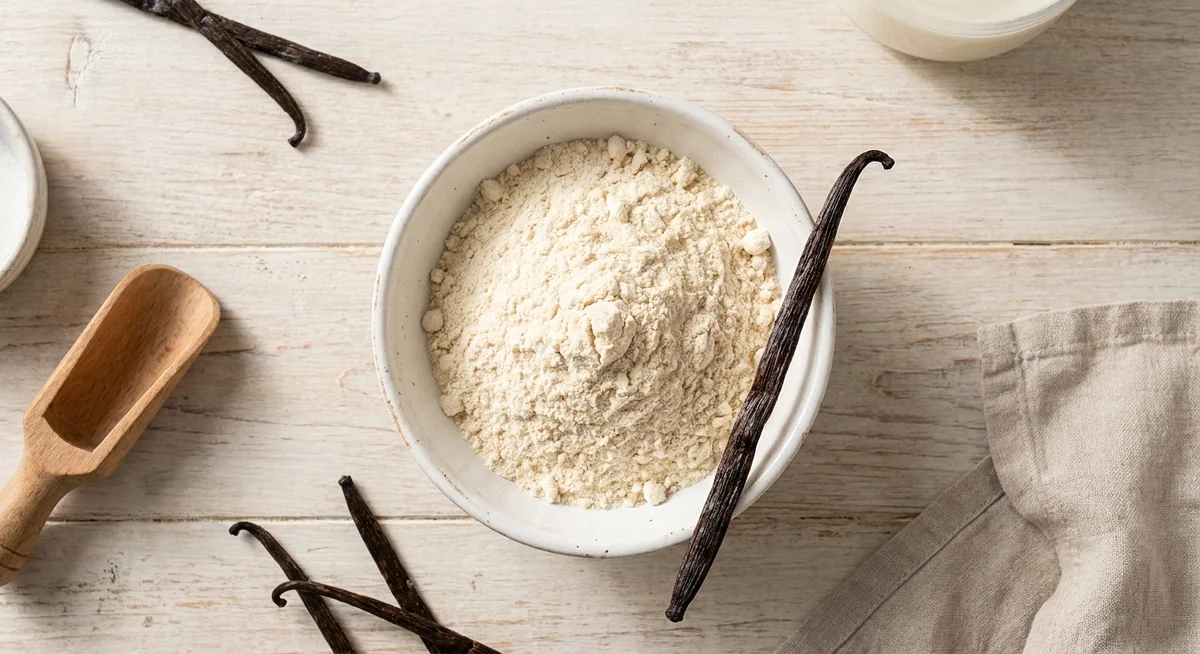
Real vanilla extract comes from the seed pods of Vanilla planifolia orchids. It contains over 200 flavour compounds, which is why it tastes richer and more complex than synthetic vanillin. Products that use real vanilla will often say "natural vanilla flavour" or "vanilla bean extract" on the label and tend to cost more.
The ingredient list is your first reference point. Look for:
- ✓ Vanilla bean extract or natural vanilla flavour — higher quality, more complex taste.
- ✓ Vanillin — synthetic, fine for most people, widely used across mid-range products.
- ✗ "Flavour" with no further description — vague, and usually means artificial.
If you're sensitive to artificial sweeteners or prefer cleaner formulations, paying attention to this distinction will save you a lot of trial and error.
"A bad chocolate can hide behind cocoa. Vanilla can't hide anything. It's the truest test of a protein powder's quality."
Which protein form suits vanilla best
The protein base matters as much as the flavouring. Different forms have different textures, solubilities and natural tastes that interact with vanilla in different ways.
Whey Isolate
The cleanest base for vanilla. Whey isolate has minimal fat and lactose, which means it doesn't bring much of its own flavour. Vanilla has room to come through clearly. Protein content is typically 88-92% per 100g. If you want a vanilla protein that tastes like vanilla rather than slightly-sweetened dairy, isolate is the right base.
Whey Concentrate
Concentrate has more fat and lactose than isolate, which gives it a creamier, slightly milky taste. Vanilla concentrate products often taste richer but can feel heavier. Protein content runs 70-80% per 100g. A good pick for people who want a creamier shake and tolerate dairy well.
Plant Protein
Pea and rice blends are the most common plant bases for vanilla. They have an earthy, slightly grassy undertone that vanilla can struggle to mask. Better plant protein brands invest more in flavouring to balance this. If you're dairy-free, vanilla pea protein is workable, though it rarely matches the clean taste of a good whey isolate vanilla.
Casein
Casein is thick and slow-digesting, which makes it popular for overnight use. Vanilla casein has a custard-like consistency when mixed with a smaller amount of water. The flavour tends to be sweeter than whey-based equivalents. Worth considering if you use protein powder as a dessert replacement or bedtime snack.
What to check on the label
The front of a protein tub tells you almost nothing useful. The back label, specifically the nutrition panel and ingredients list, is where the real information is. Here's what to look for in a vanilla protein powder:
Protein per 100g (not per serve)
Serving sizes vary widely between brands. Always compare protein per 100g. A quality whey isolate should deliver 85g or more per 100g. Below 75g per 100g suggests a lower-quality protein base or significant filler content.
Ingredient order
Ingredients are listed by weight, descending. The protein source should be first. If maltodextrin, thickeners or starches appear before the flavouring, the product is padded. Good vanilla protein powders have short, readable ingredient lists.
Sugar content
Some vanilla protein powders use added sugar to improve taste cheaply. Under 3g per serve is acceptable. Over 6g per serve starts defeating the purpose if you're using protein powder as part of a weight management routine. Check the per-100g column.
Leucine and BCAA content
Whey naturally contains a good leucine profile (around 10-11% of total protein), which triggers muscle protein synthesis. Some products list their BCAA breakdown on the label. If a product uses added BCAAs to inflate its amino acid numbers while using a lower-quality base protein, that's a red flag.
Sweeteners and taste
Most vanilla protein powders are sweetened. The question is how. The three most common options in Australian products are:
Stevia is derived from the stevia plant and is the most common natural sweetener in protein powders. It has no calories and a clean sweetness, but some people find it leaves a bitter or liquorice-like aftertaste, particularly in higher concentrations. The taste varies noticeably between brands depending on how much they use.
Sucralose is artificial and around 600 times sweeter than sugar. It's very widely used because it's stable under heat, has no aftertaste at low doses and blends well. It's the most common sweetener in mainstream Australian protein products. Most people tolerate it well, though those avoiding artificial additives prefer stevia or monk fruit.
Monk fruit extract is less common but growing in use. It's natural, calorie-free and generally considered to have the least intrusive aftertaste. Premium products are increasingly using it as their primary sweetener.
For vanilla specifically, sweetener choice makes a bigger difference than in darker flavours. A heavy sucralose dose in a vanilla product can make it taste synthetic. A well-balanced stevia or monk fruit blend will let the vanilla flavour itself do the work.
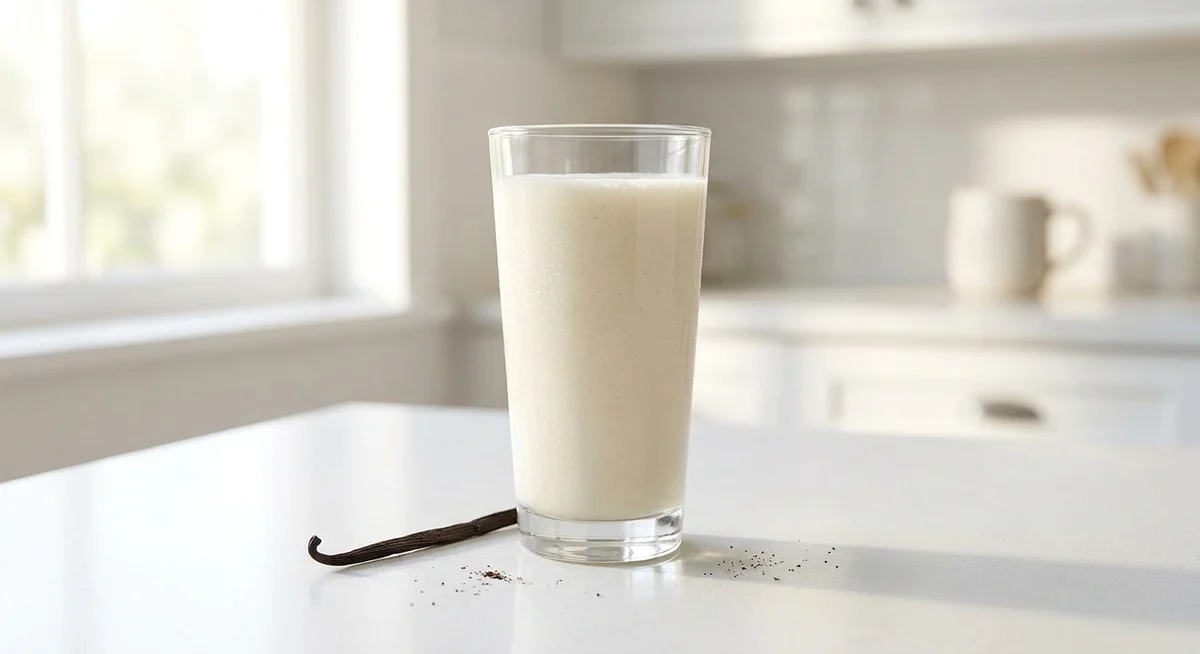
Vanilla protein works well in smoothies because it complements other ingredients without overpowering them.
Best ways to use vanilla protein powder
Vanilla's neutrality makes it more useful in the kitchen than most other flavours. A few practical applications:
With oats
Stir a scoop into overnight oats or cooked porridge. Vanilla works better here than chocolate because it doesn't compete with the oat flavour.
In smoothies
Pairs well with banana, berries, mango, almond butter or spinach without overwhelming the other ingredients. Chocolate protein can clash; vanilla sits back.
In baking
Vanilla protein blends naturally into muffins, pancakes and protein balls. Use it to replace 25-30% of the flour in a recipe. It adds flavour rather than fighting the other ingredients.
Straight with milk
A quality vanilla isolate shaken with cold milk or almond milk needs nothing else. It should taste clean and slightly sweet, not chalky or artificial.
Editor's note
A vanilla we keep coming back to
The Whey Co Isolate 90 in vanilla consistently comes up when we talk about products that don't overcomplicate things. It uses whey isolate as the only protein source (no cheap concentrate blend), delivers 90g of protein per 100g, and uses natural vanilla flavour rather than heavy synthetic sweeteners. The ingredient list is short and honest.
It's not the cheapest option in Australia, but it's one of the few vanilla proteins we'd confidently recommend to someone who's been burned by inferior products before. Read more in our Best Protein Powder Australia guide.
Frequently asked questions
Is vanilla protein powder good for weight loss?
Vanilla protein powder can support weight loss when it replaces a higher-calorie meal or snack, and when the product itself is low in added sugar and fat. Look for a vanilla isolate with under 120 calories per serve. The protein content keeps you fuller for longer, which helps reduce overall calorie intake over the day. For more detail, see our protein powder for weight loss guide.
Why does my vanilla protein taste bitter or artificial?
The most common cause is too much stevia or a low-quality stevia extract. Stevia at high concentrations has a distinct bitter, almost liquorice-like aftertaste. Some people are more sensitive to it than others. Try switching to a product that uses sucralose or monk fruit, or one that uses a smaller amount of stevia blended with another sweetener. A low-quality protein base can also contribute a chalky or chemical taste regardless of the flavouring.
Can I bake with vanilla protein powder?
Yes, with some adjustments. Whey protein tightens when exposed to heat, so replacing too much flour will make baked goods dense and rubbery. A 25-30% substitution is a reliable starting point. Whey concentrate tends to bake better than isolate because the fat content keeps things moist. Casein actually performs very well in baking and produces a softer texture. Plant-based vanilla proteins also bake well and are a good option for dairy-free recipes.
How much vanilla protein powder should I have per day?
Protein powder is a supplement, not a meal replacement. Most people get enough protein from food alone. If you do use it, 1-2 serves per day is a reasonable range, contributing roughly 50-60g of additional protein. Your total daily protein target depends on your body weight and goals. Our daily protein guide explains the numbers in detail.