Protein Powder for Swimmers: How to Fuel Training and Speed Up Recovery
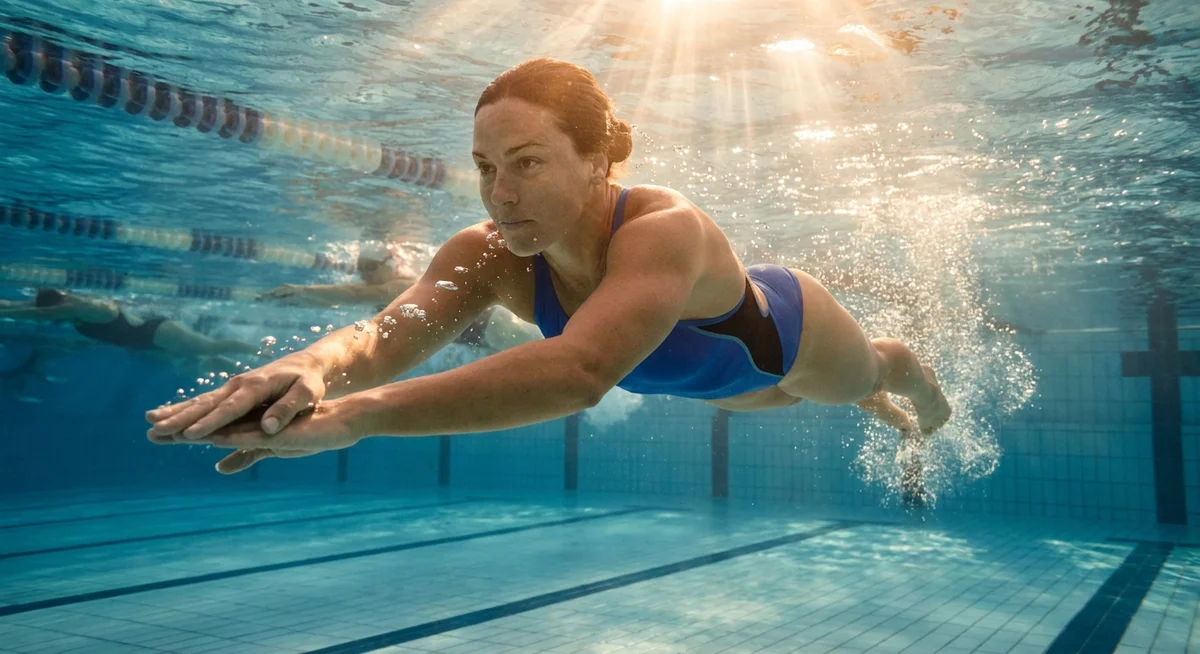
Swimming is a full-body sport that taxes the shoulders, lats, core, and legs simultaneously across every session. For competitive lap swimmers, triathletes, and open-water athletes, protein powder is a practical way to hit daily targets without loading up on heavy food before a pool session. The right formula, timed correctly, can shorten soreness, preserve lean muscle, and keep your stroke strong across a long training block.
Key takeaways
- Swimmers need 1.4 to 1.8 g of protein per kg of body weight on heavy training days.
- A fast-digesting whey shake within 30 to 60 minutes after training is the highest-leverage window.
- Plant-based blends (pea plus rice) match whey for recovery when dosed adequately.
- Avoid high-fat, high-fibre powders before pool sessions as they slow gastric emptying and can cause nausea.
- Collagen peptides taken pre-session may support shoulder and rotator-cuff connective tissue over time.
How much protein do swimmers actually need?
Research places endurance and strength-sport athletes at roughly 1.4 to 2.0 g per kg of body weight per day. Swimmers sit toward the middle of that range. A 70 kg competitive swimmer aiming for 1.6 g/kg needs around 112 g of protein daily. Spread across three meals and a post-session shake, that is very achievable, but whole food alone often falls short on double-session days when appetite is suppressed after heavy water work.
That gap is exactly where protein powder earns its place. A 25 to 30 g serve after training tops up muscle protein synthesis without requiring a full meal your gut might not want.

Which protein type works best for swimmers?
The sport does not demand one single formula. The best choice depends on your diet, your timing, and whether you have shoulder or joint issues that recur across a season.
| Protein Type | Best Use Case | Digestion Speed | Key Watch-Out |
|---|---|---|---|
| Whey concentrate | Post-session recovery, budget-conscious | Fast | Contains lactose; may cause bloating |
| Whey isolate | Post-session, lactose-sensitive swimmers | Fast | Slightly higher cost per serve |
| Casein | Overnight recovery after evening training | Slow (6 to 8 hrs) | Too heavy before morning sessions |
| Pea + rice blend | Vegan swimmers, complete amino profile | Moderate | Needs adequate dose (30 to 35 g) to match whey leucine |
| Collagen peptides | Joint and tendon support (shoulder health) | Fast | Incomplete amino acid profile; stack with another source |
For most swimmers, a quality whey isolate is the simplest post-session choice. If you train twice a day, consider adding a slower-digesting casein shake before bed to keep muscle protein synthesis elevated overnight. Our guide to casein protein powder covers what to look for on the label.
When should swimmers take protein powder?
Timing matters more in swimming than in some other sports because pool sessions are often scheduled at unsociable hours (5 am or 8 pm) when eating a full meal before or after is impractical.
For evening swimmers, a casein shake or a Greek yoghurt-based smoothie before bed covers the overnight repair window. Training twice a day? Prioritise the post-morning-session window first; that is when muscle protein synthesis is most responsive to dietary protein.
What about plant-based options for swimmers?
Plant-based protein blends have improved considerably. A pea and rice combination provides all nine essential amino acids and, at a 30 g dose, delivers leucine levels close enough to whey to trigger comparable muscle protein synthesis. If you follow a plant-based diet, look for blends that list both sources on the label rather than relying on a single plant source. Our breakdown of vegan protein options walks through the best pairings in detail.
Shoulder health: the case for collagen
Swimmer's shoulder is the most common overuse injury in the sport. Collagen peptides taken alongside vitamin C roughly 30 to 60 minutes before a session have shown promise in early research for supporting connective tissue repair. Collagen is not a replacement for a quality protein source (it lacks tryptophan), but as a targeted add-on during heavy shoulder-loading blocks, it is worth considering. See our full guide to collagen protein powder for sourcing and dosing advice.
What to avoid in a swim-specific protein powder
A few formulation choices that are fine for gym-goers can cause real problems in the water:
- High fibre content: Some plant proteins contain 5 to 8 g of fibre per serve. Taken close to a session, this slows digestion and increases the risk of GI discomfort mid-swim.
- MCT or added fats: Mass gainers and keto-focused blends with heavy fat content slow gastric emptying, which is the last thing you want before 4,000 metres of intervals.
- Excessive creatine stacking: Creatine is beneficial for sprint-dominant swimmers but can cause water retention that changes feel in the water. Evaluate separately from your protein choice.
- Artificial sweeteners in large doses: Some swimmers report bloating from high-dose sucralose or sorbitol, particularly when consuming multiple serves per day.
Frequently asked questions
Can I take protein powder before swimming?
A small, fast-digesting shake (15 to 20 g of whey isolate) 30 to 45 minutes before a session is fine for most swimmers. Avoid large servings, anything high in fat or fibre, or casein before training as these digest slowly and can cause nausea once you start flip-turning at speed.
How much protein do I need after a swim session?
Research consistently points to 20 to 40 g of high-quality protein in the post-exercise window as the dose that maximises muscle protein synthesis. For most swimmers, a 25 to 30 g serve of whey isolate mixed with water or milk covers this without needing to think too hard about it.
Is protein powder safe to use during a swim season?
Yes, provided you choose products that carry third-party testing certification (look for Informed Sport or HASTA logos on Australian-market tubs). These certifications confirm the product was tested for banned substances, which matters for competitive swimmers subject to anti-doping rules.
Do recreational swimmers need protein powder?
If you swim two to three times a week for general fitness and hit your daily protein target through whole food, a supplement is not essential. Where protein powder genuinely helps recreational swimmers is convenience: a quick shake after an early-morning session is faster and easier than cooking a high-protein breakfast before work.
Find a clean protein powder that works around your trainingBrowse our recommended vanilla protein powder and see what to look for on the label.