Casein Protein Powder: How to Pick the Right One
Casein protein powder does one thing that whey cannot: it releases amino acids slowly, over five to seven hours, keeping your muscles supplied through long gaps between meals and through the night. That single difference makes it the better choice in several situations, and the wrong choice in others. Knowing which is which will save you money and get you better results.
Key takeaways
- Casein gels in your stomach and drip-feeds amino acids for up to seven hours, making it ideal before sleep or during long fasting windows.
- Micellar casein is the gold-standard form; calcium caseinate is cheaper but slightly faster-digesting.
- Look for at least 24 g of protein per 30 g serve and less than 5 g of carbohydrates if your goal is body composition.
- Casein's thick texture makes it excellent in recipes, overnight oats, and puddings, not just shakes.
- People with a milk allergy must avoid casein; those with lactose intolerance usually tolerate it well because lactose content is minimal.
What exactly is casein, and how does it differ from whey?
Both casein and whey come from cow's milk. When milk is curdled during cheese-making, the solid curds become casein and the liquid runoff becomes whey. Casein makes up roughly 80 percent of the protein in milk; whey accounts for the remaining 20 percent.
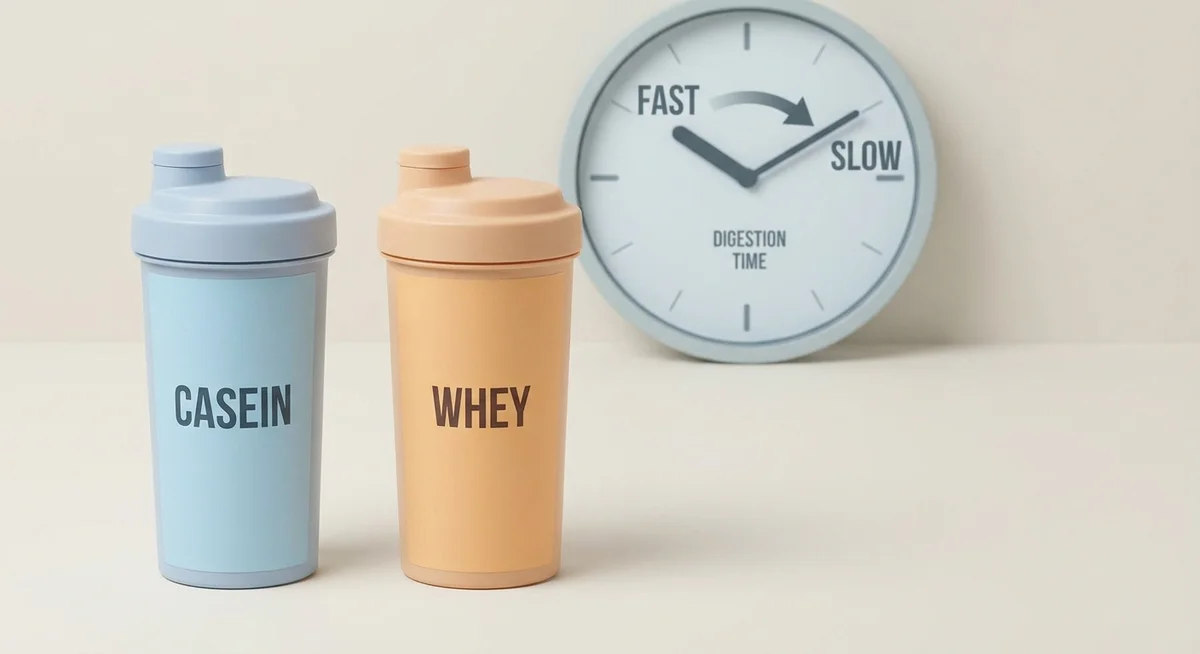
The key structural difference is how each protein behaves in acid. When casein hits the acidic environment of your stomach it clumps into a gel. That gel digests slowly, releasing leucine and other essential amino acids at a steady trickle rather than a flood. Whey, by contrast, stays soluble and races through your gut in around 90 minutes.
Neither is superior overall. Whey wins on post-workout speed; casein wins on sustained overnight delivery and on satiety. The best approach for serious trainers is to use both strategically rather than picking just one. For a full comparison of dairy protein options, see our guide on whey isolate vs concentrate.
Which form of casein should you buy?
Walk into any supplement aisle and you will see at least two forms. Here is what the labels actually mean.
| Form | How it's made | Digestion speed | Best for | Cost |
|---|---|---|---|---|
| Micellar casein | Cold-filtered from milk; retains native micelle structure | Slowest (5-7 hours) | Before sleep, long fasting gaps | Higher |
| Calcium caseinate | Acid-precipitated then treated with calcium hydroxide | Moderate (3-5 hours) | Meal replacement, baking | Lower |
| Casein hydrolysate | Pre-digested with enzymes; breaks into peptides | Fast (similar to whey) | Post-workout if you want casein-sourced peptides | Highest |
For most people, micellar casein is the right buy. It is the least processed, retains the intact micelle structure that causes slow gelling, and the research behind slow-release nighttime protein was done almost entirely using micellar casein. Calcium caseinate is a reasonable budget alternative, but if you are spending money on a nighttime protein and paying micellar prices, check the label carefully to make sure that is actually what you are getting.
What numbers matter on the nutrition panel?
Once you have confirmed the form, run through these four figures before you buy.
- Protein per serve: Aim for at least 24 g per 30 g scoop. Anything below 80 percent protein-by-weight is padded with fillers or excess carbohydrates.
- Carbohydrates: A quality micellar casein should have under 5 g of carbs per serve. Higher numbers usually mean added maltodextrin, used to improve mixability but at a cost to macros.
- Leucine content: Casein is lower in leucine than whey (roughly 9-10 percent vs 11 percent). Some products disclose the full amino acid profile; check that leucine is at least 2.2 g per serve to hit the threshold believed to trigger muscle protein synthesis.
- Additives: Thickeners like xanthan gum and guar gum appear in most casein products because of the naturally thick texture. A small amount is fine; a list of five or more gums is a red flag for cheap filler.
When should you actually use casein?
Casein earns its place in three specific windows.
Before bed: A 2012 study published in Medicine and Science in Sports and Exercise found that 40 g of casein taken 30 minutes before sleep increased overnight muscle protein synthesis by 22 percent compared to a placebo. That is the finding that built casein's reputation, and it has been replicated several times since.
During a long gap between meals: If you know you will go more than five hours without eating, a casein shake mid-morning or mid-afternoon blunts muscle breakdown better than whey would. This is especially relevant if you follow an intermittent fasting pattern. For more on timing around meals and training, the guide on when to take protein powder for best results covers the full picture.
In cooking: Casein's thick, pudding-like texture when mixed with limited liquid makes it excellent in high-protein overnight oats, cheesecakes, and protein puddings. Whey turns baked goods rubbery; casein keeps them moist and dense. If you cook with your protein powder regularly, casein is worth keeping in the pantry alongside your whey.
Who should avoid casein?
Casein is a milk protein. Anyone with a diagnosed milk protein allergy must avoid it entirely. It is not the same as lactose intolerance: most people who are lactose-intolerant handle casein fine because the lactose content after processing is negligible (under 1 g per serve in most micellar casein products). When in doubt, check with your GP or an accredited dietitian before adding it to your routine. For broader guidance on dairy-free protein options, see our article on plant-based protein powders.
People with existing kidney disease should also discuss higher protein intake with their doctor before using any protein supplement, including casein. For the full picture on protein and kidney health, read Protein Powder and Kidney Health: How Much Is Safe.
Frequently asked questions
Is casein better than whey for building muscle?
Neither is definitively better when total daily protein intake is matched. Whey is superior for stimulating muscle protein synthesis immediately after training due to its faster leucine spike. Casein is superior for overnight recovery. Studies comparing the two over 10 to 12 weeks show similar gains in lean mass when protein targets are the same, so context and timing matter more than the protein source itself.
Can I take casein in the morning instead of at night?
Yes. Morning casein works well if you skip breakfast or have a long gap before your first meal. The slow release keeps amino acid levels elevated for several hours, which can reduce muscle breakdown during a fasting window. It is not obligatory to take casein at night; that is simply the window where the research is strongest.
Why does casein powder clump so badly?
Micellar casein gels on contact with liquid, which is exactly what makes it a slow-digesting protein. That same property makes it harder to mix than whey. Use a blender rather than a shaker ball, add the powder to liquid (not liquid to powder), and if you still get clumps, try using slightly warmer water. Some brands add emulsifiers like sunflower lecithin to improve solubility.
How much casein should I take before bed?
The research showing overnight muscle protein synthesis benefits used doses of 30 to 40 g of protein. One standard scoop of most casein products delivers 24 to 27 g, so a slightly generous scoop or a scoop and a half is in line with the evidence. Going above 50 g does not appear to add further benefit for most people.
Browse our recommended protein powdersCompare options by type, flavour, and ingredient quality to find your best fit.