Collagen Protein Powder: How to Pick the Right One
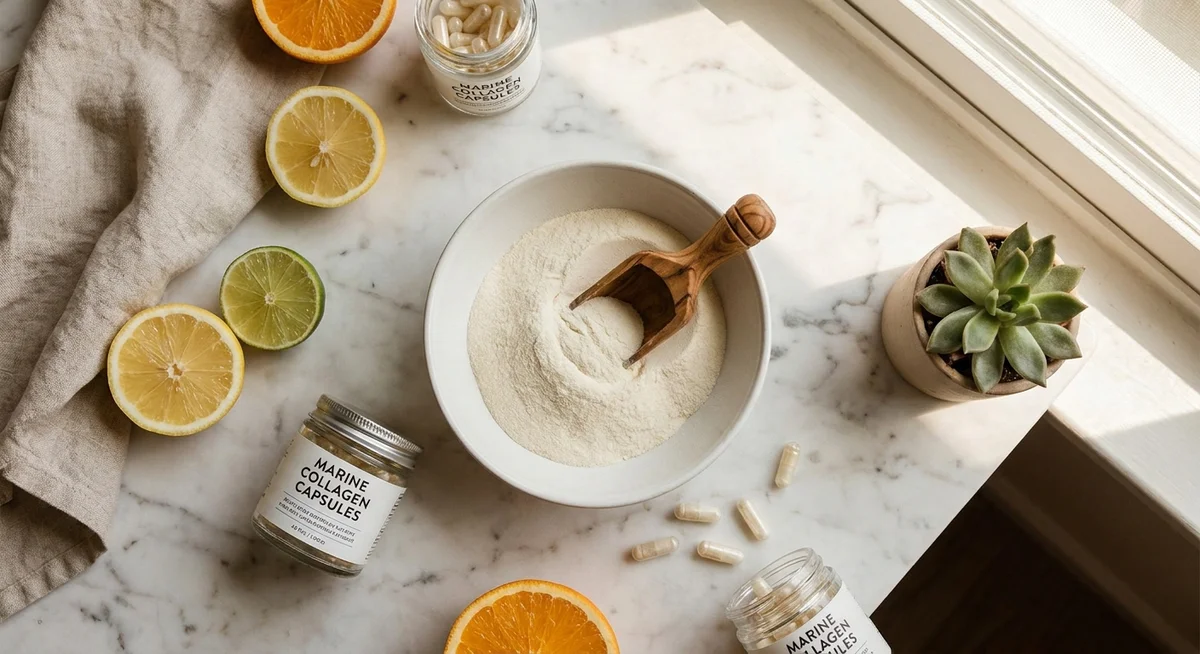
Collagen protein powder is one of the fastest-growing supplements in Australia, but the marketing often outpaces the evidence. Whether you want to support joint health, improve skin elasticity, or simply add a convenient protein source to your diet, the type of collagen you buy, the dose it delivers, and what it is combined with all determine whether you get results or just expensive flavoured water.
Key takeaways
- Hydrolysed collagen (collagen peptides) is the most bioavailable form and what most research uses.
- Type I and Type III collagen support skin and connective tissue; Type II targets cartilage and joints.
- A useful dose is 10 to 15 g of collagen peptides per day, taken consistently for at least 8 weeks.
- Vitamin C in the same serving significantly boosts collagen synthesis in the body.
- Collagen is not a complete protein, so it should not replace whey or plant protein if muscle building is your goal.
- Marine collagen has a smaller peptide size and may absorb more efficiently than bovine collagen.
What is collagen protein powder, and how does it differ from whey or plant protein?
Collagen is the most abundant protein in the human body, making up the structural scaffold of skin, tendons, ligaments, cartilage, and bone. Collagen protein powder is made by extracting collagen from animal sources, then hydrolyzing it into smaller peptides that dissolve in liquid and absorb through the gut wall. Unlike whey or plant protein, collagen is not a complete protein because it lacks tryptophan, one of the nine essential amino acids. What it does supply in abundance are glycine, proline, and hydroxyproline, the building blocks the body uses to repair and synthesize its own collagen structures.
Which type of collagen should you buy?
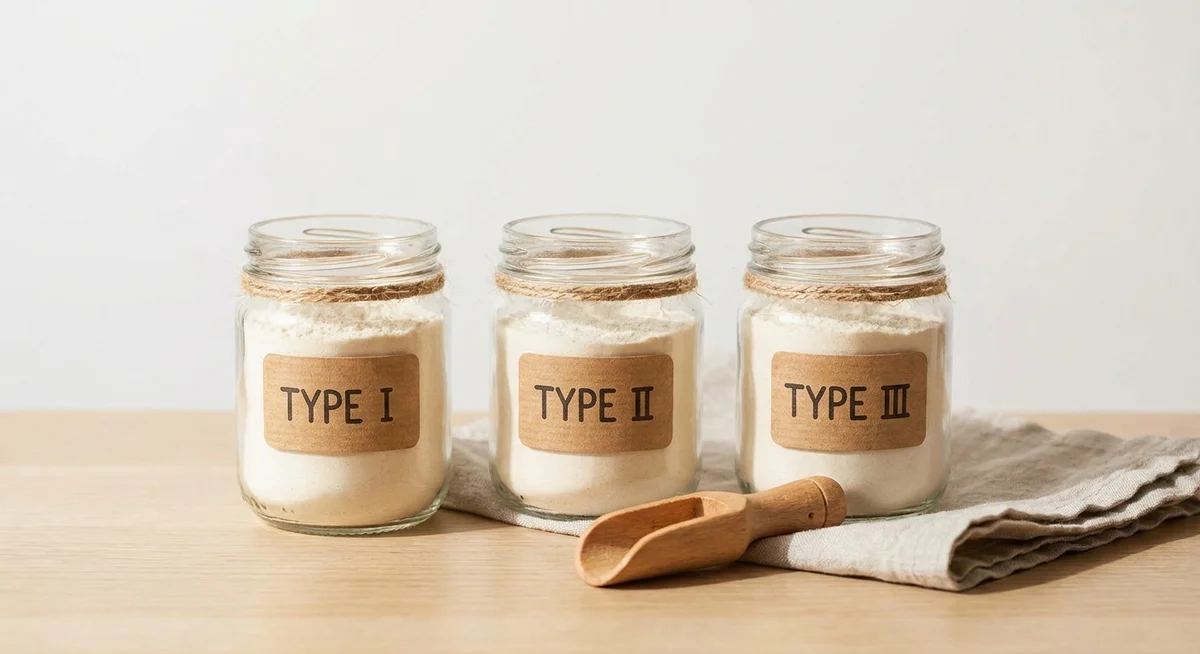
The label will often list collagen "types," and the difference matters for what you are trying to achieve.
| Collagen Type | Main Source | Best For | Typical Dose |
|---|---|---|---|
| Type I | Bovine hide, marine fish | Skin elasticity, hair, nails, tendons | 10–15 g/day |
| Type II | Chicken sternum cartilage | Joint cartilage, osteoarthritis support | 40 mg/day (undenatured form) |
| Type III | Bovine hide | Skin, gut lining, blood vessels | Often paired with Type I |
| Multi-type blend | Bovine or mixed | General connective tissue support | 10–15 g/day |
If your goal is skin and general connective tissue health, a Type I and III bovine or marine collagen peptide powder is the standard choice. If joint pain or cartilage wear is the primary concern, look for an undenatured Type II collagen product, which works through a different immune-modulating mechanism and requires a much lower dose.
Bovine vs marine collagen: which one is better?
Both are effective, and the honest answer is that the research does not declare a clear winner. The practical differences come down to source, peptide size, and personal preference.
Bovine collagen
- Derived from cattle hide or bones
- Rich in Type I and Type III
- Generally cheaper per gram
- Mild flavour, mixes well in hot and cold drinks
- Widely available in Australia
- Not suitable for pescatarians or those with religious dietary restrictions on beef
Marine collagen
- Derived from fish skin and scales
- Primarily Type I collagen
- Smaller peptide size, potentially faster absorption
- Often preferred for skin-focused outcomes
- Higher cost per gram than bovine
- Suitable for pescatarians; not for vegans
What should you look for on the label?
Once you have settled on a source, the label tells you everything else you need to know. Here is what to check before you buy.
Hydrolysed collagen (collagen peptides): This is the form backed by the most clinical research. Hydrolysis breaks the collagen protein into smaller fragments that cross the gut wall efficiently and circulate in the bloodstream. If a product says simply "collagen" without "hydrolysed" or "peptides," the molecular weight may be too large for reliable absorption.
Protein per serving: A genuine collagen supplement will deliver 10 to 15 g of protein per serving from collagen peptides specifically. Some products pad the serve with fillers or blend collagen with cheaper proteins to inflate the number. Check the ingredients list and confirm collagen peptides appear first.
Vitamin C: Collagen synthesis in the body depends on vitamin C as a cofactor. Several well-designed trials pair collagen peptides with 50 to 100 mg of vitamin C per serve and show better outcomes than collagen alone. If your product does not include it, a glass of orange juice or a small vitamin C supplement alongside your scoop achieves the same effect.
Additives and sweeteners: Many collagen powders are flavoured with natural extracts and sweetened with stevia or monk fruit. These are generally fine. Be more cautious with products using artificial sweeteners if you have a sensitive gut. For a plain, unflavoured option that stirs into coffee or soup without affecting taste, look for a product with a short, clean ingredient list.
Third-party testing: In Australia, the supplement market is lightly regulated. Look for products carrying a quality certification from an independent body such as Informed Sport, NSF, or Clean Label Project. This is especially relevant if you are an athlete subject to drug testing, since collagen powders sourced from bovine tissue can occasionally be contaminated with prohibited substances. Understanding how to read a protein powder nutrition label will help you spot which products are genuinely transparent about what is inside.
How much collagen protein powder do you actually need?
The most-cited clinical studies use 10 g of hydrolysed collagen peptides per day for skin outcomes and 15 g for joint and tendon support, taken for a minimum of 8 to 12 weeks. Results below that threshold are inconsistent. Collagen is not a fast-acting supplement; the improvement in skin hydration, nail strength, or joint comfort builds gradually over months of consistent use. Taking 5 g one day and skipping the next will not move the needle. If you are unsure how collagen fits alongside your existing protein intake, reviewing how much protein you actually need per day is a useful starting point.
Because collagen is not a complete protein, it should not replace your primary protein source if building or preserving muscle is part of your goal. Use it as a targeted supplement on top of a whey, plant, or mixed protein base, not instead of it.
Frequently asked questions
Can collagen protein powder help with joint pain?
Randomised controlled trials in active adults and people with mild osteoarthritis show that 10 to 15 g of hydrolysed collagen per day reduces self-reported joint pain and improves mobility after 8 to 24 weeks. Type II undenatured collagen at 40 mg per day shows similar benefits via a different mechanism. Collagen is not a pharmaceutical treatment, but the evidence is stronger here than for many popular joint supplements.
When is the best time to take collagen powder?
The timing is less critical than consistency. Many people add it to their morning coffee or a smoothie simply because it fits into their existing routine. Some research on tendon and cartilage outcomes used collagen doses taken 30 to 60 minutes before exercise, which may direct the circulating peptides toward connective tissue repair during the subsequent training session. Either approach works; pick whichever you will actually stick to.
Is collagen powder safe for long-term use?
Collagen peptides have a strong safety profile in healthy adults. No serious adverse effects have been reported in trials running up to 12 months. People with fish, shellfish, or beef allergies should choose a source that avoids their allergen. Those with kidney disease should speak with their doctor before adding any protein supplement, including collagen, given the additional nitrogen load.
Does collagen powder cause weight gain?
At typical doses of 10 to 15 g per day, collagen contributes roughly 50 to 60 calories per serve. That is not enough to cause weight gain on its own. Some users report that collagen powder reduces appetite slightly, likely because any protein source increases satiety signals. As with any supplement, the total context of your diet matters far more than the individual ingredient.
Browse our protein powder rangeCompare formulas, read ingredient breakdowns, and find the right protein for your goals.