Protein Powder Before or After a Workout: Does Timing Matter?

The question of when to drink a protein shake is one of the most debated topics in fitness circles. Should you slam one before your session to fuel performance, or wait until after to kick off recovery? The short answer: both timing windows can work, but post-workout protein has the stronger evidence behind it, and the difference between the two is smaller than most supplement labels want you to believe.
Key takeaways
- Post-workout protein (within 2 hours) is consistently backed by research for muscle repair and growth.
- Pre-workout protein can help if you train fasted or cannot eat a full meal within an hour after training.
- Total daily protein intake matters more than any single timing window.
- 25 to 40 g of protein per serving is the practical sweet spot for most adults.
- Protein type (whey, casein, plant) influences digestion speed, which changes how timing plays out.
What does "the anabolic window" actually mean?
For years, the fitness industry sold the idea of a 30-minute anabolic window after training: miss it and your gains evaporate. Newer research tells a more nuanced story. A 2013 meta-analysis published in the Journal of the International Society of Sports Nutrition found that total protein intake across the day predicts muscle growth far more reliably than whether you hit a narrow post-workout window. The window is real, but it is closer to 2 hours than 30 minutes, and it matters most in specific situations rather than universally.
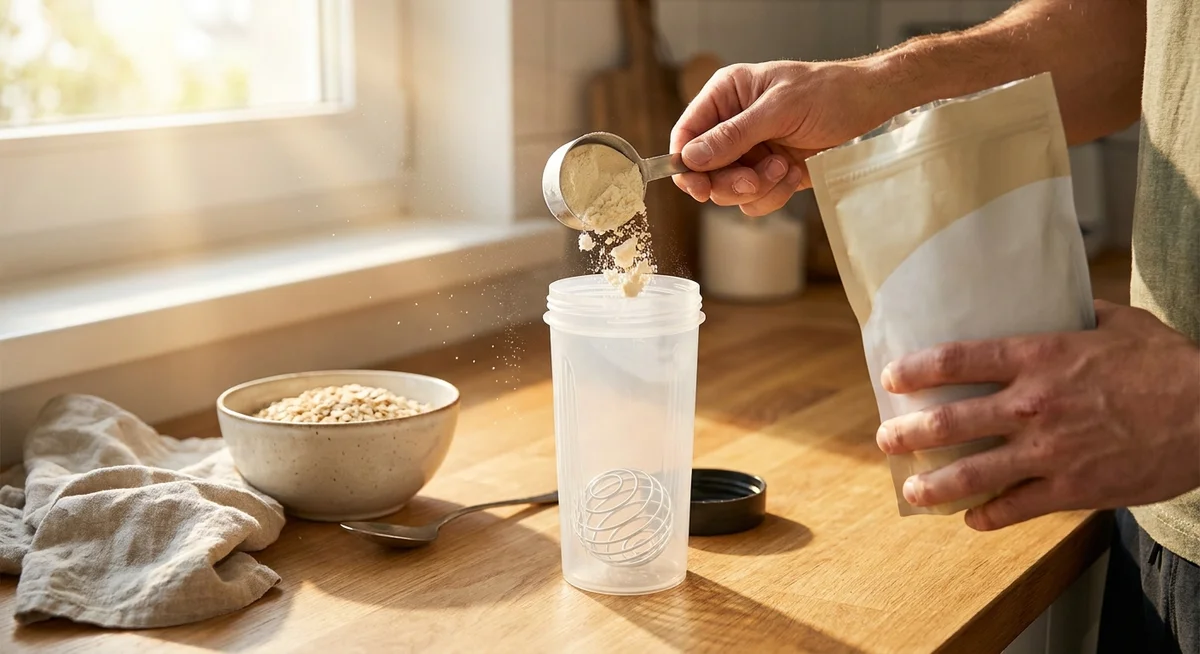
Should you take protein before or after training?
The honest answer depends on what you ate before your session and what your goals are. Here is a direct comparison of both approaches:
| Timing | Best for | Protein type that works well | Key consideration |
|---|---|---|---|
| Pre-workout (30-60 min before) | Fasted training, early morning sessions, limited post-workout window | Whey isolate, whey concentrate | Can cause GI discomfort if taken too close to the session |
| Post-workout (within 2 hours) | Muscle repair, glycogen replenishment, general strength training | Whey isolate, plant blends | Most studied and most consistently effective timing window |
| Both pre and post | Twice-daily trainers, athletes in a calorie surplus | Any high-quality powder | Watch total daily protein to avoid overshooting needs |
| Before bed (casein) | Overnight recovery, reducing muscle breakdown during sleep | Casein protein | Slow digestion is an advantage here, not a drawback |
Does protein type change how timing works?
Yes, and this is where things get practical. Whey protein digests quickly, typically reaching peak amino acid levels in the blood within 60 to 90 minutes of ingestion. That speed makes it the go-to choice for post-workout shakes, where you want amino acids available during the muscle repair window. Plant proteins, particularly pea and rice blends, digest at a similar rate to whey when combined, so they work well post-workout too.
Casein is the opposite: it forms a gel in the stomach and releases amino acids steadily over 5 to 7 hours. That makes it less useful immediately after training (you want fast delivery then) but genuinely effective before bed, where slow and steady is exactly what you need to reduce overnight muscle breakdown. If you are comparing your protein options in detail, our guide to whey vs casein protein covers the digestion differences thoroughly.
How much protein do you actually need per shake?
Research consistently points to 20 to 40 g of protein per serving as the effective dose for stimulating muscle protein synthesis in healthy adults. Going above 40 g in a single sitting does not appear to add meaningful extra benefit for most people; any excess is oxidized for energy or converted. If you are a larger athlete or eating in a calorie surplus to build mass, aim for the higher end of that range. Most standard scoops provide 25 to 30 g, which sits comfortably within the target for the majority of users.
For a full picture of daily targets, the article on how much protein you need per day breaks down requirements by body weight, training intensity, and goal.
What if you cannot eat or drink anything right after training?
Life is inconvenient. You finish a lunchtime gym session and head straight into a meeting. In this case, pre-workout protein earns its keep. A shake 30 to 60 minutes before training means amino acids are already circulating in your blood when you start lifting, and the post-exercise elevation in muscle protein synthesis will still occur, just using what is already available. The 2-hour post-workout window gives you more flexibility than the old 30-minute rule ever did.
The bigger mistake is skipping protein entirely for 3 to 4 hours on either side of training because of scheduling. Consistency across the whole day beats perfect timing on any one occasion.
Frequently asked questions
Is it bad to take protein powder on rest days?
Not at all. Muscle protein synthesis continues for 24 to 48 hours after a training session, so rest-day protein intake still contributes to repair and growth. Hit your daily protein target regardless of whether you trained. Spreading your intake across 3 to 4 meals and snacks typically works better than front-loading it all at once.
Can you take protein powder without working out?
Yes. Protein powder is a food supplement, not a workout drug. If you are not meeting your protein target through whole foods, a shake helps fill the gap whether or not you trained that day. It will not cause fat gain on its own; total calorie balance determines that. The beginner's guide to protein powder covers this and other common misconceptions in detail.
How long before a workout should I take a protein shake?
30 to 60 minutes is the practical guideline for pre-workout protein. Taking it too close to training (10 to 15 minutes before) can cause bloating or cramping mid-session, especially with thicker shakes or large doses. If your stomach is sensitive, lean toward the 60-minute mark and keep the serving size to 20 to 25 g rather than a full 40 g dose.
Does mixing protein with milk change the timing?
Mixing whey with full-fat milk slows absorption somewhat because of the fat and casein naturally present in milk. For a post-workout shake where you want fast delivery, water or a low-fat liquid works better. For a pre-bed shake or a mid-morning snack, milk is a fine choice and adds useful calories and nutrients on top of the protein.
Find a protein powder that fits your routineOur vanilla protein powder is unfussy, clean-ingredient, and works just as well pre-workout as post.