Protein Powder for Beginners: How to Pick Your First Tub

Protein powder is one of the most straightforward supplements you can add to your routine — but the sheer number of options in any health store makes the first purchase feel anything but simple. This guide cuts through the noise so you can choose a product that actually matches your goals, your digestion, and your budget, without buying something you'll push to the back of the cupboard.
Key takeaways
- Most beginners do well starting with whey concentrate or a simple plant blend, depending on their diet.
- Flavour matters more than people admit — a powder you enjoy drinking is one you'll actually use.
- Ingredient lists shorter than 10 items are usually a good sign.
- Protein content per serve should sit between 20g and 30g for most adults.
- Price per serve is more useful than price per tub when comparing products.
Do you actually need protein powder?
Not necessarily — but most people find it useful. Whole foods like chicken, eggs, Greek yoghurt, legumes, and cottage cheese provide excellent protein. The challenge is consistency. Cooking three protein-rich meals every day takes time, and many people simply don't hit their targets without a little help. A single 30g serve of protein powder mixed into water or a smoothie closes that gap in under two minutes.
If your diet is already high in lean meats, fish, and dairy, a powder is optional. If you skip meals, train regularly, are vegetarian, or find meat expensive, a tub becomes a practical tool rather than a luxury. Check the full daily protein guide to see where you actually stand before spending anything.
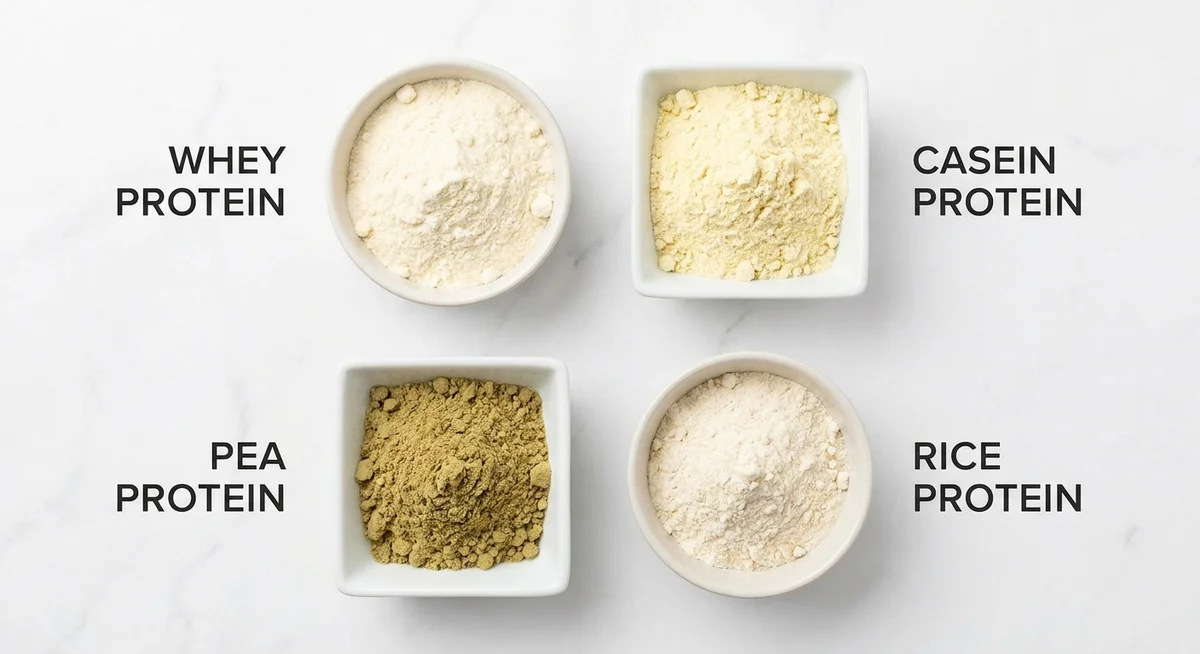
Which type of protein powder is right for a beginner?
The type you choose should reflect your diet, your digestion, and how you plan to use it. Here is a side-by-side look at the most common options:
| Type | Best for | Protein per 30g serve (approx.) | Digestion speed | Typical cost (AUD per serve) |
|---|---|---|---|---|
| Whey concentrate | Most beginners; versatile everyday use | 20–23g | Fast | $1.00–$1.60 |
| Whey isolate | Lactose-sensitive; post-workout priority | 24–27g | Fast | $1.50–$2.20 |
| Casein | Overnight recovery; hunger management | 22–25g | Slow (6–8 hrs) | $1.40–$2.00 |
| Pea protein | Vegans; lactose or whey intolerance | 20–24g | Medium | $1.20–$1.80 |
| Brown rice protein | Plant eaters; blends well with pea | 18–22g | Medium | $1.00–$1.60 |
| Blended plant protein | Complete amino acid profile without dairy | 20–25g | Medium | $1.40–$2.00 |
For most beginners who eat dairy and aren't chasing a specific goal, whey concentrate is the pragmatic starting point. It mixes well, tastes good in most flavours, and costs less than isolate. If you've had bloating issues with dairy in the past, whey isolate removes most of the lactose and is worth the small price jump. Going dairy-free? A pea-and-rice blend covers all nine essential amino acids that pea alone misses.
For a deeper look at how plant and whey options stack up on muscle-building evidence, the plant protein vs whey comparison lays it out clearly.
What should the label actually say?
Beginners often get sold on marketing claims on the front of the tub. The nutrition panel on the back is where the real information lives. A few things to check:
Green flags
- 20g+ protein per serve from a named source (whey, pea, etc.)
- Low sugar: under 5g per serve is reasonable
- Short ingredient list with recognisable names
- Serves clearly listed so you can calculate cost per serve
- No proprietary blends that hide individual ingredient amounts
Watch out for
- Protein spiking: amino acids like glycine or taurine added to inflate the protein count
- High sugar (some meal-replacement powders exceed 15g per serve)
- Enormous serving sizes that make the protein number look high
- Vague terms like "hydrolysed protein matrix" with no source named
- Artificial colours or flavours if you prefer a cleaner product
Flavour: more important than you think
Protein powder is something you'll drink four or five times a week. Choosing a flavour you genuinely like isn't vanity — it's the difference between using the tub and abandoning it. Vanilla is the most forgiving starting flavour because it blends into smoothies without overpowering other ingredients, tastes neutral in water, and works in oats or yoghurt. Chocolate is popular but varies wildly between brands. Unflavoured is useful for cooking but can be chalky on its own.
If you're curious about vanilla specifically, the vanilla protein powder guide covers what separates a good vanilla from a synthetic one, including what to look for on the ingredient list.
How to use your first tub
Start with one serve per day for the first week. This lets you assess taste, mixability, and how your stomach handles it before committing to a twice-daily habit. Mix it with water first — if it tastes fine that way, it'll taste great with milk or in a smoothie. If the texture is gritty or the flavour is too intense on its own, try blending it with a frozen banana and some milk. Most powders improve dramatically when blended rather than shaken.
A common beginner mistake is treating protein powder as a meal replacement. It isn't. Think of it as a convenience topping on a diet that already includes real food. One serve after a workout, or as a mid-morning snack between meals, is the most practical place to fit it in.
Frequently asked questions
Is protein powder safe for beginners with no gym experience?
Yes. Protein powder is food — concentrated protein from dairy or plants. It doesn't require a gym membership or a particular training level to use safely. If you're sedentary and not hitting your daily protein from food, a powder can help. That said, someone who exercises regularly will see more obvious benefit because training creates greater protein demand in muscle tissue.
How long will one tub last a beginner?
A standard 1kg tub with 30g serves contains roughly 33 serves. At one serve per day, that's just over a month. At two serves per day — common for active people — it lasts about two weeks. Factor that into your budget when comparing tub sizes, and always store your powder correctly to avoid waste. Heat and humidity degrade protein powder faster than most people expect.
Can beginners mix protein powder with just water?
Absolutely, and it's the best way to test a new flavour honestly. Mixing with full-cream milk adds roughly 8g of extra protein and makes the texture noticeably creamier. Almond or oat milk land somewhere in between. If you're counting calories closely, water keeps the serve lean. If you're trying to gain weight or find the shake too thin, milk is the easy fix.
What if protein powder upsets my stomach?
Bloating or gas from whey is usually a lactose response, not a protein intolerance. Try whey isolate, which has most of the lactose removed, before switching entirely to plant protein. If plant protein also causes issues, check the ingredient list for added fibres like inulin or chicory root, which are common gut irritants in high doses. Switching brands often resolves the problem.
Find the right protein powder for your goalsBrowse Australia's protein powder guide for honest, detailed breakdowns of every major type.