Protein Powder and Mental Performance: How Protein Supports Focus and Brain Function

Protein powder is almost always marketed around muscle. But the amino acids you consume have a second job that gets far less attention: they are the raw material your brain uses to produce neurotransmitters. Without adequate protein, your focus, mood, and mental stamina all take a measurable hit. Getting your intake right supports both your body and your brain at the same time.
Key takeaways
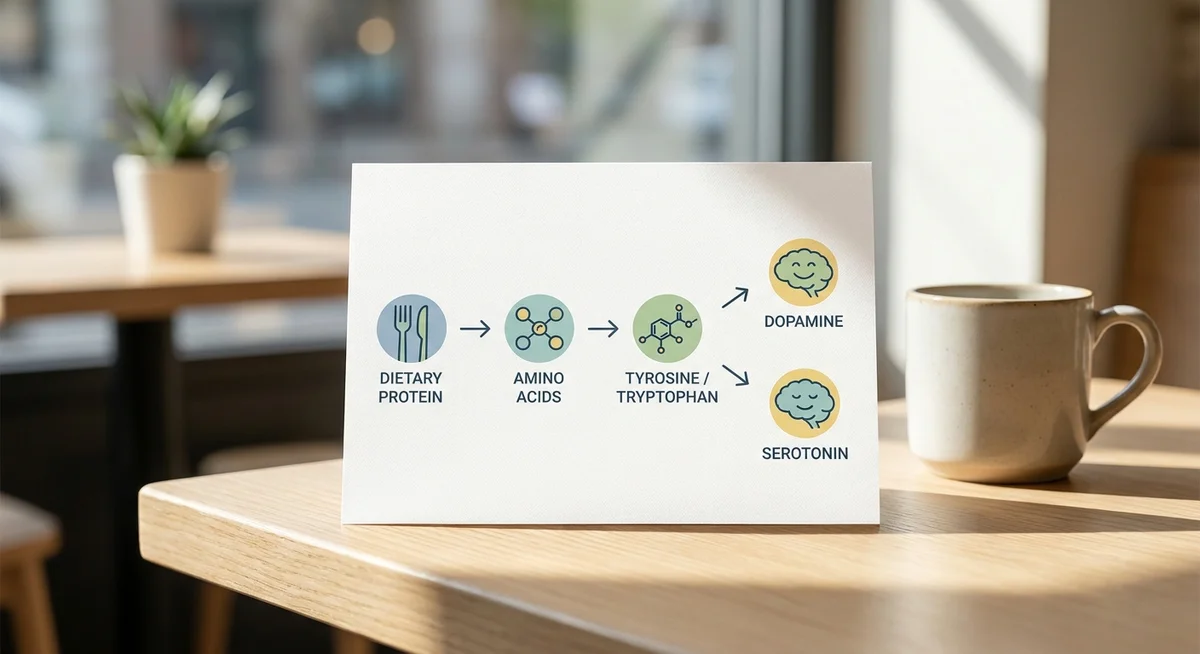
- Several amino acids are direct precursors to dopamine, serotonin, and norepinephrine, the neurotransmitters that govern focus, motivation, and mood.
- Tyrosine and tryptophan are the two most research-backed amino acids for cognitive performance, and both are present in quality protein powders.
- Protein slows glucose absorption, which prevents the blood sugar crashes that cause mental fatigue and difficulty concentrating.
- Timing matters: a protein-containing breakfast appears to support working memory and sustained attention through the morning.
- You do not need a special "nootropic" product. A well-chosen whey or plant protein powder delivers the amino acids your brain needs.
Which amino acids actually affect brain function?
Your brain cannot produce neurotransmitters from nothing. It relies on specific amino acids supplied through diet, and two stand out clearly in the research.
Tyrosine is a precursor to dopamine and norepinephrine. These two neurotransmitters drive motivation, attention switching, and the ability to stay mentally engaged under pressure. A 2015 meta-analysis in Neuroscience and Biobehavioral Reviews found that tyrosine supplementation reliably improved cognitive performance during demanding or stressful tasks, including tasks that required rapid information processing and working memory. Whey protein is a solid source of tyrosine, delivering around 3 to 4 grams per 30-gram serve depending on the product.
Tryptophan converts to serotonin, the neurotransmitter most associated with stable mood, patience, and the capacity to maintain effort. Low tryptophan availability has been linked in controlled studies to impaired memory consolidation and increased impulsivity. Whey and casein both supply tryptophan, though casein releases it more slowly, which may support steadier serotonin availability over several hours.
Leucine and the branched-chain amino acids (BCAAs) also cross the blood-brain barrier and compete with tryptophan for transport. This is worth knowing: very high doses of BCAAs in isolation can actually reduce tryptophan uptake in the brain. That is one reason a complete protein source, which provides all amino acids in natural ratios, is a better default than isolated BCAA supplements for cognitive support.
Does protein timing affect focus and mental energy?
Yes, and breakfast is the meal where it matters most. Several studies, including a well-cited 2012 trial published in Physiology and Behavior, found that eating a protein-rich breakfast improved sustained attention and working memory performance compared to a carbohydrate-only breakfast or skipping the meal entirely. The researchers attributed the benefit to two things: steadier blood glucose and the early availability of tyrosine for dopamine synthesis.
Blood sugar is relevant here in a practical way. Carbohydrates alone cause a glucose spike followed by a dip, and that dip is when most people report feeling foggy, distracted, or low on motivation. Protein slows gastric emptying, which flattens the glucose curve after a meal. A protein shake added to your breakfast, or used as the breakfast itself, can meaningfully reduce this effect. If you currently skip breakfast or eat only toast, adding 20 to 25 grams of protein to that meal is one of the most straightforward things you can do for your morning focus.
Whey vs plant protein for mental performance: is there a difference?
| Protein type | Tyrosine content (per 30g serve) | Tryptophan content (per 30g serve) | Digestion speed | Best for |
|---|---|---|---|---|
| Whey isolate | ~3.5g | ~0.5g | Fast | Morning or post-workout focus boost |
| Casein | ~3.2g | ~0.4g | Slow (6-7 hrs) | Sustained amino acid availability, evening use |
| Pea protein | ~2.8g | ~0.3g | Moderate | Plant-based alternative with decent tyrosine |
| Soy protein | ~3.0g | ~0.4g | Moderate | Complete plant option, strong amino acid profile |
In practice, the differences between these options are small enough that your existing protein powder, whether whey or plant-based, already provides meaningful amounts of both tyrosine and tryptophan. The more important variable is simply getting enough total protein across the day. According to current protein intake guidelines, most active adults benefit from 1.6 to 2.2 grams of protein per kilogram of body weight. Consistently hitting that range also means consistently supplying your brain with the amino acids it needs.
What about protein powder quality and additives?
Not every protein powder is identical in this context. Products with high levels of artificial sweeteners and fillers do not directly harm neurotransmitter production, but they may affect gut health, and the gut-brain axis is a real and increasingly well-documented pathway. The gut produces a significant proportion of the body's serotonin, and gut microbiome disruption has been linked in multiple studies to mood changes and reduced cognitive resilience.
Choosing a protein powder with a clean ingredient list, one without unnecessary fillers, excessive artificial sweeteners, or poor-quality protein blends, is therefore relevant beyond just muscle-building goals. If you are still working out what to look for on a label, the guide to reading protein powder nutrition labels covers what each line item actually means and which numbers matter most.
Protein powders that list their amino acid profile on the label give you the most transparency. You can check directly how much tyrosine and tryptophan you are getting per serve, rather than relying on general estimates.
Frequently asked questions
Can protein powder improve memory?
Protein powder itself is not a memory drug, but consistently meeting your protein targets supports the neurotransmitter systems involved in memory encoding and recall. Tyrosine in particular has shown effects on working memory under cognitively demanding conditions in controlled trials. Think of it as removing a deficit rather than adding a boost above your baseline.
Is it better to take protein in the morning for brain benefits?
Morning is the highest-priority window. Skipping breakfast or eating a low-protein breakfast leads to a long gap since your last amino acid intake, which can reduce neurotransmitter precursor availability during the hours when most people do their most demanding cognitive work. A shake at breakfast is a practical fix.
Does too much protein harm the brain?
No evidence supports this for healthy adults at typical intake levels (up to 2.5g per kg of body weight). Very high BCAA supplementation in isolation, as noted above, can theoretically crowd out tryptophan transport into the brain, but this is not a concern with standard complete protein sources. If kidney health is a specific concern for you, see what the research actually shows on protein and kidney health.
Which protein powder is best for focus?
Whey isolate and casein both deliver strong tyrosine and tryptophan content. Whey's faster digestion makes it more practical at breakfast or before a demanding work session. Casein's slow release suits those who want steadier amino acid availability over a longer stretch of the day. For plant-based eaters, soy or a pea-and-rice blend are the best complete alternatives. The protein powder buying guide lays out the full comparison across all major types.
Find the right protein powder for your goals Compare whey, casein, and plant proteins side by side and choose based on what you actually need.