Protein Powder and Alcohol: What Drinking Does to Your Gains
Alcohol and exercise both feature heavily in Australian culture, and most people who train regularly drink at least occasionally. Whether it is post-match beers, weekend social drinks, or a glass of wine most evenings, the question matters: does drinking undermine the protein you are putting in, and how much damage is actually done? The short answer is yes, alcohol does interfere with muscle building and recovery, but the degree depends heavily on how much and how often you drink.
Key takeaways
- Alcohol suppresses muscle protein synthesis directly, even when protein intake is adequate.
- The effect is dose-dependent: a couple of drinks causes far less disruption than heavy drinking.
- Drinking after training is worse timing than drinking on rest days.
- Consuming protein alongside or after alcohol can partially offset the suppression, but does not eliminate it.
- Sleep quality suffers after alcohol, and most muscle repair happens during deep sleep.
How does alcohol affect muscle protein synthesis?
Muscle protein synthesis (MPS) is the process by which your body rebuilds and grows muscle tissue. It spikes after training and after eating protein, and it is the primary driver of long-term muscle gain. Alcohol interferes with this process at the cellular level.
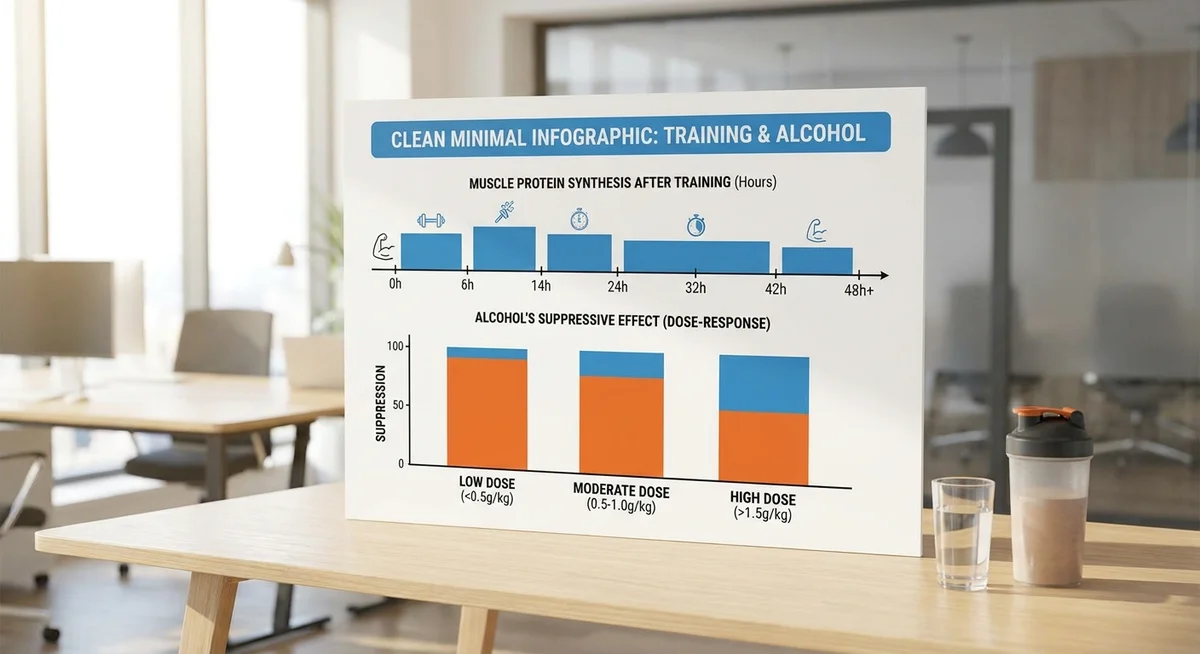
Research shows that alcohol suppresses the mTOR signalling pathway, which is the main switch that turns MPS on. A 2014 study published in PLOS ONE found that consuming roughly 1.5g of alcohol per kilogram of bodyweight after resistance training reduced MPS rates by around 37% over an 8-hour recovery window, even when participants consumed adequate protein. That is not a small number. For context, 1.5g/kg for a 75kg person is about 8 to 10 standard drinks.
Smaller amounts of alcohol still cause measurable suppression, just to a lesser degree. The key point: alcohol does not simply slow things down a little. It actively competes with the anabolic signals your body sends after training.
Does consuming protein with alcohol help?
Yes, partially. The PLOS ONE study mentioned above actually tested three conditions: alcohol alone, alcohol plus protein, and carbohydrates alone. The group that had protein with their alcohol showed better MPS rates than the alcohol-only group, but still lower rates than those who had no alcohol at all.
This means taking a protein shake before or after a night of drinking is not a waste. It provides the raw materials your muscles need and partially counteracts the suppression. But it does not fully rescue the situation, particularly after heavy drinking.
Strategies that help
- Eat a protein-rich meal before or with your drinks
- Keep drinking to 2 to 3 standard drinks when you do train that day
- Drink on rest days rather than post-training days where possible
- Stay hydrated alongside alcohol to reduce cortisol spikes
- Prioritise sleep quality by stopping drinking 2 to 3 hours before bed
Habits that cause the most damage
- Heavy drinking (5+ drinks) immediately after a training session
- Chronic daily drinking that disrupts hormonal baselines
- Skipping protein intake entirely on drinking days
- Drinking late into the night and disrupting deep sleep stages
- Using alcohol to "wind down" after every single training day
What does alcohol do to recovery beyond muscle protein synthesis?
MPS suppression is only part of the picture. Alcohol also disrupts recovery through several other mechanisms.
Hormonal interference. Testosterone plays a central role in muscle repair and growth. Alcohol raises cortisol and reduces testosterone output, particularly after large amounts. Chronic heavy drinking significantly lowers resting testosterone levels over time. For men, this effect is more pronounced and more studied; for women, the hormonal disruption manifests differently but is still meaningful.
Sleep architecture. Alcohol makes you fall asleep faster but fragments your sleep later in the night. It suppresses REM sleep and reduces time spent in the deep slow-wave stages where growth hormone is released. Since most muscle repair happens overnight during these deep stages, poor sleep quality compounds the direct MPS suppression. If you are relying on protein powder to support overnight muscle recovery, alcohol directly undercuts that strategy.
Dehydration. Alcohol is a diuretic. Mild dehydration reduces strength, impairs coordination, and slows nutrient transport to muscle tissue. This makes the session the next morning noticeably worse, even if you feel functional.
Inflammation. Exercise causes controlled micro-inflammation, which is part of how muscles adapt. Alcohol adds to systemic inflammation without any adaptive benefit, slowing the overall recovery timeline.
| Drinking level | Impact on MPS | Impact on sleep | Practical verdict |
|---|---|---|---|
| 1 to 2 standard drinks | Mild suppression | Minor disruption | Manageable with good protein intake and hydration |
| 3 to 4 standard drinks | Moderate suppression | Noticeable reduction in deep sleep | Avoid on post-training evenings; better on rest days |
| 5 to 8 standard drinks | Significant suppression (30 to 40%+) | Severe fragmentation | Negates most of the training session's anabolic benefit |
| Chronic heavy drinking | Baseline MPS chronically impaired | Structural sleep disruption | Muscle loss likely even with adequate protein intake |
Should you avoid alcohol entirely if you train?
That depends on your goals. If you are a competitive athlete or in a serious muscle-building phase, minimising alcohol makes a measurable difference. If you train regularly for general fitness and health, moderate social drinking is unlikely to derail your results provided your overall protein intake, sleep, and training are solid. The body is resilient to occasional disruption.
The bigger mistake is not occasional drinking. It is letting drinking regularly erode the habits that matter most: getting enough protein daily, sleeping 7 to 9 hours, and training consistently. If you are hitting those markers, a few drinks on the weekend will not undo your work.
Choosing a protein powder that digests easily also matters here. A slow-digesting option like casein before bed keeps amino acids available for longer overnight, which is especially useful when alcohol is already limiting your MPS window. Understanding how whey and casein compare can help you pick the right one for the right moment.
It is also worth understanding your overall daily protein target before worrying too much about optimising around alcohol. Most people who drink occasionally are far better served by nailing their daily protein intake than by obsessing over post-drinking timing strategies.
Find the right protein powder for your goalOur complete buying guide walks you through every type and what each one is best suited for.Frequently asked questions
Is it okay to have a protein shake after drinking?
Yes. Consuming protein after drinking still provides your muscles with amino acids and partially offsets the suppression of muscle protein synthesis. It is better than skipping protein entirely. A shake with 25 to 40g of protein before bed on a night you have been drinking is a reasonable damage-control strategy, though it will not fully reverse the effects of heavy drinking.
Does one drink after training really make a difference?
One standard drink causes only minor suppression of MPS and is unlikely to have a meaningful impact on long-term results. The research showing large reductions in MPS uses substantially higher doses. Occasional light drinking after training is not a practical concern for most recreational athletes.
Can protein powder help with a hangover?
Not directly. Hangovers are primarily caused by dehydration, acetaldehyde accumulation, and disrupted blood sugar. Protein does not address those mechanisms. That said, eating a protein-containing meal the morning after drinking supports your recovery and helps stabilise blood sugar, which can reduce fatigue. Prioritise water and electrolytes first.
Does the type of alcohol matter?
The alcohol itself, ethanol, is the active compound that causes MPS suppression regardless of the drink. Beer, wine, and spirits all deliver ethanol. What differs is the sugar and calorie content of the mixer. High-sugar mixers add empty calories that contribute to fat gain over time. From a muscle-building standpoint, the total ethanol dose is what matters most, not the drink type.