Pea Protein vs Whey Protein: Which One Is Right for You?
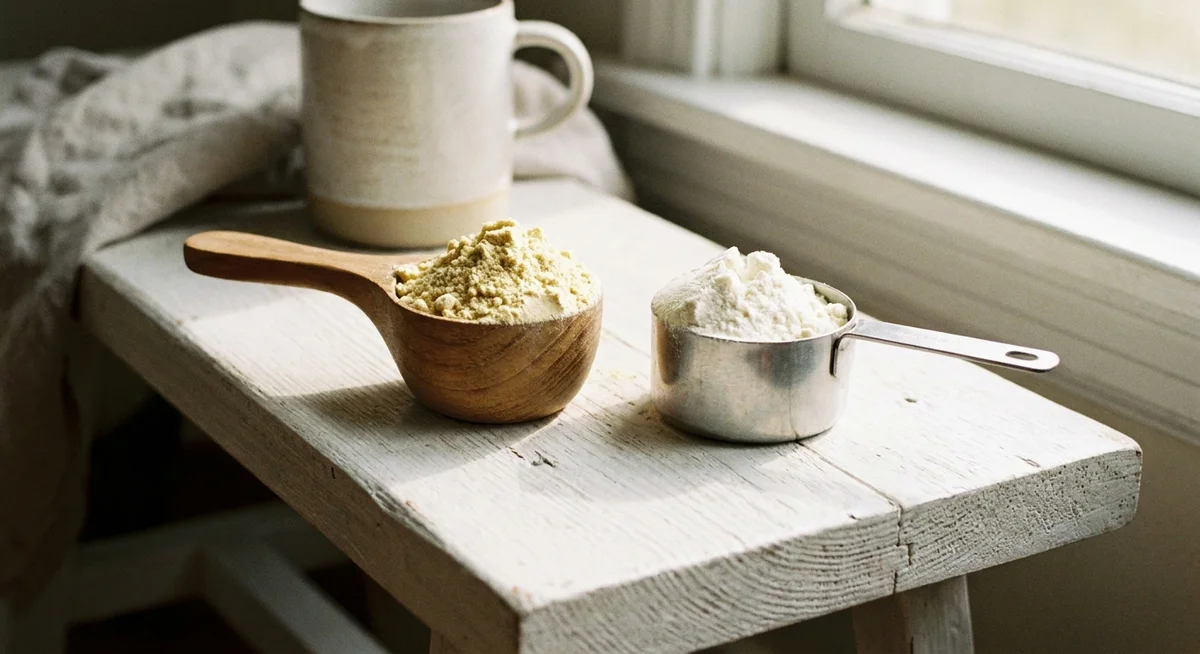
Pea protein and whey protein are the two most purchased protein powders in Australia, and for good reason: both deliver solid amino acid profiles, mix easily, and have years of research behind them. The right choice depends on how your body handles dairy, what your training looks like, and what you actually want to eat every day.
Key takeaways
- Whey protein is derived from dairy; pea protein is plant-based and suits vegans and the lactose intolerant.
- Whey has a slightly higher leucine content, which gives it a small edge for triggering muscle protein synthesis after a hard session.
- Pea protein is surprisingly complete for a plant source, though it is low in methionine; pairing it with rice protein closes that gap.
- Both options produce comparable muscle gains over 8 to 12 weeks when total daily protein intake is matched.
- Digestive comfort, dietary restrictions, and taste preference are often the deciding factors in real-world use.
What is the actual difference in protein quality?
Protein quality is measured by how well a food delivers the amino acids your muscles need. The PDCAAS (Protein Digestibility Corrected Amino Acid Score) and the newer DIAAS both rate whey very close to 1.0, the highest possible score. Pea protein scores around 0.82 to 0.89 depending on the source and processing method, which is still well above most whole plant foods.
The practical gap matters less than the marketing suggests. A 2015 study in the Journal of the International Society of Sports Nutrition found that pea protein produced the same bicep thickness gains as whey over an eight-week resistance training programme. When you are eating enough total protein across the day, the difference in amino acid scoring is largely academic.
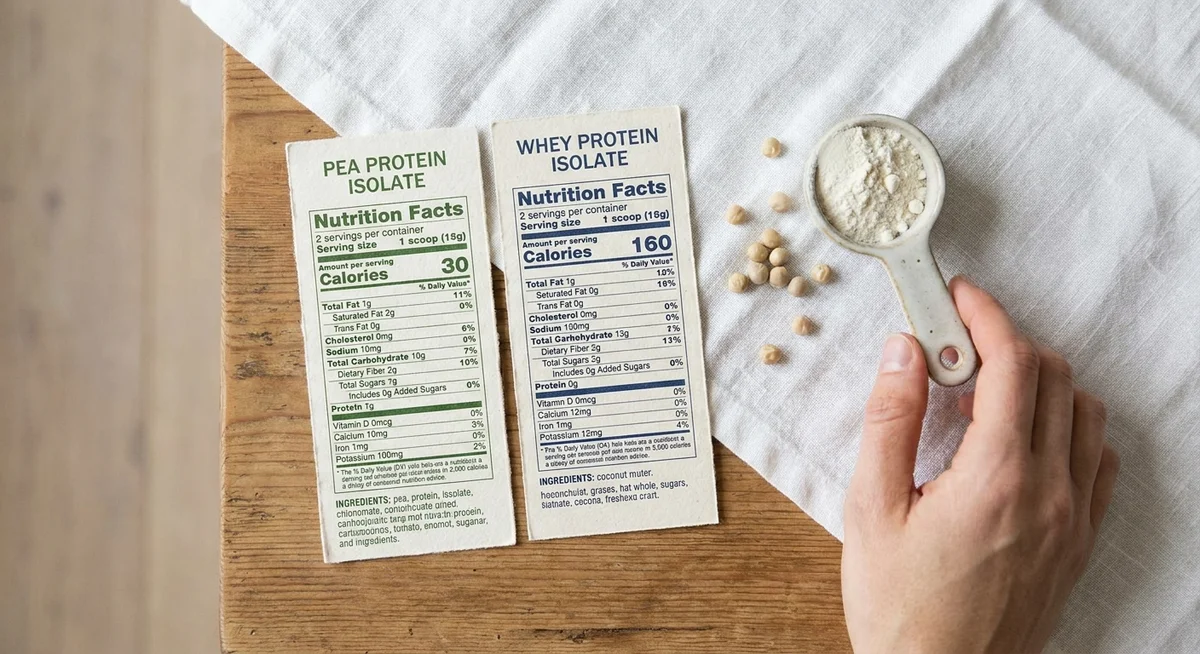
How do pea protein and whey protein compare head to head?
| Factor | Whey Protein | Pea Protein |
|---|---|---|
| Source | Cow's milk (dairy by-product) | Yellow split peas (plant) |
| Protein per 30 g serve (typical) | 22 to 26 g | 20 to 24 g |
| Leucine content | High (~2.5 g per 25 g protein) | Moderate (~1.9 g per 25 g protein) |
| DIAAS score | ~1.09 | ~0.82 to 0.89 |
| Suitable for vegans | No | Yes |
| Lactose | Present (low in isolate) | None |
| Common allergens | Milk | Legumes (rare) |
| Digestive comfort | Can cause bloating in sensitive users | Generally well tolerated |
| Taste and texture | Creamy, mild | Earthy, slightly gritty |
| Typical price (per kg) | $30 to $60 AUD | $25 to $55 AUD |
Which one is better for building muscle?
For pure muscle-building, whey has a small biochemical advantage: its leucine content is higher, and leucine is the amino acid that most directly triggers muscle protein synthesis. After a hard session, a fast-digesting whey shake hits your bloodstream quickly and keeps leucine levels elevated for the window when your muscles are most receptive to protein.
That said, the advantage shrinks considerably when you are eating adequate protein across the whole day, not just in the post-workout window. If your total daily intake is 1.6 to 2.2 g of protein per kilogram of bodyweight, as recommended for most strength athletes, the choice of powder matters far less than the consistency of hitting that target. Our guide to using protein powder for weight training covers daily targets and timing in more detail.
Choose whey if...
- You have no dairy sensitivity or lactose intolerance
- You want the highest leucine per gram for post-lift recovery
- You prefer a creamier, more neutral flavour
- You are in a bulking phase and prioritising every edge on muscle protein synthesis
Choose pea if...
- You are vegan or avoid dairy for any reason
- Whey causes bloating, gas, or digestive discomfort
- You want a protein that works well in savoury cooking and baking
- You prefer a lower overall allergen profile
What about digestive comfort and allergies?
This is where pea protein wins clearly for a significant portion of the population. Lactose intolerance affects roughly 10 to 15% of Australians, and many more experience mild dairy sensitivity that shows up as bloating or discomfort after a whey concentrate shake. Whey isolate removes most of the lactose during processing, so it is better tolerated than concentrate, but it still contains milk protein which triggers reactions in people with a true dairy allergy.
Pea protein is naturally free of the major allergens: no dairy, no gluten, no soy, no nuts. Legume allergy is rare. For people managing protein powder around food allergies, pea is often the safest starting point.
Can you use both?
Many people do, and it makes sense. Using whey immediately after training (for its fast absorption and high leucine) and pea protein at other times of day (in smoothies, baking, or as a before-bed shake) gives you the metabolic advantages of whey where they count most, without relying on dairy for every serve. If you want to understand how timing affects results, the article on protein powder timing before and after workouts is worth reading alongside this one.
Frequently asked questions
Is pea protein a complete protein?
Pea protein contains all nine essential amino acids, but it is low in methionine, which means it does not qualify as "complete" by the strict definition. In practice, if you eat varied whole foods across the day, the methionine gap is easily filled. If pea protein is your only protein source, pairing it with rice protein (which is high in methionine) covers the shortfall. Some pea-rice blends already do this for you.
Does whey protein cause acne?
Some research suggests whey protein can stimulate insulin and IGF-1 in a way that may worsen acne in people already prone to it. The evidence is not conclusive, but if you notice skin breakouts after starting whey, switching to pea protein for a few weeks is a reasonable experiment. Hydrolysed whey may be better tolerated than concentrate if you still want a dairy-based option.
Which is better for weight loss?
Neither has a meaningful fat-loss advantage over the other. Both are high in protein, which increases satiety and preserves lean mass during a calorie deficit. The better question is which one you will use consistently, because the powder that sits in the cupboard does nothing for you. Pea protein tends to be more filling for some people due to its slightly slower digestion rate.
What does pea protein taste like compared to whey?
Unflavoured pea protein has an earthy, slightly beany flavour that some people find strong. Flavoured versions have improved substantially in recent years, and chocolate and vanilla pea proteins are close to their whey equivalents in taste tests. Whey concentrate has a mild milky flavour; whey isolate is more neutral. If taste is a priority, try single-serve sachets of both before committing to a 1 kg bag.
Find the right protein powder for your goalsAustralia's independent guide to comparing protein powders by type, ingredient quality, and value.