Protein Powder for Food Allergies: How to Find a Safe Formula
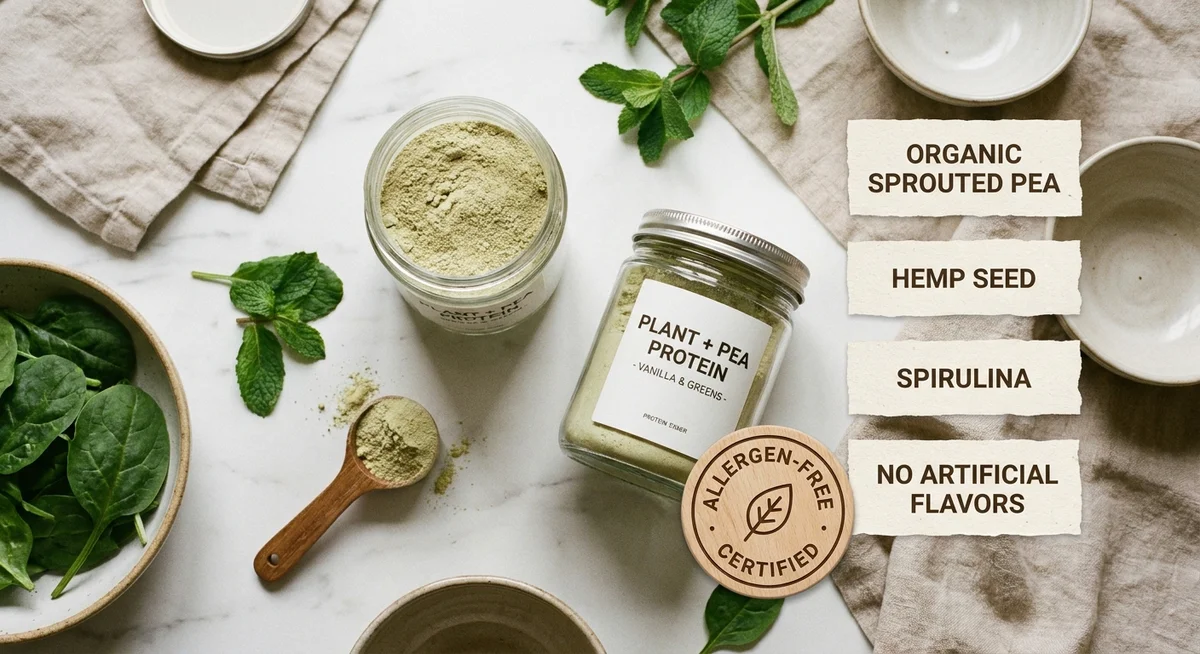
If you manage a food allergy, picking a protein powder is not as simple as comparing grams of protein per serve. The same tub that works perfectly for someone else could send you to the emergency room or sideline you for days. The good news: safe, high-quality options exist for every major allergy profile. You just need to know what to look for and where the risks hide.
Key takeaways
- The eight most common allergens (dairy, eggs, soy, wheat, peanuts, tree nuts, fish, shellfish) can all appear in protein powders, sometimes as unexpected additives rather than the base protein itself.
- "Manufactured in a facility that also processes X" warnings matter for people with severe allergies.
- Plant-based powders are not automatically allergen-free: soy, pea, and hemp each carry their own risks.
- Third-party tested and certified allergen-free products are the safest choice when your reaction severity is high.
- Single-ingredient powders with short labels reduce your exposure to hidden allergens.
Which allergens turn up in protein powders?
Most people assume the allergen risk sits entirely in the protein source, and they stop there. In practice, the flavouring agents, thickeners, sweeteners, and anti-caking agents added to a formula can introduce allergens that have nothing to do with the base protein.
| Allergen | Common source in protein powders | Safer alternative protein |
|---|---|---|
| Dairy (milk) | Whey, casein, milk protein isolate | Pea, rice, hemp, egg white (if tolerated) |
| Eggs | Egg white protein powder, some baking blends | Pea, rice, hemp, collagen |
| Soy | Soy protein isolate, soy lecithin (used as an emulsifier in many powders) | Pea, rice, hemp, whey (check for soy lecithin) |
| Wheat / Gluten | Added fibre, maltodextrin from wheat, some flavour blends | Pure pea, rice, or whey isolate labelled gluten-free |
| Peanuts | Flavoured "peanut butter" powders, shared equipment | Unflavoured single-source powders made on dedicated lines |
| Tree nuts | Coconut-flavoured products (coconut is classified as a tree nut in Australia), almond milk blends | Plain rice or pea protein with no coconut derivatives |
How do you actually read a label for allergen safety?
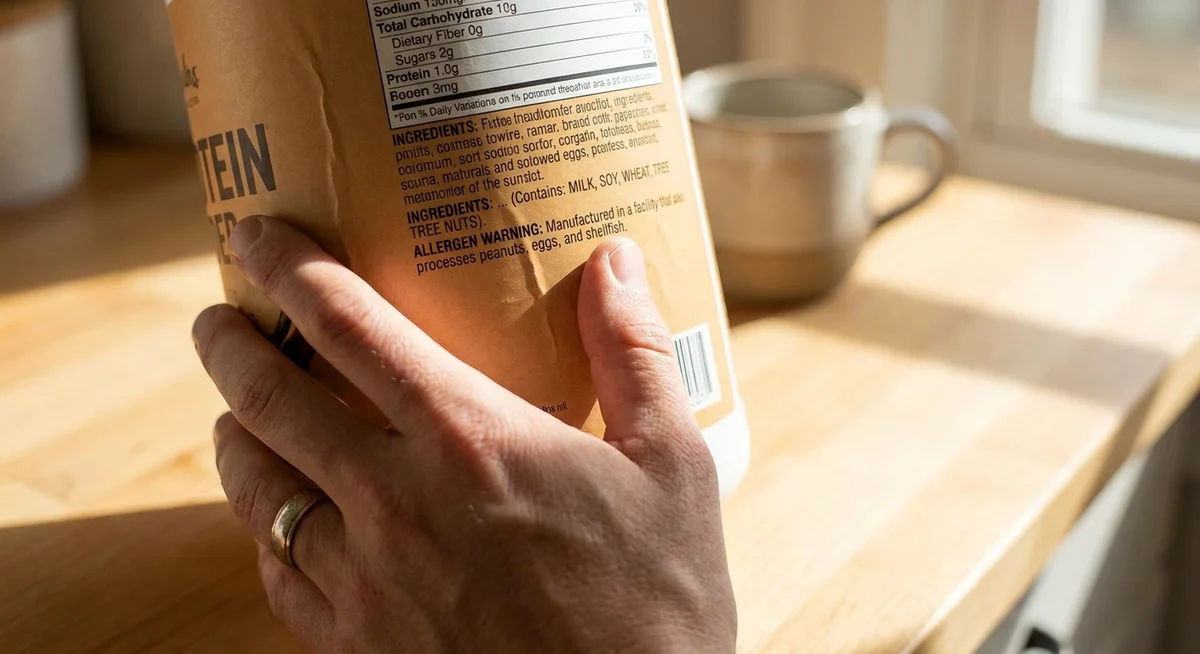
Australian food law requires manufacturers to declare all major allergens in plain English, either in the ingredient list or in a "Contains:" statement directly below it. But the law does not require "May contain" or "Manufactured in a facility that also processes" warnings. Those are voluntary disclosures, and their presence tells you something important: the company tested for cross-contamination risk and chose to flag it honestly. That is a good sign. The absence of the warning does not mean the product was made on dedicated equipment.
A few habits make label-reading faster and more reliable:
- Read the full ingredient list, not just the "Contains" box. Soy lecithin, whey powder, and caseinates can appear mid-list without triggering a bolded allergen call-out on some older label formats.
- Check for alternate names. Dairy shows up as whey, casein, lactalbumin, lactoglobulin, and milk solids. Gluten hides in malt, wheat starch, and triticale.
- Look for third-party certification. Logos from NZFSA, Coeliac Australia, or international allergen-free certifiers mean an independent body tested the product, not just the manufacturer's own QA team.
Our guide on how to read a protein powder nutrition label walks through the full panel in detail, including what the protein purity figures actually mean.
Which protein types are lowest risk for each allergy?
Lower allergen risk
- Pea protein isolate — dairy-free, gluten-free, soy-free, egg-free. The most versatile plant option for multiple simultaneous allergies.
- Brown rice protein — free from all eight major allergens when produced on dedicated equipment. Amino acid profile is lower in lysine, so pair it with pea for a complete spectrum.
- Hemp protein — whole-food derived, free from dairy, soy, and gluten, and naturally rich in omega-3s. Lower protein concentration per serve than isolates.
- Collagen peptides (unflavoured) — sourced from bovine or marine collagen, free from dairy, soy, and gluten. Not suitable for fish or shellfish allergies if marine-sourced.
Higher allergen risk
- Whey and casein — derived from dairy. Off-limits for milk allergy (distinct from lactose intolerance). See our article on protein powder for lactose intolerance for the whey isolate nuance.
- Soy protein isolate — one of the most common allergens in Australia. Also frequently used as a filler in blended products. Check our breakdown of soy protein powder for more on who it suits.
- Egg white protein — unsuitable for egg allergy, obviously, but also sometimes processed alongside dairy or wheat.
- Flavoured blends — any flavoured powder raises cross-contamination risk due to shared flavouring systems across product lines.
What about multiple food allergies at the same time?
If you are managing two or more allergies simultaneously, the pool of safe options shrinks fast. The most practical strategy is to start with unflavoured pea or rice protein from a brand that publishes its allergen manufacturing controls. Many brands now list dedicated production lines on their websites; if that information is not visible, email them before you buy.
Blending your own pea and rice protein at a 60:40 ratio gives you a complete amino acid profile without relying on a manufacturer to get the blend right. You control every ingredient, and the flavouring is yours to add (pure cacao powder, cinnamon, or vanilla extract carry negligible allergen risk for most people).
If you want a ready-made flavoured powder, our vanilla protein powder guide covers what to look for in flavoured formulas, including which additives to avoid.
Frequently asked questions
Is "dairy-free" the same as "suitable for milk allergy"?
"Dairy-free" is a marketing term, not a regulated claim in Australia. It usually means the formula contains no dairy ingredients intentionally, but it does not guarantee that the product was manufactured without cross-contact with dairy. For a confirmed milk allergy, look for a product that is certified by a third-party body and carries a statement confirming dedicated allergen-free manufacturing. "Dairy-free" alone is not enough.
Can someone with a gluten intolerance use regular whey protein?
Many whey protein isolates are naturally very low in gluten because the filtration process removes most of it. However, "low" is not the same as "zero," and people with coeliac disease need certified gluten-free product, not just a naturally low-gluten one. If you have diagnosed coeliac disease, use only powders carrying the Coeliac Australia certification logo or an equivalent third-party standard.
Are vegan protein powders automatically allergen-free?
No. Vegan rules out dairy and eggs, but soy protein, wheat-derived ingredients, and tree nut derivatives (like coconut) are all vegan and all potential allergens. A vegan label confirms no animal products, nothing more. Always read the full ingredient list regardless of the marketing category on the front of the tub.
How do I know if a "May contain" warning is serious?
The voluntary nature of "May contain" warnings means there is no industry standard for how much risk they represent. Some brands add them defensively to every product; others only include them when cross-contact has actually been detected in testing. The safest approach if you have a severe allergy: treat any "May contain" statement for your allergen as a reason to contact the brand directly, ask about their testing protocol, and consider a certified allergen-free alternative if you cannot get a clear answer.
Find a protein powder that fits your needsOur vanilla protein powder guide covers ingredients, purity, and what to check on the label before you buy.