Strawberry Protein Powder: How to Pick the Right One
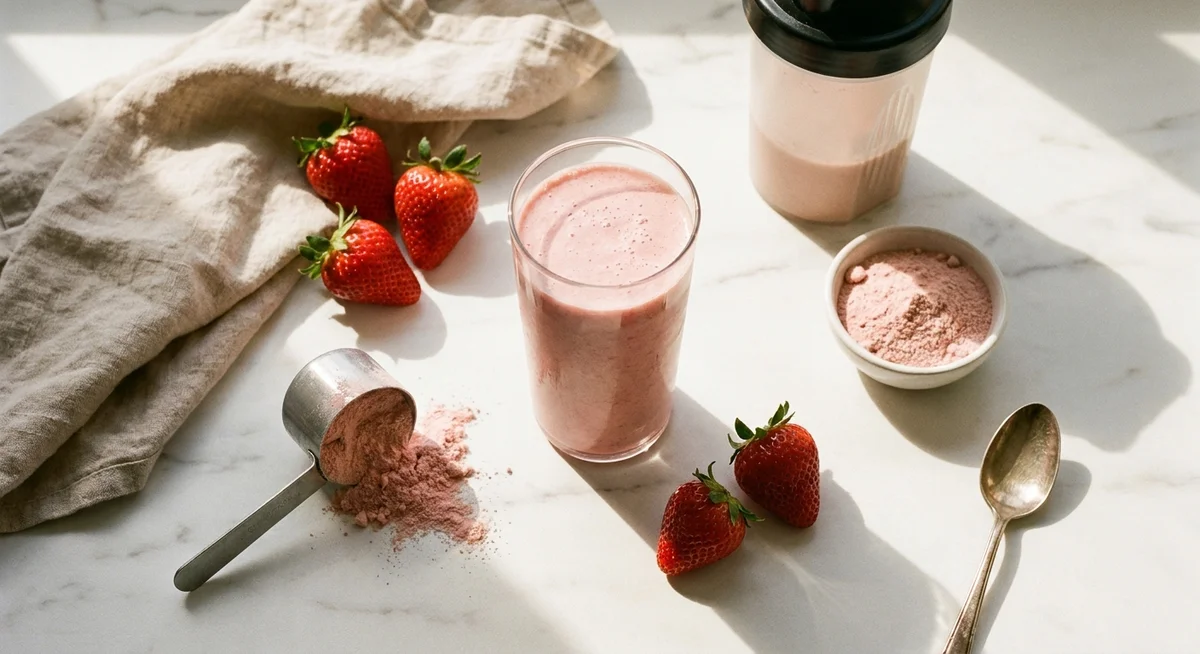
Strawberry protein powder is one of the most popular flavors on the market, yet it is also one of the most inconsistent. The gap between a scoop that tastes like a fresh berry shake and one that tastes like strawberry-flavored medicine is enormous. Knowing what separates them — and which base protein actually suits your training goals — means you stop buying tubs that end up in the bin.
Key takeaways
- Natural flavoring and real fruit powder produce noticeably better taste than artificial alternatives.
- Whey concentrate, whey isolate, casein, and plant blends all come in strawberry and each suits a different purpose.
- A quality tub should deliver at least 20 g of protein per 30 g serving with minimal filler sugars.
- Third-party testing (Informed Sport, NSF Certified) matters more for flavored powders because artificial additives are harder to spot on a label.
- Mixability is a real differentiator in strawberry formulas: some clump badly in water alone.
Why does strawberry flavor vary so much between brands?
Strawberry flavoring is harder to nail than chocolate or vanilla. Chocolate is forgiving — cocoa powder masks a lot. Vanilla sits quietly behind the protein. Strawberry, by contrast, needs to taste bright and slightly tart without tipping into cough-syrup territory. Most cheap formulas rely on artificial flavor compounds (ethyl methylphenylglycidate is common) that read as candy rather than fruit. Premium brands use a combination of natural strawberry flavor and freeze-dried strawberry powder, which delivers that realistic, slightly tangy character. When you read a label, look for "natural flavors" and ideally "strawberry powder" in the ingredient list — both are a positive sign.
Which protein base should you choose?
The base protein affects taste, digestion speed, and who the product actually suits. Here is how the main options stack up in a strawberry format.
| Protein Base | Protein per 30 g | Best For | Strawberry Flavor Notes |
|---|---|---|---|
| Whey Concentrate | 22–24 g | Post-workout, general use | Creamy, slightly milky — rounds out the berry flavor well |
| Whey Isolate | 25–27 g | Lactose sensitivity, lean goals | Lighter body, cleaner fruit taste, less coating on the palate |
| Casein | 23–25 g | Overnight recovery, hunger control | Thick and pudding-like — works better as a shake with milk than water |
| Pea Protein | 21–23 g | Vegan, dairy-free | Earthier base; strawberry needs to be strong to cover the pea note |
| Pea + Rice Blend | 20–22 g | Vegan, complete amino profile | Neutral enough that berry flavor comes through cleanly |
What should you check on the label before buying?
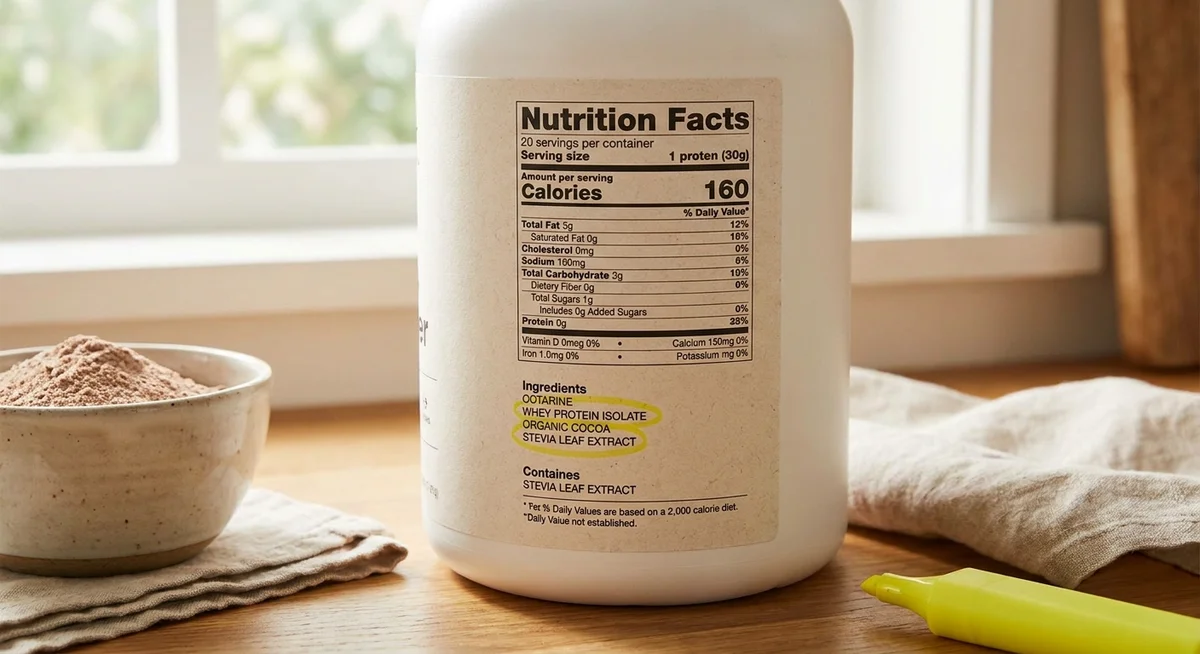
Beyond flavor, the nutrition panel tells you a lot about value for money. A serving size is typically 30 to 35 g of powder. Within that, you want at least 20 g of protein — ideally 22 g or more. If the protein per serving is under 18 g on a 30 g scoop, the brand is bulking the product with fillers: maltodextrin, guar gum, or inulin. None of those are harmful in small amounts, but you are paying protein prices for cheap carbohydrates.
Sweeteners are worth checking too. Sucralose is the most common in flavored powders and is generally fine in the quantities found in a single scoop. Stevia gives a slightly bitter aftertaste that some people find distracting in a light berry flavor. Acesulfame potassium (Ace-K) is often listed alongside sucralose and has no known issues at serving amounts. If a product is sweetened only with sugar or dextrose, check the total carbohydrates — anything over 8 g per serving on a 30 g scoop deserves a second look unless you specifically want a mass gainer.
Signs of a quality strawberry powder
- Natural flavor or strawberry powder listed in ingredients
- 20 g+ protein per 30 g serving
- Third-party tested (Informed Sport, NSF, Labdoor)
- Short ingredient list with no proprietary blends
- Positive independent taste reviews (not just brand-run)
Signs to be cautious
- Protein per serving well under 20 g on a 30 g scoop
- Artificial color additives (Red 40, Allura Red)
- No third-party certification of any kind
- Proprietary "flavor blend" with no breakdown
- More than 8 g of sugar per serving with no mass-gain purpose
How to actually use strawberry protein powder
The obvious use is a post-workout shake, and strawberry works well there. But the flavor is versatile. It blends naturally with banana, mango, and Greek yogurt in smoothies. Mixed into overnight oats with sliced fresh strawberries, the powder adds protein without tasting processed. Casein-based strawberry powder stirred into milk or yogurt and chilled overnight makes a thick, dessert-like snack that keeps hunger flat for hours — useful if your evenings are the hardest stretch for staying on track with protein targets.
For cooking, strawberry protein powder is best kept to no-bake recipes: energy balls, protein bars, and yogurt mixes. Heat degrades the whey fractions and intensifies artificial flavors in a way that is hard to mask. If baking is your main use, a plant-based blend tends to hold up better than whey.
If you are comparing strawberry against other flavors for versatility, our guide to vanilla protein powder covers the cases where a neutral base is the smarter choice — especially if you cook with it regularly.
For those choosing entirely on dietary grounds, our guide to vegan protein powders digs into which plant-based bases actually deliver a full amino acid profile and which ones fall short without blending.
Frequently asked questions
Is strawberry protein powder good for weight loss?
Yes, provided you choose a formula with high protein per serving and low added sugars. A 25 g protein shake with under 5 g of carbohydrates and 150 calories fits most fat-loss plans. The bigger factor is total daily protein — the flavor is secondary. A strawberry whey isolate or a pea-rice blend both work well for this goal.
Why does my strawberry protein powder clump in water?
Clumping usually comes from a poor lecithin content or a casein base that needs fat to hydrate properly. Whey isolates with sunflower lecithin listed in the ingredients dissolve best. A shaker bottle with a wire whisk ball almost always solves the problem, regardless of the formula. Cold water (not warm) also produces a smoother mix for most strawberry powders.
Does natural strawberry flavoring taste noticeably better than artificial?
For most people, yes. Natural flavoring and freeze-dried strawberry powder produce a tartness that reads as real fruit. Artificial compounds tend to taste sweeter and flatter, similar to strawberry candy rather than fresh berries. That said, formulas using natural flavors are generally 10 to 20 percent more expensive, so the difference has to matter to your palate to justify the cost.
Can I mix strawberry protein powder with milk instead of water?
Absolutely — and with most strawberry formulas, milk produces a noticeably better texture and taste. Full-cream or reduced-fat cow's milk, oat milk, and almond milk all work. Oat milk adds a gentle sweetness that pairs well with the berry flavor. If you are tracking calories closely, account for the extra 50 to 150 calories that dairy or fortified plant milks add per 250 ml.
Find the Best Protein Powder for Your GoalsBrowse Australia's protein powder guide to compare types, flavors, and formulas in one place.