Protein Powder for Yoga and Pilates: How to Support Strength and Recovery
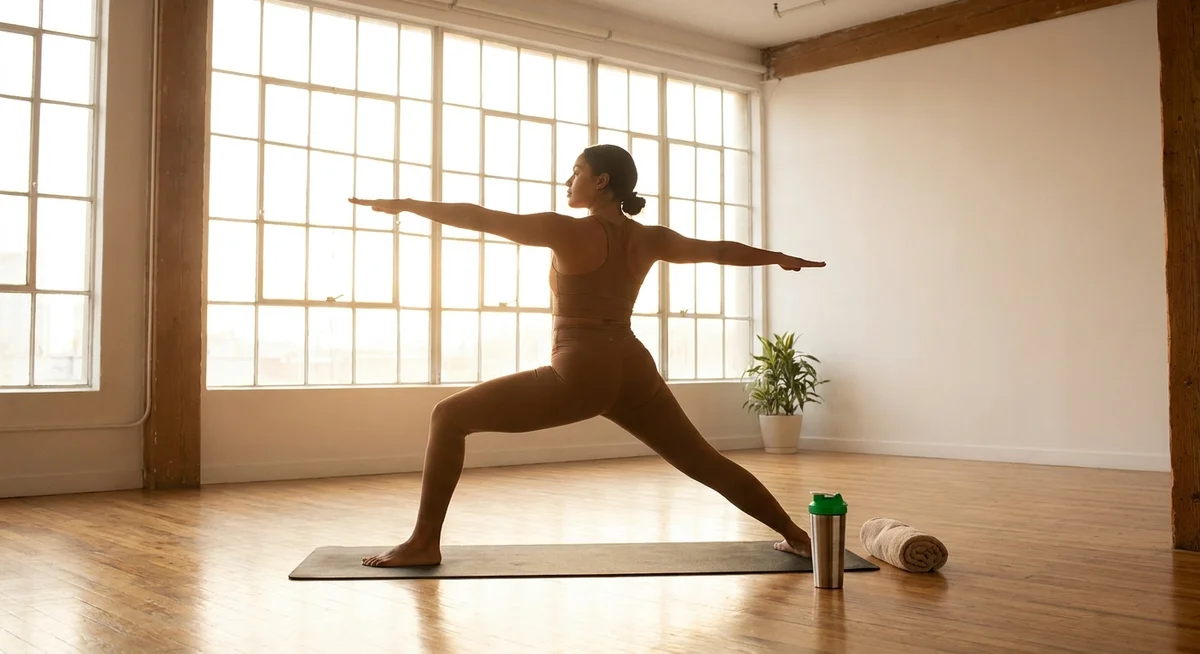
Yoga and Pilates are not light workouts. A 60-minute vinyasa flow or a reformer Pilates class puts real demand on your muscles, particularly through slow, controlled holds and deep eccentric contractions that leave you sorer the next day than a jog ever would. Protein powder can help you recover faster, maintain lean muscle, and keep showing up on the mat without feeling wrecked.
Key takeaways
- Yoga and Pilates cause meaningful muscle damage, especially through slow eccentric movements and long holds.
- Most practitioners need 1.4 to 1.8 g of protein per kilogram of bodyweight daily to support recovery.
- A 20 to 30 g serving of protein within two hours of class is enough to trigger muscle protein synthesis.
- Plant-based proteins work well for this audience; whey isolate is a strong option if you tolerate dairy.
- Avoid heavy, bloating formulas before class. Timing matters as much as dose.
Why do yoga and Pilates actually damage your muscles?
The soreness you feel after a deep yin session or a Pilates reformer class is not imaginary. Both disciplines rely heavily on eccentric loading, where your muscles lengthen under tension. Think of holding a low lunge, slowly lowering through a Pilates roll-down, or controlling the descent in a boat pose. Research consistently shows that eccentric contractions create more micro-damage than concentric ones, which is why you can feel surprisingly sore after a session that barely raised your heart rate.
Long isometric holds, common in both yoga and Pilates, also fatigue slow-twitch muscle fibres in a way that traditional gym training often misses. Over time this builds real functional strength, but it also means your muscles need adequate protein to repair and adapt between sessions.
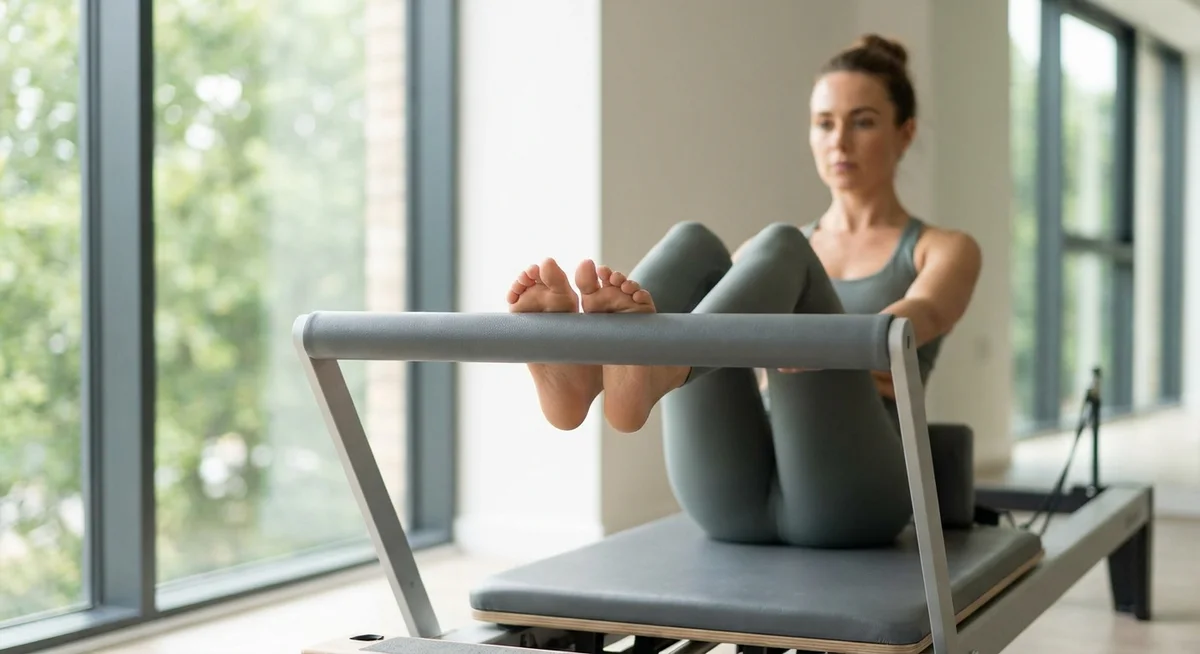
How much protein do yoga and Pilates practitioners actually need?
If you train two to five times per week, you are not a casual exerciser. Current sports nutrition research puts the protein target for people doing regular resistance or functional training at 1.4 to 1.8 g per kilogram of bodyweight per day. For a 65 kg person, that is roughly 91 to 117 g of protein daily.
Most people eating a regular diet land somewhere between 60 and 80 g without thinking about it. A single well-timed protein shake closes much of that gap without requiring you to overhaul every meal.
| Bodyweight | Lower target (1.4 g/kg) | Upper target (1.8 g/kg) |
|---|---|---|
| 55 kg | 77 g/day | 99 g/day |
| 65 kg | 91 g/day | 117 g/day |
| 75 kg | 105 g/day | 135 g/day |
| 85 kg | 119 g/day | 153 g/day |
Which protein powder works best for yoga and Pilates?
The best formula depends on your diet, your digestion, and how you prefer to use it. Here are the four most relevant options for this style of training.
Best options
- Whey isolate: fast-digesting, high in leucine (the amino acid most responsible for triggering muscle repair), and low in lactose. Ideal post-class.
- Pea protein: plant-based, gut-friendly, and a complete amino acid profile when sourced from quality manufacturers. Works well for vegans and anyone who finds whey bloating.
- Brown rice protein: mild flavour, easy to digest, and blends cleanly into smoothies. Best combined with pea protein for a fuller amino acid profile.
- Casein: slow-digesting, so useful before bed if you train in the evening and want overnight recovery support.
Options to approach with care
- Whey concentrate: higher in lactose than isolate. Fine if you tolerate dairy well, but can cause bloating mid-class if taken too close to training.
- High-sugar mass gainers: designed for bulk, not the functional lean physique that most yoga and Pilates practitioners are after.
- Collagen peptides alone: useful for joint and connective tissue support but not a complete protein source. Use alongside, not instead of, a full-spectrum powder.
For a detailed breakdown of how plant and whey options compare across key markers, the plant protein vs. whey comparison guide is worth reading before you decide.
When should you take protein powder around your practice?
Timing is straightforward. The most important window is within two hours after class, when your muscles are primed to absorb amino acids and begin repairs. A 20 to 30 g serving during this window is enough. You do not need to slam a shake the moment you roll up your mat, but do not leave it five hours either.
If you train at night, a casein shake or a blend with slower-digesting protein before bed can extend the repair window through the hours when your body does most of its recovery work. For more detail on how nighttime protein timing affects recovery, the article on protein powder and sleep covers the research in full.
What to avoid: taking a thick, high-fibre, high-fat shake immediately before a hot yoga class or any session that involves inversions. Give yourself at least 90 minutes after a full serving before you go upside down.
What about protein powder and flexibility goals?
Protein does not directly improve flexibility, but it does support the connective tissue, tendons, and fascia that determine how far and how safely you can move. Some practitioners add a small dose of vitamin C alongside collagen peptides (separate from their main protein shake) to support collagen synthesis in joints and ligaments. The evidence for this specific combination is growing, particularly for people doing yoga or gymnastics-style mobility work.
The more direct benefit of adequate protein for flexibility is simply less soreness. When you recover fully between sessions, you show up with more supple, responsive muscles rather than ones that are still in the middle of repairing themselves.
If flavour choice matters to you, a quality vanilla protein powder is one of the most versatile options for this style of training. It mixes cleanly into smoothies, pairs well with fruit and greens, and does not dominate more delicate flavour combinations the way chocolate-based powders can.
Find the right protein powder for your training styleOur full buying guide walks through every type, dose, and goal in plain language.Frequently asked questions
Do I need protein powder if I only do yoga once or twice a week?
Probably not as a supplement. At that frequency, a balanced diet with quality protein at most meals, eggs, chicken, legumes, fish, or dairy, should cover your needs. Protein powder becomes more useful when you train three or more times per week, skip meals regularly, or follow a plant-based diet that makes it harder to hit daily protein targets from whole foods alone.
Can protein powder make me bulky if I do Pilates?
No. Protein powder does not cause muscle bulk on its own. Bulk comes from sustained heavy resistance training combined with a significant calorie surplus over months. Pilates builds functional, lean muscle. Adequate protein helps you recover and maintain that muscle without adding mass beyond what your training stimulus actually creates.
Is plant-based protein powder better for yoga practitioners?
Not categorically, but many yoga practitioners prefer plant-based options for ethical or digestive reasons. A quality pea protein isolate or a pea-and-rice blend performs comparably to whey for recovery purposes. The key is choosing one with a complete amino acid profile and at least 20 g of protein per serving. Check the label rather than trusting the marketing language on the front of the bag.
How do I avoid bloating from protein powder before a class?
Allow at least 90 minutes between a full serving and your class. If you need something closer to session time, use a smaller 10 to 15 g serving mixed with water only, not milk. Avoid powders with sugar alcohols (maltitol, sorbitol), high fibre blends, or added fats before practice. Whey isolate and pea protein tend to be the most gut-friendly options for pre-class use.