Protein Powder and Sleep: How Nighttime Nutrition Affects Recovery

Your body does most of its muscle-building work while you sleep, not while you train. Protein powder taken at the right time before bed can meaningfully improve overnight muscle repair, slow nighttime muscle breakdown, and help you wake up better recovered. The catch is that type, dose, and timing all matter.
Key takeaways
- Muscle protein synthesis stays active during sleep, but only if amino acids are available in the bloodstream.
- Casein protein digests slowly over 5 to 7 hours, making it the best studied option for overnight use.
- A dose of 30 to 40 g of protein roughly 30 minutes before bed is the most commonly supported range in the research.
- Whey can work if you train late, but it clears your system in 2 to 3 hours and leaves a gap overnight.
- Sleep quality itself affects protein utilisation: poor sleep blunts the anabolic response no matter what you consume.
Why does protein before bed actually matter?
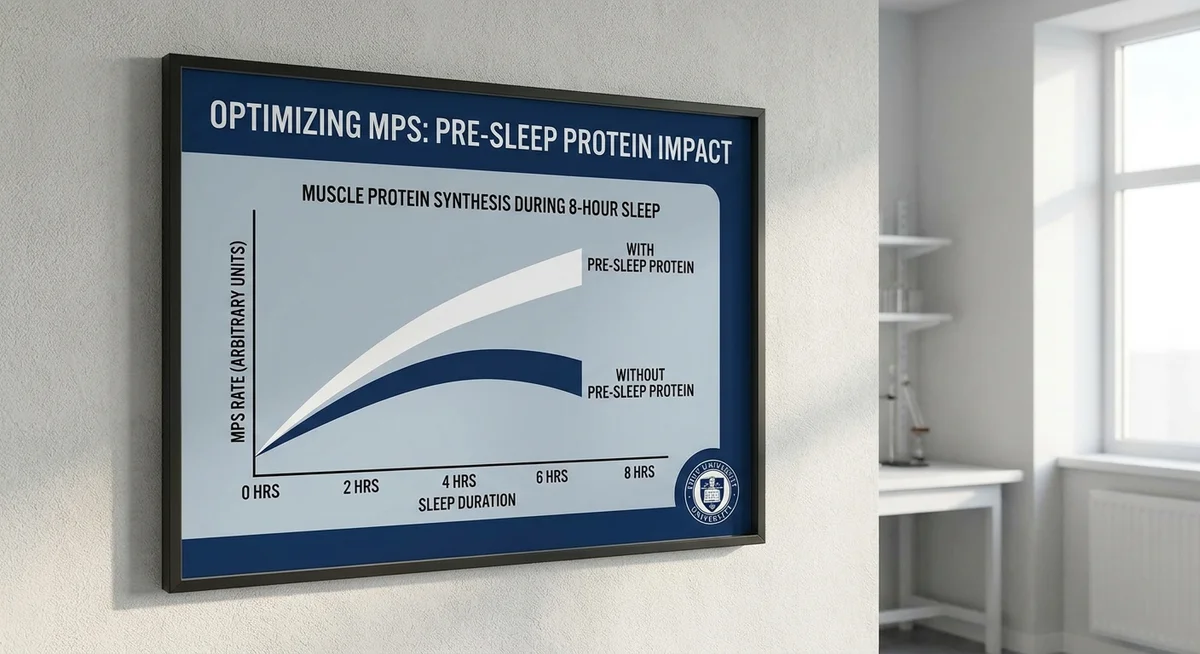
Muscle protein synthesis (MPS) runs in cycles around the clock. After you train, MPS spikes and then gradually falls. By the time you go to sleep, that window has largely closed unless you have eaten protein in the hours before. A 2012 study published in Medicine and Science in Sports and Exercise by Res and colleagues was one of the first to show clearly that consuming 40 g of casein protein before sleep increased overnight MPS by roughly 22 percent compared to a placebo group. Subsequent studies from Maastricht University confirmed the effect and showed it translated into greater muscle mass gains over 12 weeks of resistance training.
The key mechanism is simple: your muscles need amino acids to repair and build. After roughly 4 to 5 hours without food, circulating amino acid levels drop, and the rate of muscle breakdown begins to exceed the rate of synthesis. A slow-digesting protein source bridges that gap through the night.
Which protein type is best for overnight use?
The digestion speed of a protein source determines how well it covers an overnight fast. Here's how the main types compare:
| Protein Type | Digestion Speed | Overnight Coverage | Best For |
|---|---|---|---|
| Casein | Slow (5-7 hours) | Excellent | Most people wanting overnight recovery |
| Whey Isolate | Fast (1.5-2.5 hours) | Poor for overnight; good post-training | Late-evening training sessions |
| Whey Concentrate | Moderate-fast (2-3 hours) | Limited | Budget option when casein isn't available |
| Pea Protein | Moderate (3-4 hours) | Decent | Plant-based athletes, those avoiding dairy |
| Blended Plant Proteins | Moderate-slow (3-5 hours) | Good | Vegans wanting slower release |
Casein wins clearly because of its micellar structure, which gels in the stomach and releases amino acids in a controlled drip rather than a flood. If you follow a plant-based diet, a blended protein combining pea, rice, and hemp protein comes closest to replicating that slower release. You can read more about this tradeoff in our guide to plant protein vs whey.
How much protein should you take before bed?
The research cluster around 30 to 40 g as the effective dose for overnight MPS support in adults who train. Going below 20 g is unlikely to meaningfully elevate MPS through the night. Going above 50 g adds calories without a proportional benefit because MPS cannot scale indefinitely with dose at a single sitting.
For people over 40, there is a good case for sitting at the higher end (35 to 40 g). Anabolic sensitivity declines with age, meaning older adults need a larger leucine signal to trigger the same MPS response. If managing muscle loss after 40 is a priority for you, our article on protein powder and ageing covers the broader strategy in detail.
Does protein before bed affect sleep quality?
This is a reasonable concern, and the short answer is: it depends on what you're taking. A plain casein shake is unlikely to disrupt sleep in most people. Some research suggests that protein before bed may actually support sleep quality by providing the amino acid tryptophan, a precursor to serotonin and melatonin.
What can hurt sleep is everything else that sometimes comes with a pre-sleep shake: added caffeine, large quantities of sugar (which can cause blood sugar swings), and excessive volume of liquid that sends you to the bathroom twice a night. Choose an unflavoured or lightly sweetened casein, keep total volume under 300 ml, and avoid any blends that contain stimulants. Some protein powders contain green tea extract or other compounds that carry caffeine. Check the label carefully.
Sleep quality also feeds back into protein use. Poor or fragmented sleep raises cortisol, which increases muscle protein breakdown and reduces the anabolic response to amino acids. If you're relying on pre-sleep protein to fix a recovery problem that is actually caused by inadequate sleep, the protein will only take you so far. For a deeper look at how cortisol affects your gains, see our article on protein powder and stress.
Do you need pre-sleep protein every night?
Not necessarily. The benefit is largest on nights following a resistance training session, when muscle protein breakdown is elevated and MPS is primed to respond to available amino acids. On complete rest days, the overnight anabolic window is smaller, and a high-protein dinner may be sufficient to carry you through.
If your total daily protein intake is already hitting your target (typically 1.6 to 2.2 g per kg of body weight), a pre-sleep shake may add redundant calories without a significant extra benefit. Use it strategically around your training schedule rather than as a nightly habit regardless of context. Our full guide to choosing the right protein for your goal can help you map out a complete daily approach.
Frequently asked questions
Will protein before bed make me fat?
No, provided it fits within your total daily calorie target. Protein has the highest thermic effect of any macronutrient, meaning around 20 to 30 percent of its calories are burned in digestion alone. A 35 g casein shake typically contains 130 to 150 calories. If you are in a deficit overall, a pre-sleep shake does not change that equation. What matters is total intake across the day, not the timing of any single meal.
Is casein safe to take every night?
Yes, for the vast majority of healthy adults. Casein is simply a dairy protein. The only groups who need to be cautious are those with a diagnosed dairy allergy (distinct from lactose intolerance, since casein is the protein fraction and is lactose-free). If you have existing kidney disease, speak to your doctor before increasing protein intake significantly, as the general research on protein and kidney health applies here too.
Can I just eat cottage cheese instead of a shake?
Yes. Cottage cheese is high in casein and is a genuinely good pre-sleep option. A 200 g serving provides roughly 25 to 28 g of protein. For people who find it easier to eat real food before bed than to drink a shake, cottage cheese, Greek yogurt, or quark are practical alternatives. A shake is simply more convenient when you want precise dosing or need to avoid extra carbohydrates.
What if I train late at night?
If you train within 2 hours of sleep, a whey shake immediately post-workout followed by a casein shake before bed is a reasonable approach. The whey addresses the acute post-training MPS spike with fast-absorbing amino acids, while the casein covers the overnight window. If calories are tight, a blended whey-casein product works as a middle-ground single shake.
Looking for a clean protein powder to try before bed? Read our full guide to vanilla protein powder, including what to check on the label before you buy.