Protein Powder and Travel: How to Hit Your Targets When You're Away From Home
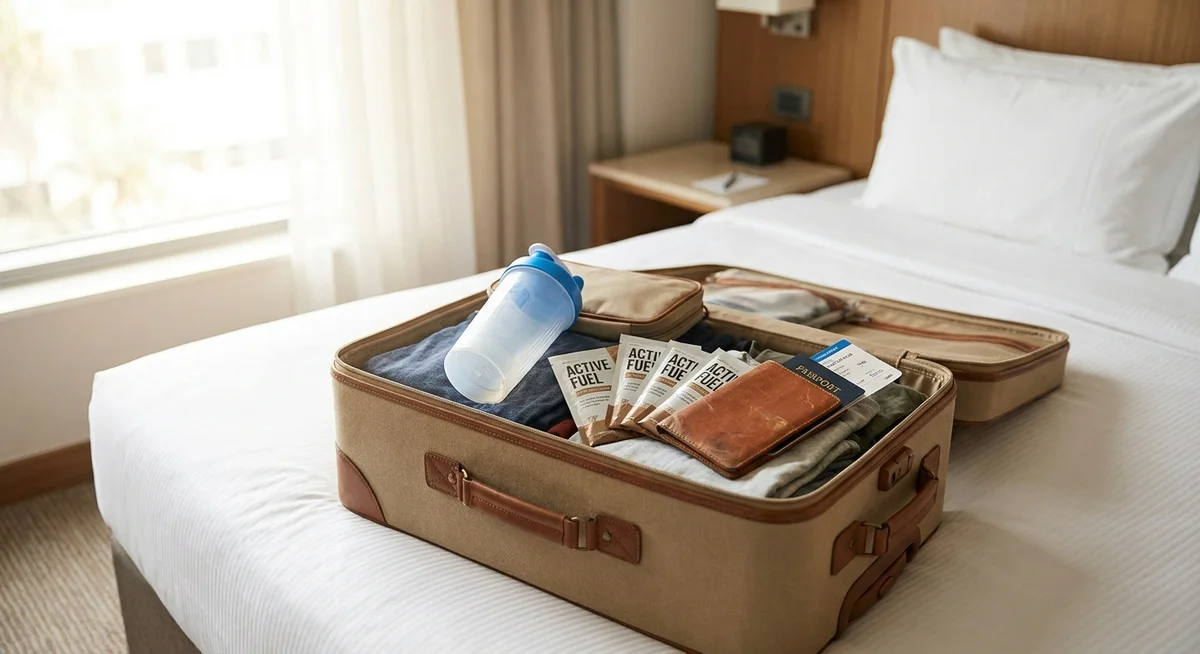
Keeping protein intake consistent is straightforward when you have your own kitchen, your regular supermarket, and your usual routine. The moment you leave home — whether for a work trip, a holiday, or a long weekend — that structure disappears. Protein is the macronutrient most likely to drop during travel, and the deficit adds up fast, especially if you're training. Here's a practical guide to staying on track without turning every trip into a nutrition project.
Key takeaways
- Pre-portioned protein sachets or zip-lock servings are the most travel-friendly format — no bulky tub required.
- Most airports, hotels, and convenience stores carry high-protein foods; you just need to know where to look.
- A shaker bottle is worth the luggage space. A blender is not.
- A short trip of 3 to 5 days rarely causes muscle loss, but consistent low protein over 10+ days will affect recovery.
- Customs rules matter: powders can trigger screening, and some countries restrict certain ingredients. Check before you pack.
How do you pack protein powder for travel without the hassle?
The single biggest mistake travellers make is bringing an entire tub. A 1 kg tub is heavy, takes up half a carry-on, and will almost certainly be flagged for additional screening at airport security. The smarter approach is to pre-portion your servings into small zip-lock bags or reusable silicone pouches before you leave. Label each one with the serving size and flavour.
If you prefer a cleaner option, many brands now sell individual sachets or single-serve sticks specifically designed for travel. They cost slightly more per serve, but the convenience is genuine — no spills, no bulk, no measuring on the road. Pack one per day you'll be away, plus two or three extras for days you train hard or can't find a decent meal.
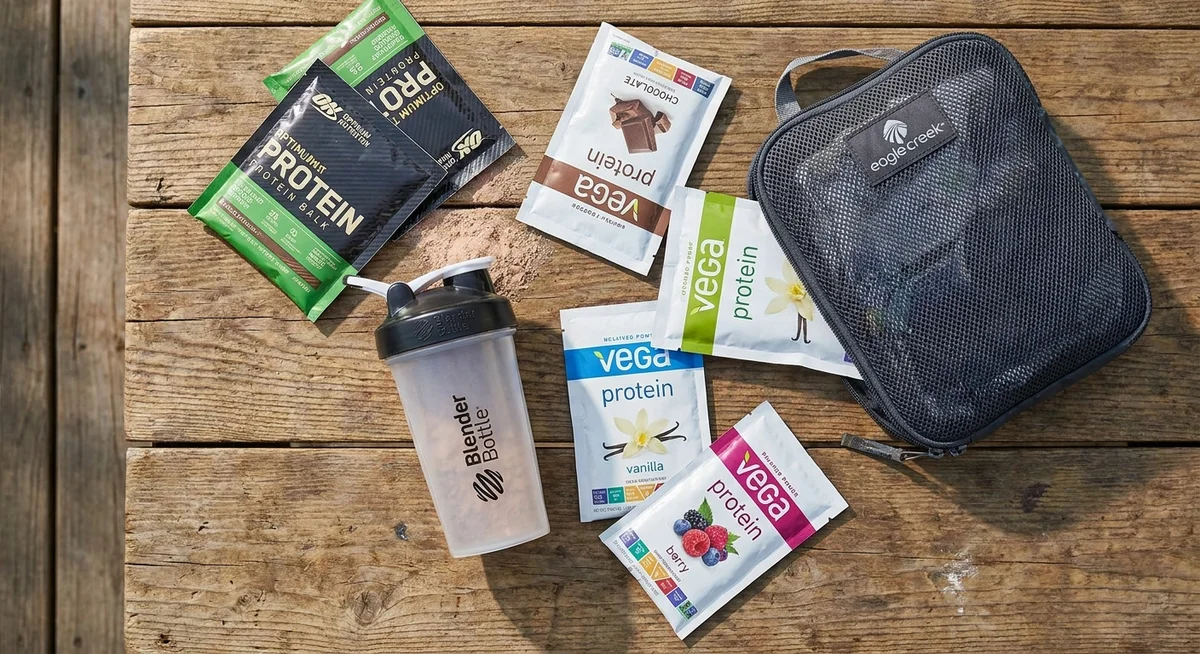
For carry-on luggage, powders are generally allowed through airport security in Australia and most international destinations. However, powders over 350 ml (roughly 350 g) in carry-on bags may be subject to additional screening in some countries, particularly the United States and European Union airports. If you're carrying a larger quantity, pack it in your checked luggage to avoid delays.
What high-protein foods can you find when travelling?
Protein powder is a convenience tool, not a replacement for real food — and real food is usually available, even on the road. The key is knowing which options to look for in each setting.
| Setting | Best high-protein options | Approximate protein |
|---|---|---|
| Airport | Greek yoghurt, boiled eggs, deli chicken wrap, protein bar | 15 to 30 g per item |
| Hotel breakfast buffet | Eggs (scrambled, poached, or omelette), smoked salmon, cottage cheese | 20 to 40 g per plate |
| Convenience store | Canned tuna, hard cheese, beef jerky, roasted edamame | 10 to 25 g per pack |
| Restaurant | Any main with a grilled protein (chicken, steak, fish, tofu) as the centrepiece | 25 to 50 g per serve |
| Supermarket | Rotisserie chicken, cottage cheese, flavoured tuna pouches, ready-made boiled eggs | 20 to 40 g per serve |
Hotel breakfast buffets are genuinely underrated. If eggs are available, load up — three scrambled eggs deliver around 18 g of protein before you've touched anything else. Add smoked salmon or a few slices of ham and you've hit 30 g before 8 am. That's a strong start that makes the rest of the day much easier to manage.
How should you adjust your protein strategy based on trip length?
Not every trip requires the same level of planning. A 48-hour interstate work trip is very different from a three-week backpacking holiday, and your approach should reflect that.
Short trips (1 to 4 days)
- Bring 4 to 6 pre-portioned serves in zip-lock bags
- One shaker bottle is enough
- Focus on high-protein choices at meals; don't stress if you drop 10 to 20 g on one day
- Keep a protein bar or two in your bag for transit gaps
- Muscle loss risk at this duration is essentially zero
Long trips (5+ days)
- Research supermarkets near your accommodation before you arrive
- Buy a small supply of tuna pouches, Greek yoghurt, or cottage cheese locally
- Aim to hit at least 80% of your usual daily target on rest days, 100% on training days
- Consider ordering a box of single-serve sachets to a hotel or Airbnb if you'll stay in one place
- Consistent deficit over 10+ days will affect recovery, so treat it seriously
What about training while travelling?
Many hotels have small gyms, and bodyweight sessions in your room are a legitimate option. If you're training while away, the protein rules from your normal routine still apply: aim to consume protein within a couple of hours of your session, distribute intake across at least three meals, and don't rely on a single large hit at dinner to cover the whole day.
If your schedule is chaotic — early flights, long days, late dinners — a protein shake mixed in your room or grabbed at the airport fills the gaps that real food can't always cover. For a broader look at how timing affects results, the guide on protein powder before or after a workout covers the research in detail.
For those travelling specifically for endurance events (marathons, triathlons, cycling tours), protein needs during travel are slightly different. The article on protein powder for endurance athletes goes into the specifics of how much you need and when.
Frequently asked questions
Can I bring protein powder on a plane?
Yes, in most cases. In Australia and the majority of international airports, protein powder is permitted in both carry-on and checked luggage. Some countries (including the US) may require additional screening for powders over a certain volume in carry-on bags. Pre-portioning servings into smaller bags reduces the chance of delays. Always check the current rules for your specific destination before flying.
Is it worth buying protein powder at my destination instead of packing it?
For trips longer than a week, buying locally is often the most practical option. Most countries with a gym culture have protein powder available in supplement stores, pharmacies, or large supermarkets. The brand will be different but the fundamentals are the same. For short trips, pre-portioned servings from home are faster and more reliable.
How do I mix protein powder without a blender while travelling?
A shaker bottle with a metal mixing ball handles protein powder well. Add water first, then powder, then shake for 20 to 30 seconds. If you don't have a shaker, a wide-mouth water bottle and a fork will work in a pinch — it just takes more stirring. Whey isolate tends to mix more cleanly than concentrate or plant-based blends, which is worth considering when choosing what to pack.
Will a few days of lower protein intake actually set back my progress?
For a short trip of 2 to 5 days, the practical impact on muscle is minimal, especially if you're still eating reasonable amounts of food overall. Where people run into trouble is extended travel — 2 to 4 weeks — with consistently low protein and no training. In that case, some muscle loss is possible. Good planning and smart food choices while away are enough to prevent it for most people.
Find the right protein powder for your routine Our buying guide breaks down every type by goal, diet, and budget so you can make a confident choice.