Protein Powder for Team Sport Athletes: How to Fuel Training and Match Day

Team sport athletes - whether they play rugby, soccer, basketball, AFL, or hockey - put their bodies through a mix of sprinting, contact, change-of-direction, and sustained aerobic effort that no single training block fully replicates. That complexity makes nutrition tricky. Protein powder can fill real gaps in a team athlete's diet, but only when you understand what those gaps actually are.
Key takeaways
- Team sport athletes typically need 1.6 to 2.0 g of protein per kg of bodyweight daily, with higher targets during pre-season or double training days.
- Post-training and post-match timing is the highest-priority window for protein intake.
- Whey isolate works best for fast post-exercise recovery; casein suits a nighttime dose on heavy training days.
- Carbohydrate intake matters more for team sport than it does for pure strength training - protein supplements should not replace carbs.
- Not all protein powders are safe for competitive athletes - look for third-party batch testing.
Why do team sport athletes have different protein needs?
Team sports sit at the crossroads of power and endurance. A soccer midfielder covers 10 to 13 km per match. An AFL forward makes dozens of explosive sprints and physical contests. A rugby prop absorbs repeated contact that causes significant muscle damage. Each of these demands drives protein breakdown, and that breakdown must be repaired before the next session or the next match.
Research published in the Journal of the International Society of Sports Nutrition puts the daily protein target for team sport athletes at 1.6 to 2.0 g per kg of bodyweight. A 90 kg rugby lock therefore needs around 144 to 180 g of protein per day - an amount that is genuinely difficult to reach through whole food alone when training twice a day, travelling to away games, or eating from a club canteen.
This is where protein powder earns its place. It is not a replacement for real food; it is a reliable, fast, portable top-up that closes the gap.
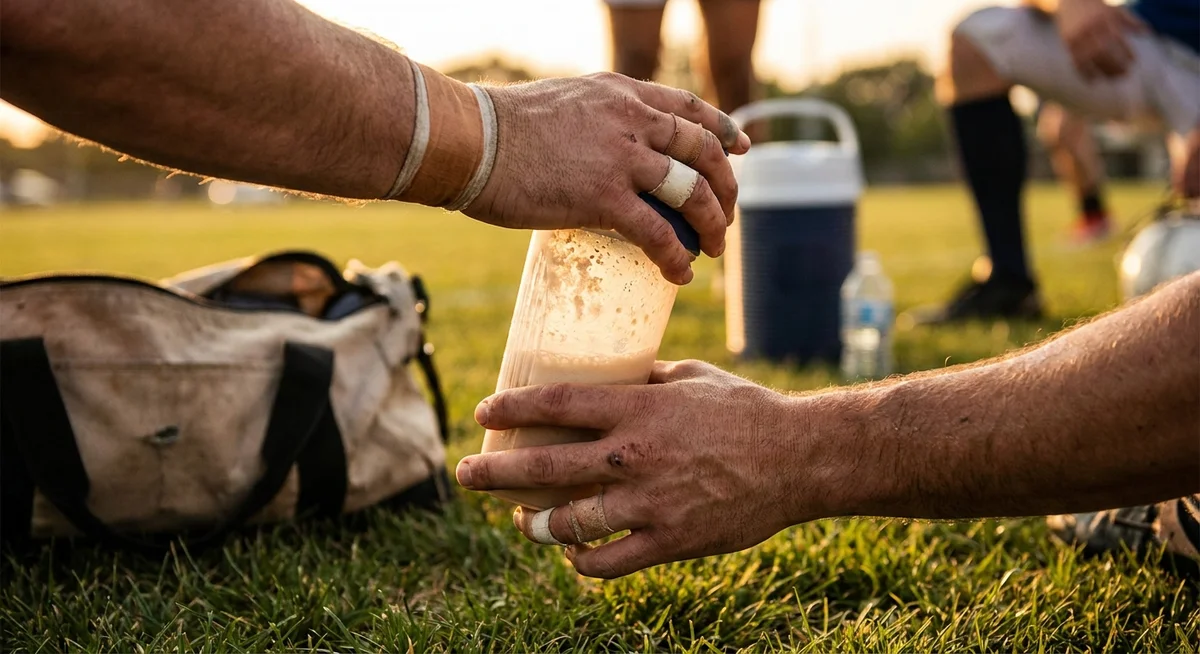
Which protein type is best for team sport?
The answer depends on when you are taking it and what you need it to do.
| Protein Type | Best Timing | Key Benefit for Team Athletes | Watch Out For |
|---|---|---|---|
| Whey Isolate | Within 30-60 min post-training or post-match | Fast digestion, high leucine content, triggers muscle protein synthesis quickly | Can cause bloating in lactose-sensitive athletes |
| Whey Concentrate | Post-training (less urgent) | Cost-effective, good amino acid profile | Higher lactose content than isolate |
| Casein | Before bed on heavy training days | Slow release sustains overnight muscle repair | Not ideal immediately post-exercise |
| Plant Blend (pea + rice) | Any time | Suitable for athletes avoiding dairy; complete amino profile when blended | Lower leucine per gram than whey; may need a larger serve |
For most team sport athletes, a quality whey isolate is the default choice for post-session recovery. If you train or play in the evening and sleep is part of your recovery plan, adding a casein shake before bed on your hardest days is worth the extra step.
How should team sport athletes time their protein intake?
Timing matters more for team sport athletes than for recreational gym-goers, because the gap between a Saturday match and a Tuesday training session is narrow. Here is a practical daily structure:
- Breakfast: 30 to 40 g protein from whole food (eggs, Greek yogurt, cottage cheese). This sets the day's baseline and keeps the distribution even.
- Pre-training (1 to 2 hours before): A small whole-food meal with both protein and carbohydrate. A shake is acceptable if appetite is low.
- Post-training (within 60 minutes): 25 to 40 g of whey isolate. This is your highest-priority window. Pair it with fast carbs - a banana or a piece of fruit - to replenish glycogen and amplify the anabolic response.
- Dinner: A full meal with lean protein and plenty of carbohydrate to restore energy stores.
- Before bed (heavy training days only): 30 to 40 g of casein to support overnight repair.
What about third-party testing for competitive athletes?
If you compete at a semi-professional or elite level, contamination risk is a real concern. WADA-prohibited substances including stimulants and SARMs have been found in products that listed none of them on the label. An inadvertent positive test is career-ending regardless of intent.
When buying protein powder, look for products that carry Informed Sport or HASTA batch certification. These programmes test each batch after manufacturing, not just the formula. It costs more, but it is the only way to verify what is actually in the tub you are buying.
Our protein powder buying guide covers what to check on a label, including certification logos and red-flag ingredients to avoid.
How much protein powder is too much?
Protein powder is a supplement, not a food group. Two serves per day is a practical ceiling for most athletes. Beyond that, you are likely displacing whole food that provides vitamins, minerals, fibre, and micronutrients that no protein powder replaces. If you are hitting three or more shakes a day to reach your targets, the better fix is restructuring your meals, not adding more scoops.
Heavy training blocks, pre-season camps, and tournament weekends are the exceptions. During those periods, a third serve can bridge genuine gaps without issue. When training volume drops back, pull the supplementation back with it.
For a deeper look at total daily targets across different body weights and training loads, see our article on how much protein you actually need per day.
Find the best-rated protein powders available in Australia Reviewed by type, taste, and third-party testing credentials.Frequently asked questions
Should I take protein powder on rest days?
Yes. Muscle protein synthesis continues for 24 to 48 hours after a hard session, so rest days are still recovery days. You may not need the immediate post-exercise window shake, but hitting your overall daily protein target - through food and supplements - is just as important on the days you are not training.
Can I use protein powder to replace a post-match meal?
As a temporary bridge, yes. A shake within 30 minutes of the final whistle is better than waiting an hour for a full meal. But it should be followed by a proper meal within two hours. Whole food provides carbohydrates, micronutrients, and total energy that a single shake cannot match. Treat the shake as the first course, not the whole meal.
Is plant protein effective for team sport recovery?
A pea-and-rice blend with a complete amino acid profile can drive similar recovery to whey when the dose is adequate - typically 35 to 40 g per serve rather than 25 to 30 g. The key is leucine content: you need at least 2.5 to 3 g of leucine per serve to reliably trigger muscle protein synthesis. Check the amino acid breakdown on the label, not just the total protein figure.
How do I manage protein intake during back-to-back match weeks?
Prioritise the post-match window on both match days. Use whey isolate immediately after the first match, restore carbohydrates aggressively, and consider a casein serve before bed to support overnight repair. On the day between matches, keep protein evenly distributed across four meals and reduce training intensity so the recovery stimulus is not competing with a new damage stimulus.