Protein Powder at Night: How to Use It for Sleep and Recovery

Taking protein powder before bed is one of the most underused strategies in training nutrition. While your body is asleep, muscle protein synthesis runs at full speed, powered entirely by the amino acids circulating in your bloodstream. Give it nothing, and that overnight repair window goes to waste. Give it the right protein at the right dose, and you wake up a little further along than you went to bed.
Key takeaways
- Overnight is your longest fasting window, and muscle repair peaks during deep sleep. A pre-bed protein dose can keep synthesis elevated through that window.
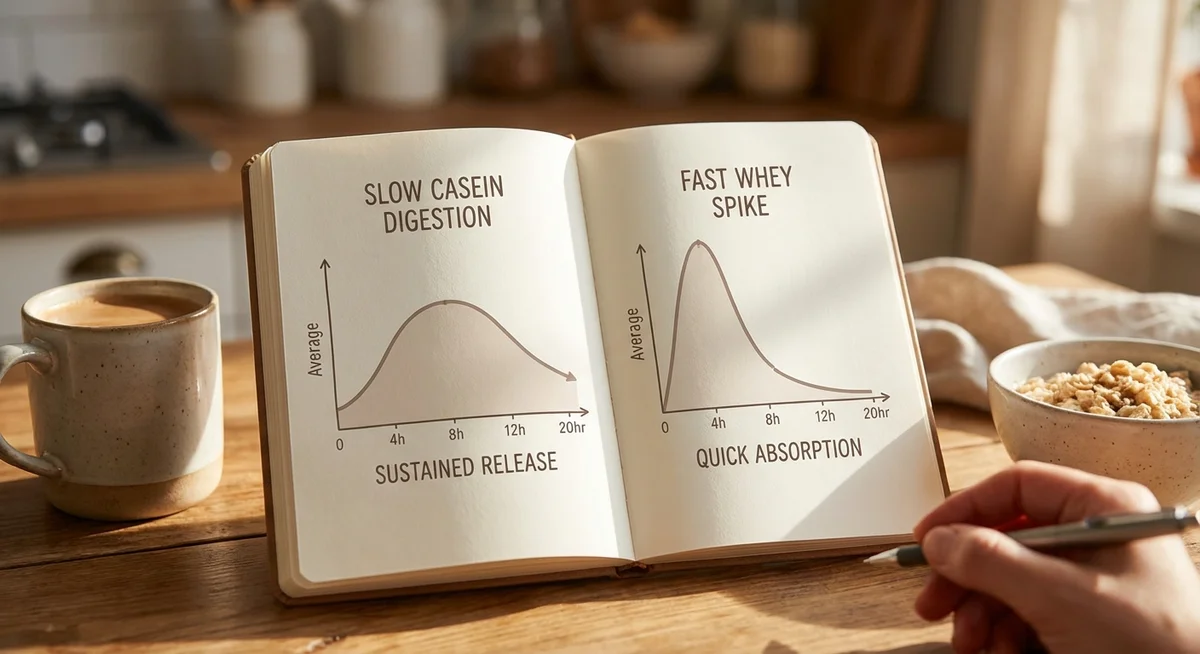
- Slow-digesting proteins (casein, micellar casein) are the first choice for nighttime use because they release amino acids steadily over 5 to 7 hours.
- 30 to 40 g is the effective dose range for most adults. Under 20 g is likely too little to drive a meaningful overnight response.
- Nighttime protein does not cause fat gain when total daily calories are controlled.
- People over 50, shift workers, and hard-training athletes gain the most from adding a nightly dose.
Why does the timing of protein before bed actually matter?
Muscle protein synthesis responds to two triggers: resistance exercise and dietary protein. Both signals decay quickly. After a training session, the anabolic window extends well into the night, but synthesis requires amino acids to run. A 2012 study in Medicine & Science in Sports & Exercise (Res et al.) gave participants 40 g of casein protein 30 minutes before sleep and found whole-body protein synthesis rates were significantly higher overnight compared to a placebo. Subsequent trials confirmed that this translated to measurable gains in muscle mass and strength over 12 weeks of resistance training.
The reason timing matters here is simple: a typical dinner is digested and cleared from the bloodstream within 3 to 4 hours. For most people, that means 6 to 8 hours of sleep with no amino acid supply. Pre-bed protein plugs that gap.
Which protein powder works best at night?
Not all proteins behave the same way once swallowed. Digestion rate is the key variable for nighttime use.
| Protein Type | Digestion Speed | Nighttime Rating | Best For |
|---|---|---|---|
| Micellar Casein | Very slow (5-7 hrs) | ★★★★★ | Most adults, strength athletes |
| Casein Hydrolysate | Moderate (2-4 hrs) | ★★★☆☆ | Those who want faster digestion |
| Whey Concentrate / Isolate | Fast (1-2 hrs) | ★★☆☆☆ | Post-workout; not ideal pre-bed |
| Pea Protein | Moderate (2-4 hrs) | ★★★☆☆ | Vegans and plant-based eaters |
| Blended Plant Protein (pea + rice) | Moderate-slow | ★★★★☆ | Vegans wanting a slower release |
Micellar casein is the clear front-runner. The micelles (protein clusters) clump in the stomach's acidic environment and trickle into the small intestine slowly, delivering a steady drip of leucine and other essential amino acids across most of a night's sleep. If you are dairy-free, a blended pea-and-rice formula is the next best option because the combination delivers a complete amino acid profile with a more gradual absorption curve than pea alone. For more detail on casein, see our full casein protein powder guide.
How much protein should you take before bed?
Research consistently points to 30 to 40 g as the effective pre-bed dose for adults engaged in regular resistance training. Below 20 g, the overnight synthesis response is modest at best. Above 50 g, you're unlikely to see additional benefit, and some people find large amounts of casein uncomfortably thick on the stomach before lying down.
Practical starting point: aim for 30 g of protein from your powder. If your daily protein target is already close to being hit through food, 20 to 25 g is enough to top you up without pushing total daily intake too high.
For guidance on daily targets, our article on how much protein you need per day breaks down requirements by goal, body weight, and training frequency.
Does nighttime protein make you gain fat?
This concern comes up often, and the short answer is no, provided your total daily calorie intake stays within your target. Multiple controlled trials have found that adding pre-sleep protein does not increase fat mass when total daily calories are matched between groups. The extra protein supports muscle without being stored as fat, because the body prioritises using protein for repair rather than converting it to triglycerides.
Where people do gain fat from a nightly shake is when they add it on top of an already-surplus diet without accounting for the extra calories. Track your total intake for a few days before adding a nightly shake, and adjust accordingly.
Who benefits most from pre-bed protein?
Higher benefit
- Adults over 50 (anabolic resistance means more protein is needed to drive the same synthesis response)
- Hard-training athletes in high-volume phases
- People in a caloric deficit trying to preserve muscle
- Shift workers with irregular meal timing
- Anyone whose dinner is typically light or early
Lower benefit
- Sedentary individuals not doing resistance training
- People already hitting 2 g per kg of body weight through food
- Those who eat a large, protein-rich dinner close to bedtime
- Anyone with a known dairy allergy opting for casein (use a plant blend instead)
Older adults deserve special mention. Research out of Maastricht University found that older men who supplemented with 40 g of casein before bed gained significantly more muscle mass and strength over 12 weeks than those who did not, despite following the same training program. This aligns with what we cover in our protein powder guide for adults over 60: higher doses and slower proteins are the right approach as anabolic sensitivity declines with age.
Practical tips for making a nightly shake work
- Timing: 30 to 60 minutes before bed is the practical window. You don't need to set an alarm - just make it part of your wind-down routine.
- Mix thickness: Casein shakes are thick. Use 250 to 300 ml of water or low-fat milk rather than a full shaker of liquid, or blend it for a smoother texture.
- Flavour: Chocolate casein mixed with a little cold water tastes similar to chocolate pudding. Vanilla mixes well with low-fat milk. Keep it simple so it doesn't feel like a chore.
- Stomach sensitivity: If you find casein heavy before bed, try dropping the dose to 20 g for the first week, then build up. Some people also digest casein better mixed with warm water.
Frequently asked questions
Can I use whey protein before bed instead of casein?
You can, but it's not the best choice. Whey is absorbed within 1 to 2 hours, meaning amino acid levels peak quickly and then fall back to baseline well before morning. You'll get some benefit from the initial spike, but miss out on the sustained overnight delivery that casein provides. If whey is all you have, it's better than nothing - just know you're leaving some overnight benefit on the table.
Will a pre-bed protein shake disrupt my sleep?
Studies have found no negative effect on sleep quality from pre-bed protein. Some participants actually reported slightly better sleep, possibly because adequate amino acid supply supports serotonin and melatonin production. Avoid adding stimulants (caffeine, pre-workout mixes) to your nighttime shake, and keep the shake small enough that you're not lying down with a very full stomach.
Do I need to take pre-bed protein on rest days too?
Yes, muscle protein synthesis continues on rest days - that's when most of the actual rebuilding happens after training. The case for pre-bed protein is arguably just as strong on rest days, particularly if your daytime eating was light or your last meal was early in the evening.
Is pre-bed protein safe for teenagers?
For teenagers doing regular sport or resistance training, a moderate pre-bed dose (20 to 25 g from a quality powder) is generally considered safe. Total daily protein from food should always come first. Parents should check with a GP or sports dietitian before making supplementation part of a young athlete's routine. Our guide to protein powder for teenagers covers this in more detail.
Find your nighttime protein powderBrowse our range of quality protein powders suited to overnight recovery.