How to Cook and Bake with Protein Powder Without Ruining Your Food
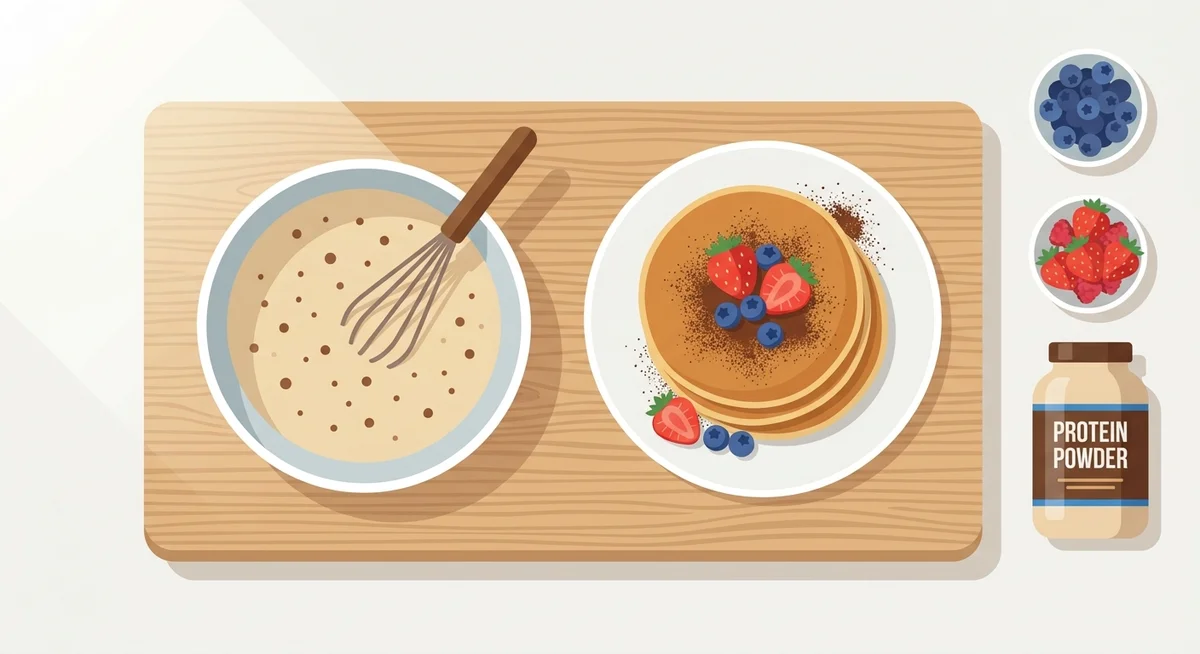
Adding protein powder to food is one of the easiest ways to close the gap between the protein you eat at meals and the amount you actually need each day. Done right, it adds 20 to 30 grams of protein to a recipe with almost no change to taste or texture. Done wrong, you end up with a rubbery brownie or a pancake that tastes like chalk. The difference comes down to three things: which powder you use, how much you add, and how you adjust the rest of the recipe.
Key takeaways
- Whey concentrate and casein behave very differently in heat. Knowing which you have saves ruined batches.
- Replace no more than 20 to 30% of the flour in a recipe with protein powder or the texture suffers.
- Add extra liquid whenever you add protein powder. A tablespoon of milk, yoghurt, or water per 30 g scoop is a reliable starting rule.
- Flavoured powders season the whole recipe. Unflavoured powders give you more control.
- Eggs and bananas are the best binders when protein powder dries out a batter.
Which protein powder works best for cooking?
Not all protein powders behave the same way under heat, and choosing the wrong one is the most common reason cooked protein recipes fail. Here is how the main types compare.
| Powder Type | Heat Tolerance | Texture Impact | Best Uses |
|---|---|---|---|
| Whey Concentrate | Moderate | Can go rubbery if overbaked | Pancakes, overnight oats, no-bake balls |
| Whey Isolate | Moderate | Drier than concentrate; needs extra liquid | Muffins, protein bars, smoothie bowls |
| Casein | High | Thick and creamy when mixed; holds shape well | Puddings, protein ice cream, thick cookies |
| Pea Protein | High | Dense; works well in savoury dishes | Pasta dough, savoury muffins, soups |
| Brown Rice Protein | High | Slightly grainy; blends better with nut butters | Energy balls, granola bars, biscuits |
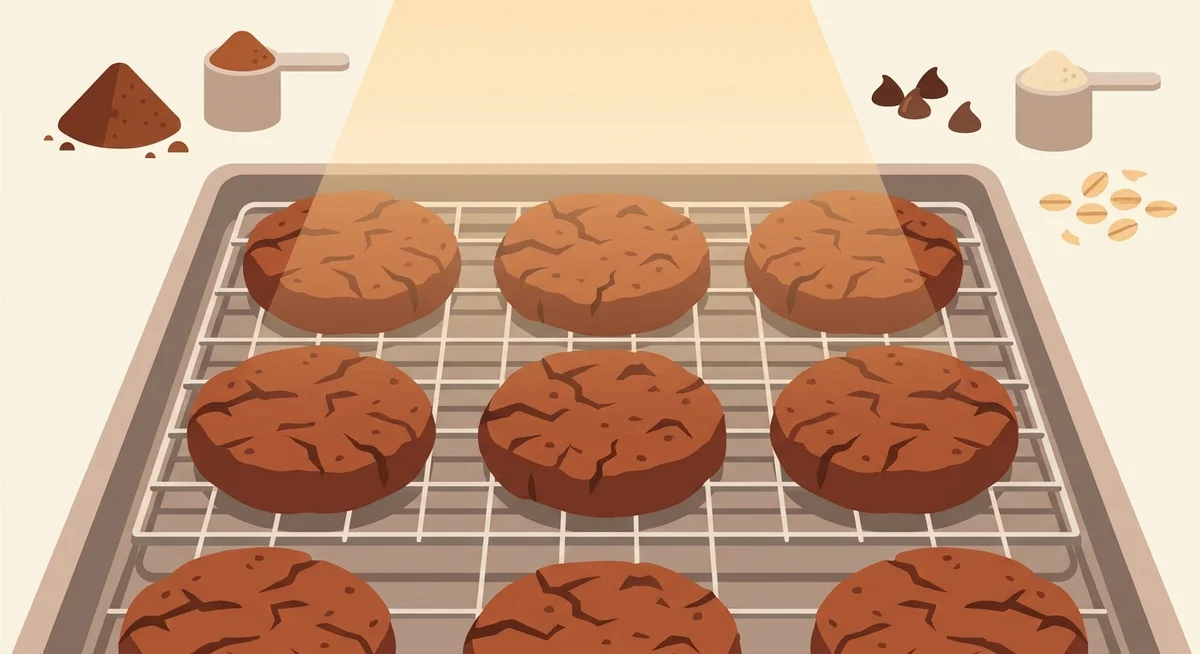
Casein is the top pick for baking because it absorbs liquid slowly and doesn't turn rubbery the way whey can at high oven temperatures. If you are baking brownies, cookies, or mug cakes, casein gives you the most forgiving result. For no-bake recipes and pancakes, whey concentrate works well because the heat is lower and briefer.
What is the right ratio of protein powder to flour?
The most reliable rule in protein baking is the 25% rule: replace no more than one quarter of the flour in a recipe with protein powder. If a recipe calls for 200 g of flour, swap out 50 g and keep the remaining 150 g as flour. Going beyond this threshold usually makes baked goods dry, dense, or tough because protein powder absorbs far more liquid than flour and provides none of the gluten structure that gives baked goods their lift and chew.
For no-bake recipes like bliss balls or protein bars, you can go higher, up to 50%, because there is no heat involved and the binding ingredients (dates, nut butter, honey) do the structural work. Just add liquid a teaspoon at a time until the mix holds together without crumbling.
How do you adjust recipes to stop protein food going dry?
Protein powder, especially isolates, pulls moisture out of a recipe. Three practical fixes work across almost every recipe type.
Add a binding liquid. Greek yoghurt, mashed banana, apple sauce, and eggs all add moisture and help hold the structure together when protein powder displaces some of the flour. A single ripe banana can offset the drying effect of one full scoop of whey isolate in a muffin recipe.
Lower the oven temperature. Protein denatures faster than flour gelatinises. Dropping the oven temperature by 10 to 15 degrees Celsius and extending the bake time by a few minutes reduces the risk of the outside overcooking while the inside is still wet. This matters most for dense items like brownies and thick cookies.
Pull it early. Protein baked goods continue cooking after they leave the oven. If a toothpick comes out mostly clean with a few moist crumbs, that is done. Waiting for the toothpick to come out completely dry means you have overbaked it.
Savoury cooking: an underused option
Most people think of protein powder as a sweet-recipe ingredient, but unflavoured pea or rice protein blends easily into savoury food. Stir a scoop into soup or a pasta sauce during cooking and it thickens the liquid slightly while adding protein that you won't taste. It works in scrambled eggs, homemade pasta dough, and even burger patties. The key is using an unflavoured powder. Vanilla whey in bolognese is as bad as it sounds.
For a rough guide, one 30 g scoop of unflavoured pea protein in a four-serve soup adds about 6 to 7 grams of protein per portion. That is a meaningful boost with no recipe redesign required. If you want to understand more about how different plant-based powders compare on flavour and texture, the pea vs rice vs hemp vs soy protein breakdown is worth reading before you choose one to cook with.
Protein powder in everyday foods (no recipe required)
You don't need a dedicated protein recipe to cook with powder. Stirring a scoop into plain rolled oats before microwaving, mixing it into yoghurt, or blending it into a smoothie are all cooking in the loose sense. For people who don't enjoy baking but want more protein, these no-effort additions are more practical than baking a batch of protein muffins every week.
Understanding your daily protein target makes it easier to know how many of these additions are worth making. The guide to daily protein needs gives you a personalised starting number based on body weight and activity level. Once you know the gap between what you eat at meals and what you need, you can decide how much cooking with protein powder is actually worth the effort.
If you are looking at a tub right now and wondering what the label is actually telling you, the protein powder nutrition label guide explains every line, from protein per serve to amino acid profiles and sweetener codes.
See our Vanilla Protein PowderA versatile, mild-flavoured option that works in both sweet baking and smoothies.Frequently asked questions
Does cooking protein powder destroy the protein?
Heat denatures protein, which changes its shape but does not reduce the amino acid content or make it nutritionally inert. The protein grams on the label remain accurate after baking. What heat can affect is texture: overcooked whey protein turns rubbery because the denatured strands bind tightly together. The nutrition is fine; the mouthfeel may not be.
Can I use any flavour of protein powder in baking?
Yes, but the flavour carries through strongly into the finished food. Chocolate and vanilla are the most versatile for sweet baking. Unflavoured works in both sweet and savoury recipes. Flavours like salted caramel or strawberry can clash with other ingredients, so use them in recipes where that flavour is supposed to be dominant.
Why do my protein pancakes always come out flat and rubbery?
Two common causes: too much protein powder relative to flour, or the pan is too hot. Protein pancakes should be cooked on a lower-medium heat than regular pancakes. Flip them only once, and only when bubbles have formed across most of the surface. A ratio of one scoop of protein powder to roughly 40 to 50 g of oats or flour, plus one egg, works well as a base.
Is it worth buying a dedicated baking protein powder?
Some brands sell protein powders marketed specifically for baking, usually casein-heavy blends with modified starches. They do produce more consistent results. That said, a plain casein or a 50/50 whey-casein blend from a standard tub gives nearly the same outcome at a lower cost per serve. The specialised label adds price more than it adds performance.