Soy Protein Powder: How to Pick the Right One
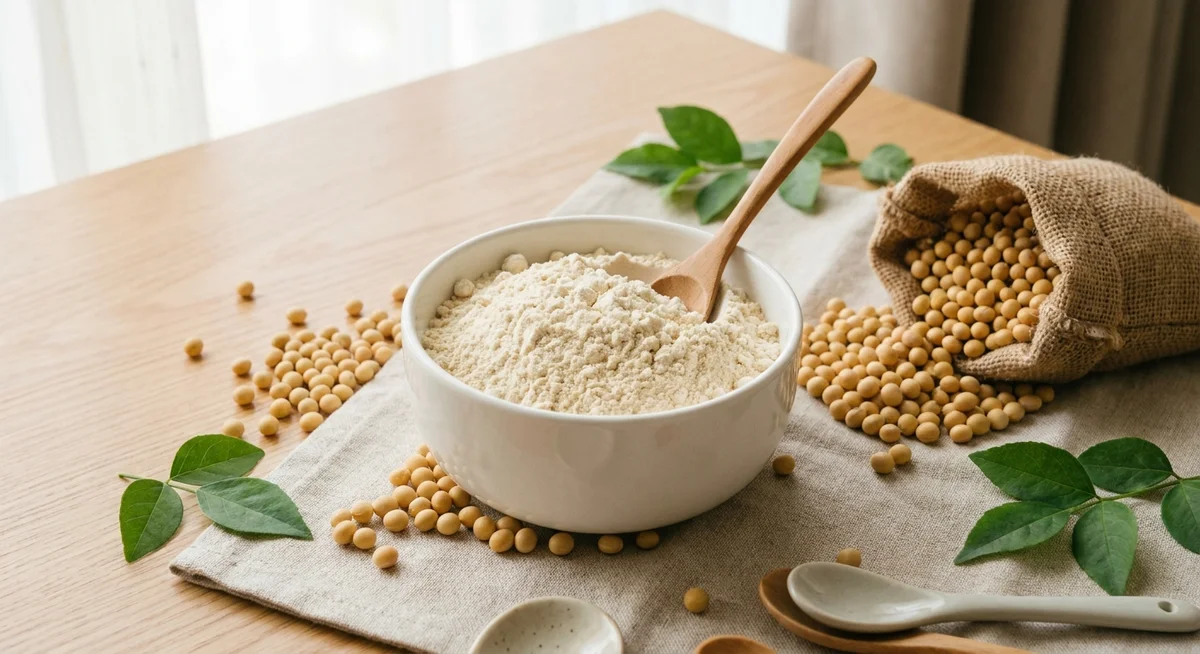
Soy protein powder is the only plant-based protein that delivers all nine essential amino acids in proportions close enough to animal protein to earn a complete-protein rating. If you are avoiding dairy, building muscle on a plant-based diet, or simply want a versatile powder that mixes into almost anything, soy is worth a serious look. The catch is that the market is crowded and the labels are not always honest about what matters.
Key takeaways
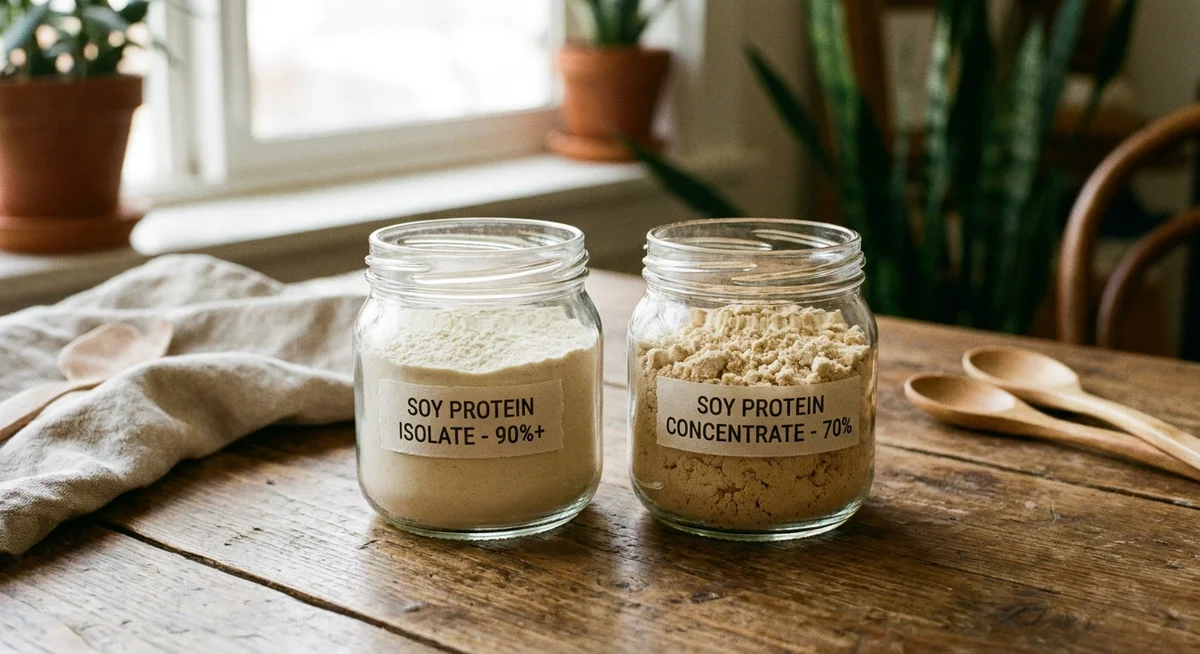
- Soy protein isolate (90 %+ protein) is leaner and faster-absorbing than soy concentrate (70 %).
- Look for a PDCAAS or DIAAS score of 1.0, which confirms complete amino acid coverage.
- Non-GMO and third-party tested labels matter if you want to avoid pesticide residues and contaminants.
- Soy's phytoestrogen content is safe for most adults at typical serving sizes, according to current evidence.
- Unflavoured soy isolate is one of the cheapest per-gram protein sources available in Australia.
What is the difference between soy isolate and soy concentrate?
The label will almost always say one of two things: soy protein isolate or soy protein concentrate. They come from the same bean but are processed differently, and the gap in quality is meaningful.
| Feature | Soy Protein Isolate | Soy Protein Concentrate |
|---|---|---|
| Protein per 100 g | 90 g or more | 65–70 g |
| Carbohydrates | Very low (2–5 g) | Moderate (15–25 g) |
| Fat | Very low (1–3 g) | Low (3–6 g) |
| Absorption speed | Medium-fast | Slower |
| Price per gram of protein | Slightly higher | Lower |
| Best for | Body composition, muscle building | Budget shoppers, general health |
For most people focused on muscle building or fat loss, isolate is the better pick. Concentrate is fine for general nutrition top-ups, especially if budget is a priority and you are already eating a varied diet.
Is soy protein actually complete?
Yes, and this is the detail that separates soy from almost every other plant protein. Pea protein is low in methionine. Rice protein is low in lysine. Hemp sits below the threshold for several amino acids. Soy hits the full range, which is why it scores a PDCAAS (Protein Digestibility Corrected Amino Acid Score) of 1.0, the maximum possible. This makes it genuinely comparable to whey for muscle protein synthesis, particularly when dosed correctly.
Research published in the Journal of the International Society of Sports Nutrition found that soy isolate produced similar gains in lean mass and strength to whey isolate over a 12-week resistance training program, when total daily protein intake was matched. The difference between the two is not as large as many supplement brands would have you believe. For a deeper look at how plant and animal proteins compare, see our guide to plant protein vs whey.
What should you look for on the label?
Green flags
- Soy protein isolate listed as the first ingredient
- At least 25 g protein per 30 g serving
- Non-GMO certified or identity-preserved soy
- Third-party tested (Informed Sport, Cologne List, or HASTA)
- Short ingredient list with no unnecessary fillers
- Leucine content disclosed (aim for 2 g or more per serve)
Red flags
- Soy concentrate hidden inside a proprietary blend
- Protein spiking ingredients like taurine or glycine listed early
- Artificial sweeteners in quantities that cause digestive discomfort
- No third-party certification
- Excessive sodium (above 400 mg per serve)
- Inflated serving sizes that make the protein ratio look better than it is
What about phytoestrogens? Is soy safe?
This is the question that stops a lot of people, particularly men. Soy contains isoflavones, plant compounds that can weakly mimic oestrogen in the body. The concern is legitimate enough to take seriously, but the evidence at typical intake levels is reassuring.
If you are still cautious, rotating soy with pea or rice protein is a practical middle ground. Our overview of plant protein for vegans covers how to blend sources for full amino acid coverage without relying on any single powder.
How does soy protein fit into different goals?
Soy isolate absorbs in roughly 3–4 hours, putting it between whey (fast) and casein (slow). That mid-range absorption makes it flexible: useful post-workout, fine as a meal supplement, and decent before bed if casein is not in your budget. For weight loss, its high protein density and low carb content support satiety without excessive calories. For muscle building, it performs well when total daily protein is at or above 1.6 g per kilogram of bodyweight. Understanding how much protein you actually need is the starting point before any powder choice matters.
Frequently asked questions
Is soy protein good for building muscle?
Yes. Soy protein isolate contains all essential amino acids, including leucine, which triggers muscle protein synthesis. Studies comparing soy isolate to whey over training programs of 8–12 weeks consistently show similar lean mass gains when total daily protein intake is matched. It is not as fast-absorbing as whey isolate, but the difference in real-world muscle outcomes is small for most people.
Can men take soy protein powder every day?
Current evidence says yes, at typical serving sizes. Concerns about soy lowering testosterone are based largely on case reports and animal studies using very high doses. Controlled clinical trials in men show no meaningful hormonal changes at 1–2 serves per day. If you train hard and eat varied protein sources, daily soy use is unlikely to cause any issues.
What does soy protein taste like?
Unflavoured soy isolate has a mild, slightly beany taste that is more neutral than hemp but more noticeable than whey. Flavoured versions (vanilla, chocolate) mask it well. In cooking and baking it is almost undetectable, which makes it popular for adding protein to pancakes, oats, and smoothies without changing the flavour profile.
Is soy protein suitable for people with nut allergies?
Soy is a legume, not a tree nut, so soy protein does not contain nut allergens. However, soy itself is one of the top eight food allergens in Australia. If you have a soy allergy, avoid it entirely. If you have a nut allergy but no soy sensitivity, soy protein is generally safe, though always check the label for cross-contamination warnings from shared manufacturing facilities.
Browse our guide to vanilla protein powderFind out which vanilla formulas use quality isolate and which ones cut corners on ingredients.