Protein Powder for Women Over 50: How to Build Strength, Protect Bone, and Manage Weight
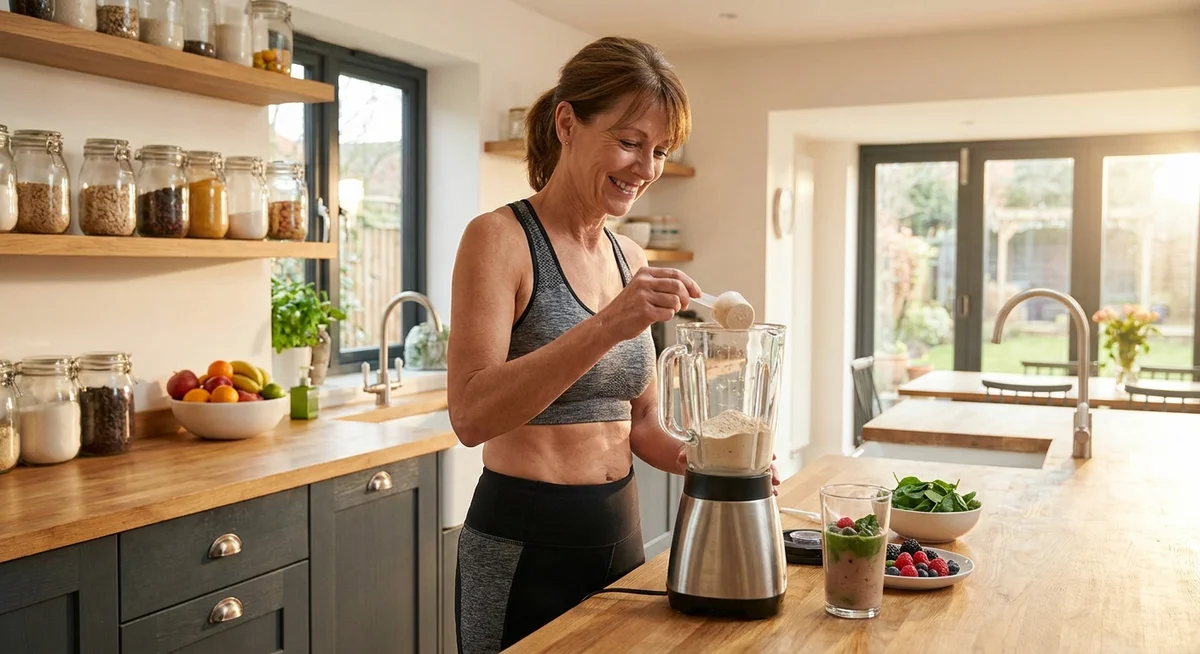
Women over 50 need more protein than most nutrition labels suggest, yet most protein powders are marketed at 25-year-old gym-goers. The underlying biology is specific: after 50, muscle protein synthesis slows, estrogen drops, and bone turnover accelerates. A well-chosen protein powder, used consistently, can address all three of those changes at once.
Key takeaways
- Women over 50 need roughly 1.2 to 1.6 g of protein per kilogram of body weight daily, well above the standard 0.8 g/kg RDI.
- Whey isolate and casein both work well; plant-based blends are a strong choice for those avoiding dairy.
- Leucine content per serving matters more than total protein grams for triggering muscle repair after 50.
- Avoid powders with added sugar, artificial sweeteners in large doses, and untested herbal blends.
- Timing protein around resistance training gives the best return for muscle and bone outcomes.
Why do protein needs change after 50?
Two processes converge after menopause. First, anabolic resistance: muscles become less sensitive to dietary protein, so a serving that once triggered growth now triggers a weaker response. Second, osteoclast activity (bone breakdown) outpaces bone formation once estrogen falls. Both problems respond directly to adequate protein intake, and both get worse when protein is too low.
Research published in the Journal of the Academy of Nutrition and Dietetics found that older women eating 1.3 g of protein per kilogram per day preserved significantly more lean mass over two years than those eating the standard 0.8 g/kg. Whole food protein is always the priority, but hitting 1.2 to 1.6 g/kg from food alone is harder than it sounds, especially for women with smaller appetites. That is exactly where a protein powder fills the gap without adding a large caloric load.
Which protein sources work best for women over 50?
Not all protein powders deliver the same benefit. The key variable is leucine, the amino acid that flips the muscle-building switch. Most research suggests you need at least 2.5 g of leucine per serving to overcome the anabolic resistance common after 50. Here is how the main sources compare:
| Protein Source | Leucine per 25 g protein | Digestibility | Best for |
|---|---|---|---|
| Whey isolate | ~2.7 g | Very high (PDCAAS 1.0) | Post-workout, appetite control |
| Casein | ~2.3 g | High, slow-digesting | Overnight muscle repair, satiety |
| Pea + rice blend | ~2.4 g (combined) | Moderate-high | Dairy-free, gut-sensitive users |
| Soy isolate | ~2.5 g | High (PDCAAS 1.0) | Plant-based, hormonal neutrality |
| Collagen peptides | ~0.5 g | High | Joint and skin support (not for muscle) |
What should women over 50 look for on the label?
Marketing claims on protein tubs can obscure what actually matters. Here is a short checklist to apply before buying any powder:
Look for
- At least 20 to 25 g of protein per serving
- 2.5 g or more of leucine (check the amino acid profile)
- Third-party testing mark (Informed Sport, NSF Certified, or HASTA in Australia)
- Short ingredient list with recognizable items
- Calcium or vitamin D added, if your dietary intake is low
Avoid
- More than 5 g of added sugar per serving
- Proprietary blends that hide individual ingredient amounts
- Unverified herbal additions (phytoestrogens in large, unstudied doses)
- Heavy metals risk: cheap plant proteins, particularly brown rice, can carry elevated arsenic without third-party testing
- Very high caffeine content if you are sensitive or have bone density concerns
How much protein should women over 50 take per day?
The short answer: more than the standard recommended daily intake. A practical target for an active woman over 50 is 1.2 to 1.6 g of protein per kilogram of body weight. For a 65 kg woman that works out to 78 to 104 g per day. Most women eating a balanced diet get around 60 to 70 g from food, which leaves a 20 to 40 g gap that one good-quality shake can close comfortably.
Spreading protein across three to four meals, rather than loading it into one, also improves muscle protein synthesis. A shake at breakfast or immediately after resistance training is usually the most practical place to add it.
Does protein powder support bone health?
Yes, with some nuance. Dietary protein provides the raw materials for bone matrix (collagen scaffolding), and adequate intake is consistently linked to lower fracture risk in older women. The concern that protein leaches calcium from bones has been largely debunked; the current evidence points in the opposite direction. If you are getting enough calcium and vitamin D (from food or supplements), higher protein intake supports, rather than undermines, bone density.
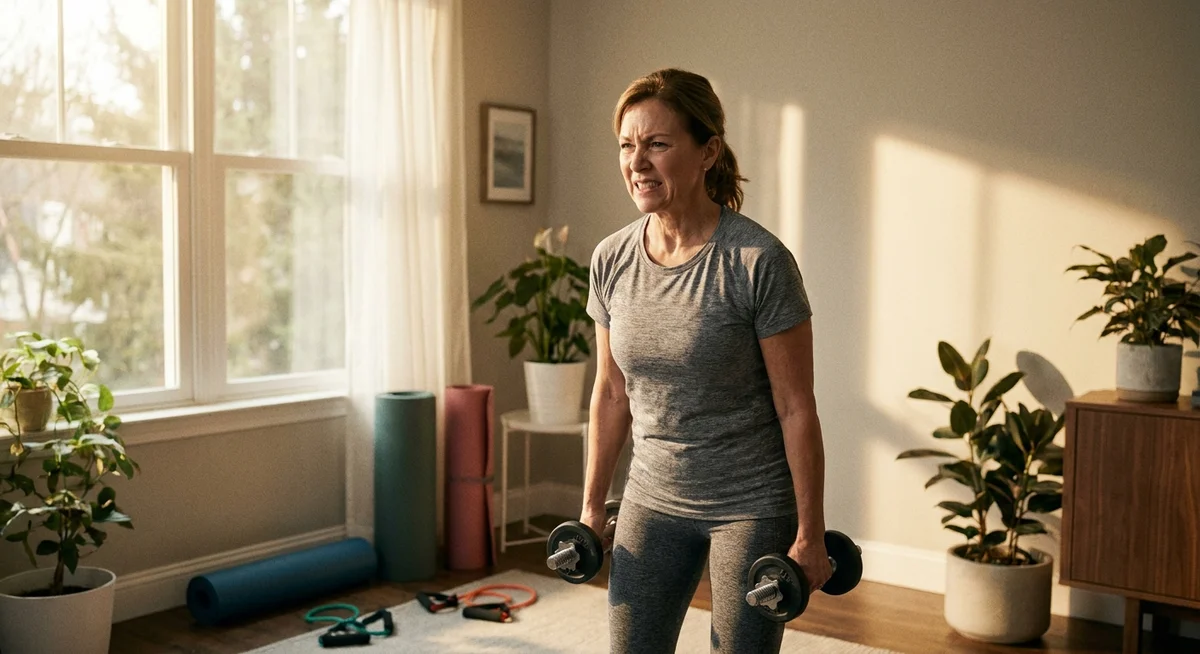
Resistance training amplifies the bone benefit: protein gives the building blocks, and mechanical load on the skeleton tells the body to use them. For women over 50, combining two to three resistance sessions per week with adequate protein is the most evidence-backed strategy for maintaining bone mass.
If you are also thinking about timing your intake around training, the article on protein powder before or after a workout covers what the research actually shows about the anabolic window and how much timing really matters.
For women navigating the hormonal side of this picture, the dedicated guide on protein powder during menopause goes deeper into estrogen-related muscle loss and what to do about it.
Frequently asked questions
Can protein powder help women over 50 lose weight?
Yes. Protein is the most satiating macronutrient, and higher protein intake consistently reduces overall calorie consumption in studies of older adults. A shake replacing a high-carbohydrate snack or a light, protein-poor breakfast often reduces total daily calories while preserving lean mass. Muscle burns more energy at rest than fat does, so protecting muscle during a calorie deficit also keeps metabolism from slowing down as much.
Is whey protein safe for women over 50?
For women without dairy allergy or lactose intolerance, whey isolate is safe and well-studied. Whey isolate has most of the lactose removed during processing, making it better tolerated than whey concentrate for those with mild lactose sensitivity. If kidney function is a concern, discuss protein targets with your GP first; healthy kidneys handle higher protein intake without issue, but pre-existing kidney disease changes the picture. See the full breakdown in the article on protein powder and kidney health.
What is the best time of day for women over 50 to take protein powder?
Within 30 to 60 minutes after resistance training is the most evidence-backed window. If you do not train, morning is a practical choice because overnight fasting leaves muscles primed to absorb amino acids. A casein-based shake before bed is also useful because its slow release of amino acids over four to six hours supports overnight muscle repair, which becomes increasingly important as recovery slows with age.
Are plant-based protein powders good enough for women over 50?
A well-formulated pea and rice blend delivers a complete amino acid profile and enough leucine to support muscle protein synthesis, making it a genuine alternative to whey for women who avoid dairy. Soy isolate is also a complete protein and is one of the most thoroughly studied plant options. The key is to check that the blend specifically provides at least 2.5 g of leucine per serving and carries third-party testing for heavy metals.
Find the right protein powder for your goals Our vanilla protein powder guide walks through ingredients, label reading, and what to look for at every price point.