Protein Powder as a Meal Replacement: What Works and What Doesn't
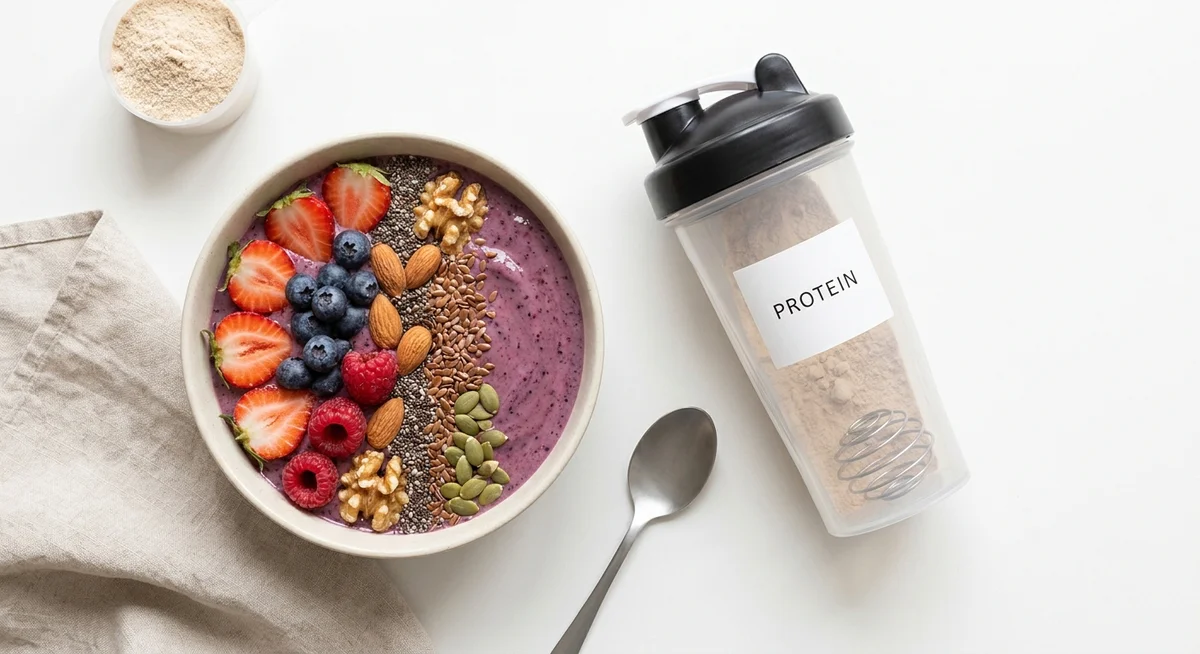
Protein powder can substitute for a meal in a pinch, but it was never designed to replace one outright. The gap between a scoop of powder and a balanced plate is wider than most people realise. Done well, a protein-based meal substitute keeps you fuelled, supports muscle, and controls hunger. Done poorly, it leaves you short on calories, fibre, and key micronutrients. Here is exactly what to combine, what to avoid, and when it actually makes sense.
Key takeaways
- A single scoop of protein powder (20-30g protein) is not a meal on its own — it needs fibre, fat, and enough calories to replace a full eating occasion.
- Blending protein powder with whole foods produces a far better nutritional result than powder and water alone.
- Using protein powder as a meal replacement occasionally is practical; doing it for every meal long-term is not advisable.
- The right protein type matters: fast-digesting whey works differently from slow-releasing casein or plant blends when hunger control is the goal.
- Checking your total daily protein target is always the starting point. See how much protein you actually need per day.
Can protein powder actually replace a meal?
Technically, yes — with the right additions. A protein shake with only powder and water delivers around 100-130 calories and 20-30g of protein. That is not a meal. A standard lunch sits at 400-700 calories and includes carbohydrate, fat, fibre, vitamins, and minerals alongside protein. To bridge that gap, you need to build around the powder rather than rely on it alone.
The good news is that protein does the heaviest lifting for satiety. Research consistently shows that higher-protein meals suppress the hunger hormone ghrelin more than carbohydrate or fat-equivalent meals. So starting with a quality protein source and adding calories from whole foods is a sound strategy when a cooked meal isn't possible.
How do you build a protein shake that actually replaces a meal?
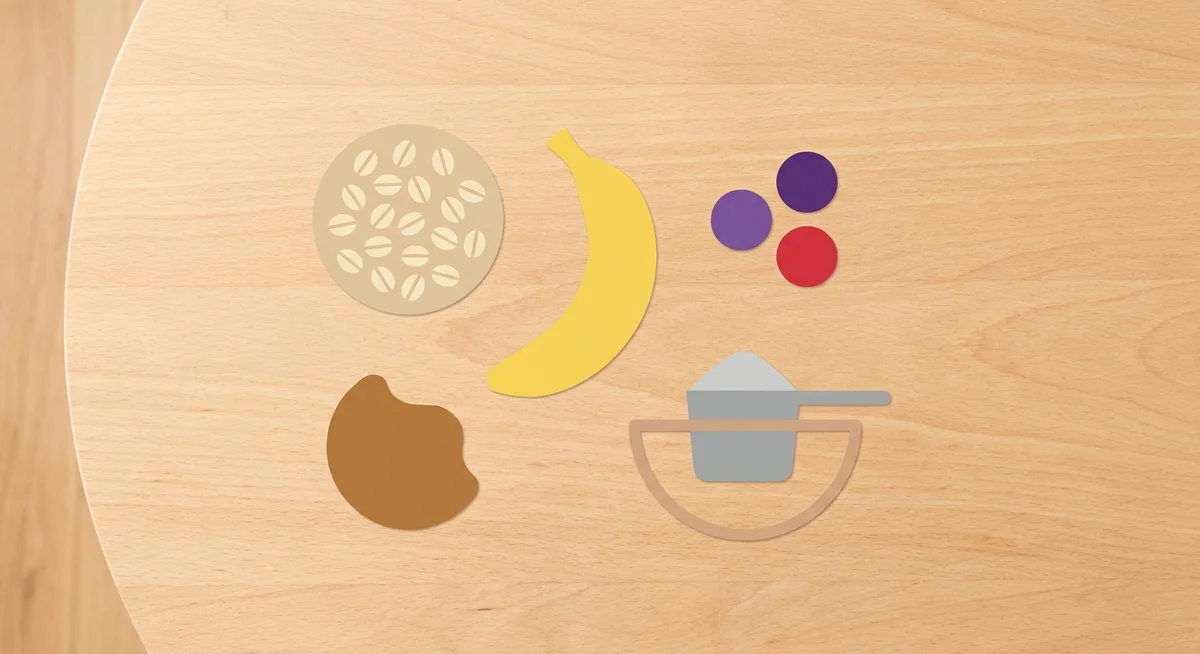
The formula is straightforward: protein powder is the base, then you add a slow carbohydrate, a healthy fat, and ideally some fibre. The table below shows how to hit the rough nutrition targets of a 500-calorie meal using common pantry ingredients.
| Component | Example ingredient | Approx. calories | What it adds |
|---|---|---|---|
| Protein base | 1 scoop vanilla protein powder | 110-130 kcal | 20-30g protein, satiety |
| Slow carbohydrate | ½ cup rolled oats or 1 banana | 100-120 kcal | Energy, fibre, sustained glucose |
| Healthy fat | 1 tbsp almond or peanut butter | 90-100 kcal | Calorie density, fat-soluble vitamins |
| Fibre boost | 1 tbsp chia or flaxseeds | 50-60 kcal | Gut health, extended fullness |
| Liquid | 250ml milk or fortified oat milk | 100-120 kcal | Calcium, extra protein or micronutrients |
Combined, that blend lands around 450-530 calories with 30-40g protein, meaningful fibre, and a decent spread of micronutrients. That is a real meal replacement, not just a protein shake.
Which protein type is best for replacing a meal?
Hunger control is the main variable here. Casein digests slowly (over 5-7 hours) and keeps you fuller for longer, which makes it a strong choice for a meal-replacement shake you're having instead of lunch. Whey digests quickly — ideal around training, but less useful if you need sustained satiety for three or four hours.
Plant-based blends (typically pea plus rice) digest at a moderate pace and suit people who want to avoid dairy. A single-source plant protein like pea alone can leave some people hungry faster, so a blend is preferable here. If you're exploring your options, this buying guide covers how to choose the right protein type for your goal.
When it works well
- Skipping breakfast when you're not hungry but need protein
- Post-training when cooking is impractical
- Calorie-controlled eating where you've planned the shake's macros
- Travel days with no access to decent food
- One or two meals per week where convenience genuinely matters
When it falls short
- Replacing every meal long-term (severe micronutrient gaps emerge)
- Powder and water only — too low in calories and missing fats and fibre
- Using it to avoid eating when hunger is a signal worth respecting
- Children, pregnant women, or people with specific medical conditions without professional guidance
- Substituting for a meal you genuinely enjoy and look forward to
How often is it reasonable to use protein powder as a meal?
One meal replacement per day is the practical ceiling for most people. Whole foods carry vitamins, phytonutrients, and fibre in combinations that no supplement fully replicates. Using a well-built protein shake to cover one meal while eating varied whole food across the rest of the day is a reasonable pattern.
If you are using protein powder to replace meals as part of a fat-loss plan, the calorie maths matters more than the meal-replacement framing. The underlying goal is hitting your protein target while staying in a moderate calorie deficit. A well-constructed shake does that efficiently. For a deeper look at protein in a calorie deficit, that article covers the numbers in detail.
One thing to watch: if you are regularly too busy to eat proper meals, a protein shake is a useful short-term fix, not a long-term lifestyle system. Persistent reliance on shakes instead of food often signals a scheduling problem worth solving at the source.
Frequently asked questions
Is it safe to replace one meal a day with a protein shake?
Yes, for most healthy adults. The key is building the shake with enough calories (at least 400-500 for a meal) and pairing the protein with carbohydrate, fat, and fibre. A protein shake with water alone is not a meal replacement — it's a protein supplement. Add whole ingredients to make the nutrition stack up.
Can I use protein powder as a meal replacement for weight loss?
It can support weight loss when it replaces a higher-calorie meal and still hits your protein target. The protein helps preserve muscle while you're in a deficit, and it keeps hunger manageable. The risk is under-eating: if the shake is too low in calories, energy dips, cravings spike, and adherence suffers within days.
What is the difference between a protein powder and a meal replacement powder?
Dedicated meal replacement powders are formulated with added vitamins, minerals, carbohydrates, and fats to approximate a full meal's nutrition in one product. Standard protein powders are designed to add protein to your diet, not replace all other nutrients. You can turn a protein powder into a practical meal replacement by adding whole-food ingredients yourself.
Does flavour matter when using protein powder as a meal base?
It matters more than most people expect. A flavour you enjoy makes it far easier to stick with consistently. Vanilla is the most versatile base because it pairs with oats, fruit, nut butter, and greens without clashing. Our vanilla protein powder is a popular starting point for this reason. Chocolate is a close second. Unflavoured works well if you prefer to control the taste entirely with whole-food additions.
See our Vanilla Protein PowderA clean, versatile base for meal-replacement shakes — check the full nutrition breakdown and ingredient list.