Protein Powder and Aging: How Much Protein Older Adults Really Need

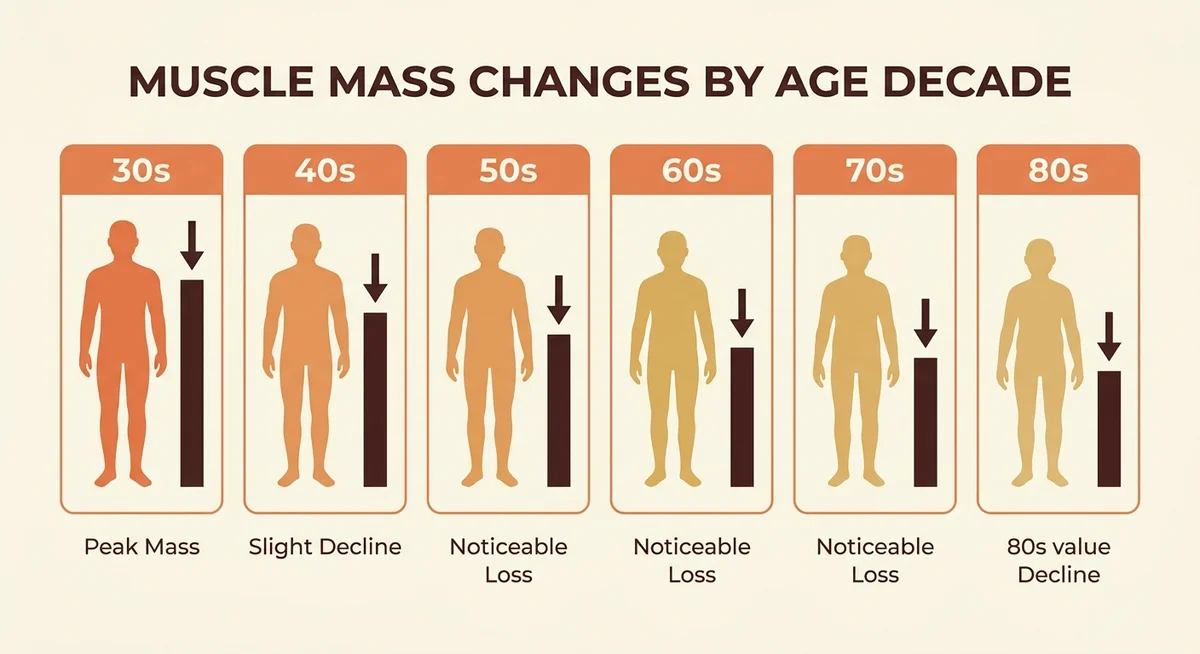
After about age 50, the body becomes noticeably less efficient at turning dietary protein into new muscle tissue. The daily protein target most Australians grew up with is no longer enough, and the gap between what older adults eat and what they actually need is one of the most underappreciated nutrition problems in healthy aging. A quality protein powder can help close that gap without forcing you to eat another chicken breast at 9 pm.
Key takeaways
- Adults over 50 need roughly 1.2 to 1.6 g of protein per kg of body weight per day, well above the standard 0.8 g/kg guideline.
- Muscle loss (sarcopenia) accelerates from your mid-50s and is directly linked to inadequate protein intake.
- Spreading protein evenly across three to four meals is more effective than loading most of it into one meal.
- Whey isolate and plant-based blends with leucine are the best-evidenced supplement options for older adults.
- Protein powder is a convenient top-up, not a replacement for whole food sources.
Why do protein needs increase as you age?
The main driver is a condition researchers call anabolic resistance: muscle tissue in older adults responds less strongly to the same protein dose that would stimulate growth in a 25-year-old. The muscle building signal gets quieter with age, so you need a louder signal to get the same result. Studies published in the American Journal of Clinical Nutrition consistently show that adults over 65 need a higher per-meal protein dose, typically 35 to 40 g at a sitting, to achieve the same muscle protein synthesis response that 20 g would produce in a younger person.
Compounding this, many older adults eat less overall. Appetite decreases, taste perception changes, and chewing becomes less comfortable. The result is a double problem: higher requirement, lower intake.
How much protein do older adults actually need per day?
The Australian RDI of 0.8 g per kg of body weight was set to prevent deficiency, not to preserve muscle mass in an aging population. Leading sports dietitians and geriatric researchers now recommend substantially more.
| Age group | Minimum daily target | Optimal range (active adults) | Per-meal dose |
|---|---|---|---|
| Under 40 | 0.8 g/kg | 1.2 to 1.6 g/kg | 20 to 30 g |
| 40 to 60 | 1.0 g/kg | 1.2 to 1.6 g/kg | 25 to 35 g |
| 60 to 75 | 1.2 g/kg | 1.4 to 1.8 g/kg | 35 to 40 g |
| 75 and over | 1.4 g/kg | 1.6 to 2.0 g/kg | 35 to 45 g |
For a 70 kg person aged 65, this means targeting somewhere between 98 g and 126 g of protein per day. Most whole-food diets without deliberate planning fall short of 80 g. This is where a well-chosen protein supplement becomes genuinely useful rather than optional.
To understand your own baseline, the guide on how much protein you need per day runs through the full calculation including activity level adjustments.
What type of protein powder works best after 50?
Not all protein sources perform equally in older muscle tissue. The key variable is leucine content. Leucine is the amino acid that directly triggers the muscle protein synthesis pathway, and it has a threshold effect: you need roughly 2.5 to 3 g of leucine per serving to switch that pathway on. Below the threshold, the stimulus is weak regardless of total protein eaten.
Whey isolate (animal-based)
- Highest leucine content per gram (around 11 to 12%)
- Fast-digesting, raises blood amino acids quickly
- Well-studied in older adult trials specifically
- Low in lactose (easier on digestion than concentrate)
- Not suitable for vegans or those with a dairy allergy
Plant-based blends
- Pea + rice combination covers the full amino acid profile
- Lower leucine than whey, but a slightly larger dose compensates
- Well tolerated by people with sensitive digestion
- Suitable for vegans, vegetarians, and dairy-free diets
- Look for added leucine in the ingredient list for a stronger signal
If you want a deeper look at how plant and animal proteins compare on muscle outcomes, the article on plant protein vs whey covers the evidence in detail.
Timing matters more as you age
Young adults can eat most of their protein at dinner and still build muscle reasonably well. Older adults cannot. Research shows that muscle protein synthesis in aging tissue is more sensitive to the timing and distribution of protein across the day. Eating 90 g of protein across two meals produces a weaker result than spreading the same 90 g across three or four meals, each with at least 30 to 35 g.
A practical pattern that works well:
- Breakfast: eggs plus a protein shake (35 to 40 g total)
- Lunch: a palm-sized serve of meat, fish, legumes, or tofu (25 to 35 g)
- Afternoon or post-exercise: a protein shake or Greek yoghurt (25 to 35 g)
- Dinner: another whole-food serve of protein (25 to 35 g)
The article on when to take protein powder for best results goes into more detail on post-exercise windows and overnight protein for people at any age.
Frequently asked questions
Is it safe for older adults to eat that much protein?
For healthy adults with normal kidney function, intakes up to 2.0 g/kg per day are considered safe based on current evidence. If you have existing kidney disease or have been told to restrict protein by a doctor, follow that medical advice. For everyone else, the risk of eating slightly more protein is effectively zero, while the risk of eating too little is real and measurable in lost muscle and bone mass.
Can protein powder alone prevent muscle loss?
No. Protein is the building material, but resistance exercise is the instruction to use it. Without some form of strength training (even bodyweight exercises two to three times a week), extra protein has nowhere productive to go. The two work together. Protein powder without exercise is much less effective than protein powder with even modest resistance work.
How do I know if a protein powder has enough leucine?
A 35 g serve of whey isolate typically contains around 3.5 to 4 g of leucine, which is above the threshold. For plant-based powders, check the amino acid profile on the label. If leucine is not listed separately, a 40 g serve of a quality pea-rice blend should still get you close. Some plant powders now add free-form leucine to the formula specifically to close this gap.
What about protein needs during illness or recovery from surgery?
Protein requirements spike significantly during illness, surgery, or injury recovery. Values of 1.5 to 2.0 g/kg per day are commonly recommended in clinical settings for older patients. Protein shakes become particularly practical during these periods when chewing is difficult or appetite is very low. Always confirm targets with the treating medical team in a clinical context.
See our Vanilla Protein PowderA clean, well-dosed option suitable for daily use at any age.