Pea Protein Powder: How to Pick the Right One
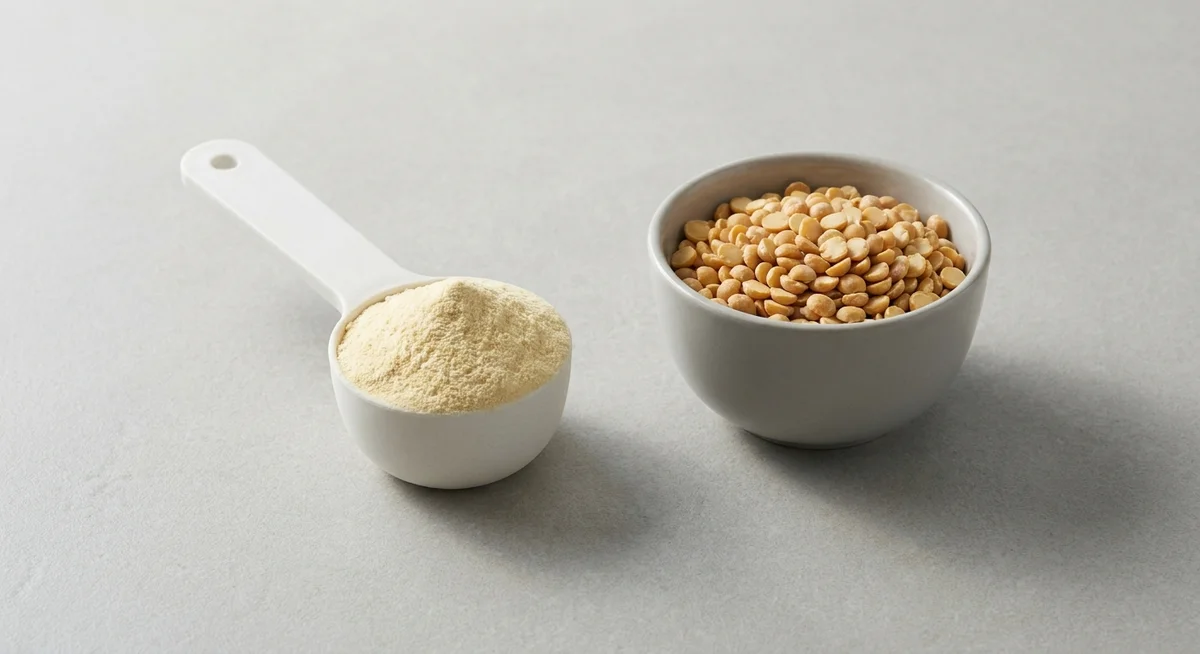
Pea protein powder is made from yellow split peas and delivers around 20 to 25 grams of protein per serve. It is one of the few plant proteins that comes close to a complete amino acid profile on its own, it digests gently, and it suits people who cannot tolerate dairy, eggs, or soy. The catch is that not all pea proteins are made the same way, and the difference between a good tub and a mediocre one shows up fast in taste, mixability, and results.
Key takeaways
- Yellow split peas supply all nine essential amino acids, though lysine is modest and leucine is lower than whey.
- Look for at least 80% protein by weight and a short ingredient list with no fillers or excessive thickeners.
- Pea protein absorbs faster than casein but slower than whey, making it useful at multiple points in the day.
- Independent third-party testing matters here: heavy metal contamination has been found in cheaper plant protein products.
- Pairing pea protein with rice protein fills the amino acid gaps and produces a profile that closely matches whey.
Is pea protein actually a complete protein?
Technically, pea protein contains all nine essential amino acids, so it qualifies as complete. In practice, the amounts matter as much as the presence. Leucine, the amino acid most directly responsible for triggering muscle protein synthesis, runs about 8% in pea protein compared to roughly 11% in whey. That gap is real but manageable. Research published in the Journal of the International Society of Sports Nutrition (2015) found that pea protein produced equivalent gains in bicep thickness to whey over an eight-week resistance training program. Eating slightly more pea protein per serve (30 grams rather than 25) largely closes the leucine deficit.
If you use pea protein as your main source rather than a supplement to a mixed diet, combining it with rice protein is worth considering. Rice supplies more methionine and cysteine, while pea supplies more lysine. Together they form a profile that sits very close to whey.
What should you look for on the label?
The label tells you most of what you need to know before you even open the bag.
| What to check | What a good product shows | Red flag |
|---|---|---|
| Protein per 30g serve | 24g or more (80%+ protein by weight) | Below 20g — fillers are taking up space |
| Ingredient list | Pea protein isolate, natural flavour, maybe a sweetener | Maltodextrin, inulin in large amounts, gums listed early |
| Sodium | Under 300mg per serve | Above 400mg — processing or flavouring is masking poor taste |
| Third-party testing | Informed Sport, NSF, or HASTA certified | No certification, no batch testing mentioned |
| Heavy metal disclosure | Lab results available on request or published | No transparency at all |
Why does third-party testing matter more for plant proteins?
A 2018 report by the Clean Label Project tested 134 protein powders and found that plant-based products averaged significantly higher lead, cadmium, and arsenic concentrations than dairy-based ones. This is not a reason to avoid pea protein, but it is a reason to choose brands that publish independent test results. Soil quality and processing method both affect heavy metal content. A brand that tests every batch and makes results available is not doing something extra — it is doing the minimum.
Pea protein isolate vs pea protein concentrate
Isolate
- Higher protein content (85-90% by weight)
- Lower carbohydrate and fat content
- More processed, slightly higher cost
- Better choice when protein per calorie is the priority
- Mixes more smoothly in most cases
Concentrate
- Protein content typically 70-80% by weight
- Retains more naturally occurring fibre
- Less processed, lower cost
- Better choice for people who want minimal processing
- Can have a slightly stronger pea flavour
For most people who are choosing pea protein as a daily protein source, isolate is the more practical option. The higher protein density means you get more per serve, and the flavour is generally milder. If processing matters to you and you are happy with a slightly earthier taste, concentrate works fine.
How and when to use it
Pea protein sits between whey and casein in its digestion speed: faster than casein, slower than whey isolate. That flexibility makes it useful across the day rather than only in the post-workout window. A 30g serve post-training delivers leucine fast enough to support recovery. A serve before bed digests slowly enough to keep muscle protein synthesis ticking through the night. Mixed into oats or a smoothie at breakfast, it adds staying power without heaviness.
Unflavoured pea protein blends well into savoury cooking — soups, dahls, and pasta sauces work particularly well because the natural pea flavour disappears into the dish. This is something whey protein simply cannot do.
If you are working out how much to take each day, our guide on how much protein you actually need per day gives a practical breakdown by body weight and training load.
Who is pea protein best suited to?
Pea protein is a strong choice for anyone avoiding dairy or eggs, anyone with a soy allergy (a common issue with plant-based proteins), and people who find whey concentrate or isolate causes bloating. It is also a practical option for people who want one protein that works across cooking, baking, and shakes rather than a dedicated powder for each purpose.
It is not the best choice if you are cutting calories aggressively and need every gram of protein to come with minimal calories, since whey isolate still has a slight edge in protein density. It is also worth reading our overview on plant protein vs whey if you are deciding between the two categories rather than already committed to plant-based.
For a closer look at how vanilla-flavoured options compare — pea protein is now common in this format — the vanilla protein powder guide covers what to watch for in flavoured formulas.
Frequently asked questions
Does pea protein cause bloating?
Pea protein is generally well tolerated. It does not contain lactose, which is the most common cause of protein powder bloating. A small number of people are sensitive to legumes generally, in which case pea protein may cause mild digestive discomfort. Starting with a smaller serve (15 to 20g) and building up over a week tends to resolve this for most people.
Can pea protein build muscle as effectively as whey?
The published research suggests yes, provided you consume enough total protein and eat across a mixed diet. The 2015 Babault study found no statistically significant difference in muscle thickness gains between pea and whey groups after eight weeks of resistance training. Getting 30g per serve rather than 25g helps match whey's leucine delivery.
Is pea protein safe to eat every day?
Yes. Pea protein has been consumed as a food staple in many cultures for centuries in its whole-food form. As a powder, daily use at typical serving sizes (25 to 40g) poses no known health risks for healthy adults. People with kidney disease should follow their doctor's guidance on total protein intake regardless of the source.
How do I improve the taste of unflavoured pea protein?
Blend it with frozen banana, nut butter, or cacao powder rather than shaking it with water alone. The earthiness of pea protein pairs well with strong flavours. Alternatively, stir it into a warm dish like oats or soup where the flavour disappears completely. Flavoured versions from quality brands have improved significantly and most are now genuinely palatable.
Find the Best Protein Powder in AustraliaOur full guide compares types, brands, and prices so you can choose with confidence.