Does Protein Powder Expire? What You Need to Know
Yes, Protein Powder Does Expire
Protein powder will not make you immediately sick the day after its best-before date, but it does degrade over time in ways that are worth understanding. The date printed on the tub matters, but so does how you store the product and whether it has been opened.
Here is what actually happens to protein powder as it ages, how to store it correctly, and how to tell when it is genuinely time to throw a tub out.
What Happens to Protein Powder Over Time
The Maillard Reaction
The most common form of degradation in protein powder is the Maillard reaction, a chemical reaction between proteins and sugars (including lactose) that accelerates at higher temperatures and humidity levels. It is the same reaction responsible for browning in baked bread. In protein powder, it causes the powder to clump, darken slightly, and develop off-flavours over time.
Importantly, the Maillard reaction reduces the bioavailability of the amino acid lysine in particular. A protein powder that has undergone significant Maillard reaction will still show the same protein content on the label (because the label was set at manufacture) but will deliver slightly less usable protein to your body.
Fat Oxidation
Whey concentrate contains 4 to 8% fat by weight, which is enough to go rancid over time when exposed to oxygen, heat or light. Oxidised fats produce off-smells, typically described as sour, bitter, or "paint-like." This is more of a concern with concentrate than isolate, since isolate has very little fat content.
Products that include added fats, such as MCT oil or flaxseed, degrade faster than pure whey products.
Microbial Growth
Dry protein powder is generally hostile to bacteria and mould because of its low moisture content. The risk increases significantly once moisture gets into the container. A wet scoop, a humid environment, or storing the tub near a stove or sink can introduce enough moisture to allow microbial growth over time.
Best Before vs Use By: The Legal Difference
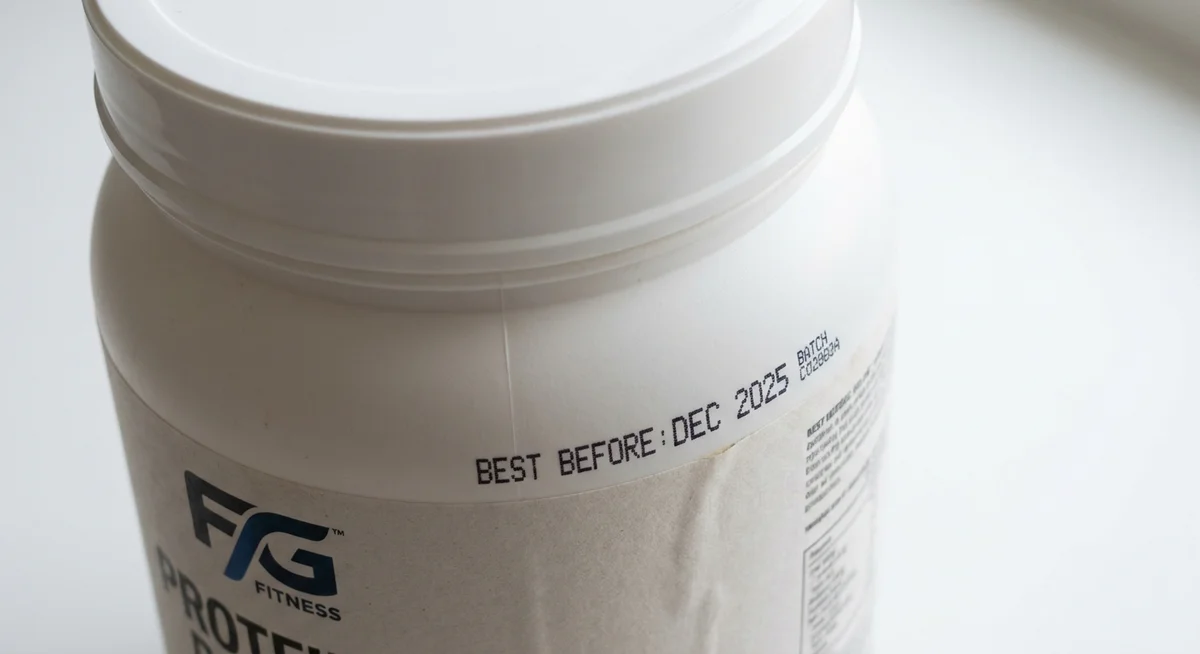
In Australia, these two terms have distinct legal meanings under FSANZ food standards. A "use by" date is a safety date: consuming the product after that date carries a food safety risk. A "best before" date is a quality date: the manufacturer guarantees the product's quality up to that date, but it does not automatically become unsafe after it passes.
Almost all protein powders carry a best-before date, not a use-by date. This means a sealed tub a few months past its best-before date is typically still safe and nutritionally functional, though the flavour and amino acid bioavailability may have declined somewhat.
Shelf Life by Type
Whey Isolate (Unopened)
Typically 18 to 24 months from manufacture. Because isolate has very low fat and lactose content, it is less susceptible to both oxidation and the Maillard reaction. Stored correctly (cool, dry, sealed), it will often remain in good condition for a month or two beyond the printed date.
Whey Concentrate (Unopened)
Typically 12 to 18 months from manufacture. The higher fat content means a greater oxidation risk over time. It is more important to store concentrate in cooler conditions and to use it within a reasonable time of opening.
Plant Protein (Unopened)
Pea and rice protein powders generally last 18 to 24 months unopened. They have low fat content and no lactose, so they are reasonably shelf-stable. Hemp protein, which contains more natural fats, degrades faster and is better stored in the fridge once opened.
Once Opened
Once you open a tub, the clock moves faster. As a general guide, use opened protein powder within 3 to 6 months for best quality. Keep the lid tightly sealed after every use.
How to Store Protein Powder Correctly
- Keep it cool and dry: A pantry shelf away from the stove, dishwasher or sink is ideal. Temperature fluctuations and humidity accelerate degradation.
- Keep it sealed: Always replace the lid firmly. Oxygen and moisture are the enemies of shelf life.
- Use a dry scoop: Never dip a wet or recently washed scoop into the powder. Even a small amount of moisture can introduce clumping and microbial risk over time.
- Avoid direct sunlight: UV exposure accelerates oxidation, particularly of any fats in the product.
- Do not store in the fridge: The humidity changes when you take a cold container in and out of the fridge can actually introduce condensation into the powder. Room temperature storage in a cool, stable environment is generally better.
Clumping Is Not Always a Bad Sign
One of the most common concerns people have is finding their protein powder has clumped together in the tub. Clumping is usually caused by moisture absorption rather than spoilage. If the powder still smells normal and the colour has not changed, it is almost always fine. Breaking up the clumps and using the powder as normal is perfectly acceptable.
Clumping that is accompanied by an off-smell, discolouration, or visible mould is a different matter entirely and warrants discarding the product.
Signs It Is Actually Time to Throw It Out
- A sour, rancid or unusual smell that was not there when you opened it
- Visible mould (typically grey, green or black spots in the powder)
- A significantly changed colour, particularly yellowing or browning
- A bitter or off taste that you do not recognise from earlier in the tub
If the powder smells fine, looks fine and tastes as expected, it is almost certainly still usable regardless of the best-before date on the label.
The Practical Rule
Buy quantity you will realistically use within 3 to 4 months of opening. Store it in a cool, dry place with the lid tight and a dry scoop. If it smells right and looks right, use it. If something seems off, trust your senses over the date stamp. Protein powder is not the kind of product where you need to be anxious about date labels, but it is also not something you want to leave half-open in a humid kitchen cupboard for a year.